Best Kitesurfing in January: Cape Verde, the Caribbean, Asia and Egypt
For a warm January kite trip, I would look at Cape Verde, Aruba, Bonaire, Mui Ne in Vietnam and Boracay. Egypt, the Canaries and Dakhla work too, with lighter wind and cooler days.
For the best kitesurfing in January somewhere warm, start with Cape Verde, Aruba and Bonaire. Mui Ne and Boracay are in peak season too, while Paje on Zanzibar gets the northerly Kaskazi wind. I would then narrow the choice by the water conditions and support you need at the spot.
Closer to Europe, you can go to Egypt, Fuerteventura or Dakhla in Morocco. The wind there is lighter in January than in the main season and the average daytime temperature sits around 19°C, so bring a bigger kite and a full wetsuit.
The average wind speed alone won't pick the place for you, though. The small things decide it: which way the wind blows relative to the beach, what the tide does, and how many kites will be on the water with you.
January wind at the weather stations
Windfinder builds its statistics from real weather station measurements, using daytime hours only. For the places people fly to for winter wind, January looks like this:
| Place | Average wind in January | Wind from | Average daytime temperature |
|---|---|---|---|
| Sal, Cape Verde | 15 knots (7.7 m/s) | northeast | 23°C |
| Aruba | 15 knots (7.7 m/s) | east | 28°C |
| Bonaire | 14 knots (7.2 m/s) | east | 28°C |
| Dakhla, Morocco | 13 knots (6.7 m/s) | northeast | 19°C |
| Cumbuco, Brazil | 12 knots (6.2 m/s) | east-northeast | 28°C |
| Hurghada, Egypt | 11 knots (5.7 m/s) | north-northwest | 19°C |
| Fuerteventura, Canaries | 11 knots (5.7 m/s) | northeast | 19°C |
| Curaçao | 11 knots (5.7 m/s) | east | 28°C |
| Dubai | 8 knots (4.1 m/s) | west-northwest | 22°C |
| Cabarete, Dominican Republic | 5 knots (2.6 m/s) | east-southeast | 25°C |
Most of these stations sit at airports; Cumbuco and Cabarete have theirs by the beach. The data mostly covers 2000-2026, Cumbuco 2006-2024 and Cabarete only 2003-2014. An average does not tell you how many days you will ride: it hides days on a smaller kite and days when the kite never leaves the bag. Treat the table as a rough comparison of stations with different settings and measurement periods. For your actual week, check the forecast and conditions at the spot.
Sal and Aruba have the highest January averages among the stations compared here. On Sal the monthly averages stay around 15 knots (7.7 m/s) from January to May, and Aruba climbs to 17-18 knots (8.7-9.3 m/s) from February to July.
Cape Verde: Sal
If you have recently finished a course, I would start by looking at Kite Beach on Sal. The wind blows diagonally towards shore from the left, and local schools teach here, but there are waves and shorebreak too. Before heading out on your own, check with a school that the day's waves suit your level, including getting through the shorebreak and coming back in.
Kite Beach gets busy at peak times. You may find more room late in the afternoon or during everyone else's lunch break. Ponta Preta is a wave spot for advanced riders, and the wave closes out dangerously close to the rocks. For Sal in January I would pack a full wetsuit even though 23°C sounds pleasant: the wind cools you down fast once you're wet. There's more on the island in the guide to kitesurfing in Cape Verde.
Aruba, Bonaire, Curaçao, and why not Cabarete
On the ABC islands January days are around 28°C, and easterly wind dominates the statistics. Alongside the wind, I would look at where you enter the water and who can help if something goes wrong.
Within Bonaire's marine park, kiters must use the designated entry and exit zone at Atlantis. Kiting is banned in Lac Bay. At Atlantis the wind is offshore, blowing from the land out to sea. If your kite drops or a line snaps, the wind carries you away from the beach. Only ride offshore with rescue arranged in advance and operating that session: a boat must already be on the water with a driver trained in deep-water rescues, and someone on shore must know you are riding. If you have just finished a course, arrange supervision with a local instructor too.
Visitors aged 12 and over entering the sea must pay the 40 USD STINAPA nature fee, valid for the calendar year. Residents of Aruba, Bonaire, Curaçao, Sint Maarten, Sint Eustatius and Saba with official ID are exempt.
I wouldn't choose Cabarete in the Dominican Republic for a January trip that depends entirely on kiting. Its windiest season is April to September. From December to March you can get lucky with the wind, but winter swells can be big and powerful. If you have recently finished a course, their size and strength would be my main concern. The islands and Cabarete are covered in detail in the guide to kitesurfing in the Caribbean.
Mui Ne and Boracay: peak season in Asia
In Mui Ne, Vietnam, January falls in the main northeast monsoon season. You ride on the open sea, with chop and shorebreak to account for. Before launching, check the wind direction, space on the beach and where you will come back in. If you are still learning, arrange an instructor who can match the day's conditions to your level.
On Boracay the main season runs from mid-October to the end of March, when the northeasterly Amihan wind blows. The spot is Bulabog beach, with flat water inside and waves on the reef. When the wind picks up it gets choppy inside, and it gets busy at peak times. I would try an early session, when the wind tends to be stronger. The tide also determines depth: at extreme low tide it is too shallow to ride safely, with rocks and reef in parts of the lagoon. Check the timing with a local school and stay off the water when it is too shallow.
Zanzibar and Brazil
In Paje on Zanzibar the northerly Kaskazi blows from mid-December to February. The tide shapes the spot more than anything, so check the tide table as carefully as the wind forecast. At low tide the inner lagoon empties and everyone moves to the outer lagoon and the sandbanks. Depending on the water level the lagoons give you knee-deep flat water, and high tide brings mild chop and a few small kickers.
In Cumbuco in northeast Brazil, January is at the end of the main windy season. The station shows an average of 14 knots (7.2 m/s) from September to December, 12 knots (6.2 m/s) in January and 11 knots (5.7 m/s) in February. Monthly averages cannot tell you which part of January will be better. More in the guide to kitesurfing in Brazil.
Closer to Europe: Egypt, Fuerteventura, Dakhla
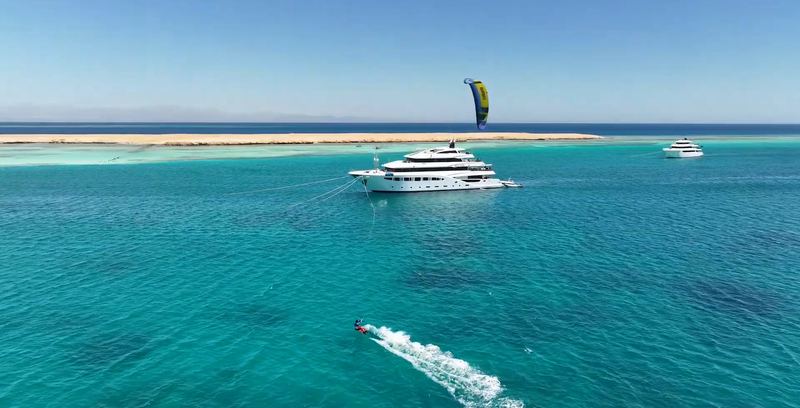
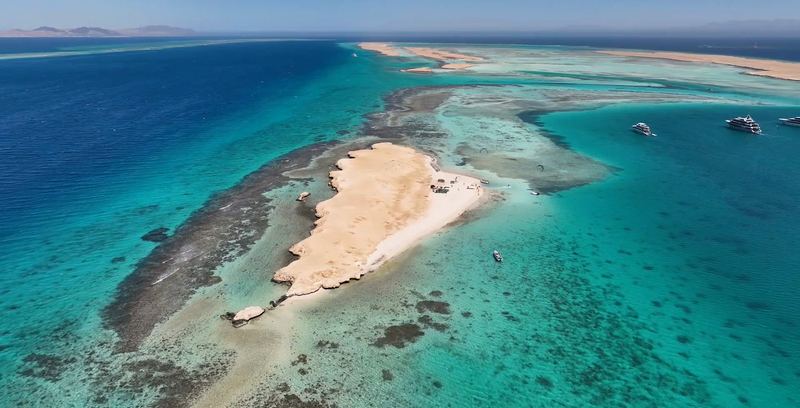
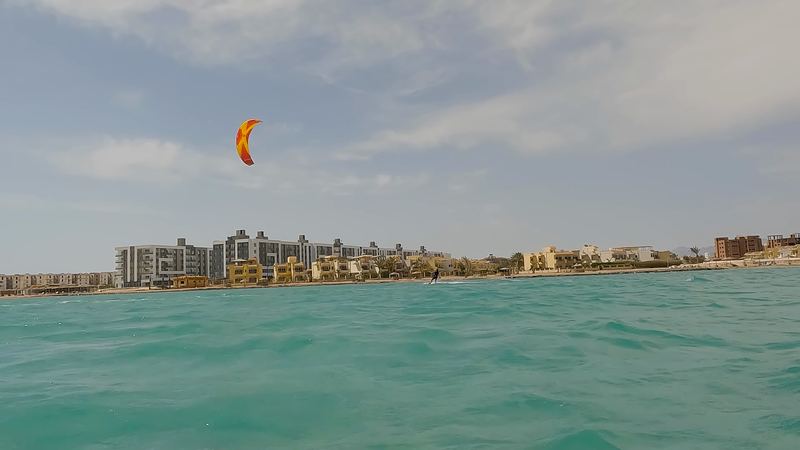
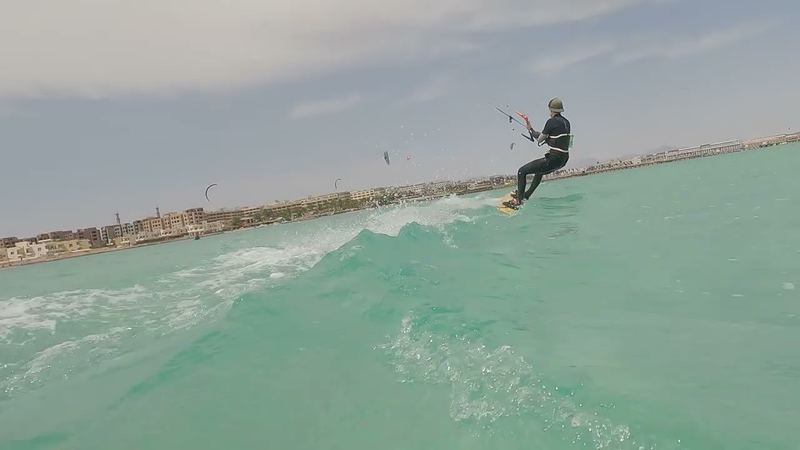
Around Hurghada the January wind is lighter than in summer. The airport station averages 11 knots (5.7 m/s) in January and 14 knots (7.2 m/s) in August and September. The NASA POWER model gives January 75% of the wind speed of the windiest month. The average daytime temperature is 19°C, so I would bring a full wetsuit and plan on a bigger kite than you ride in summer. For a month-by-month breakdown, see my guide to the best time to kitesurf in Egypt.
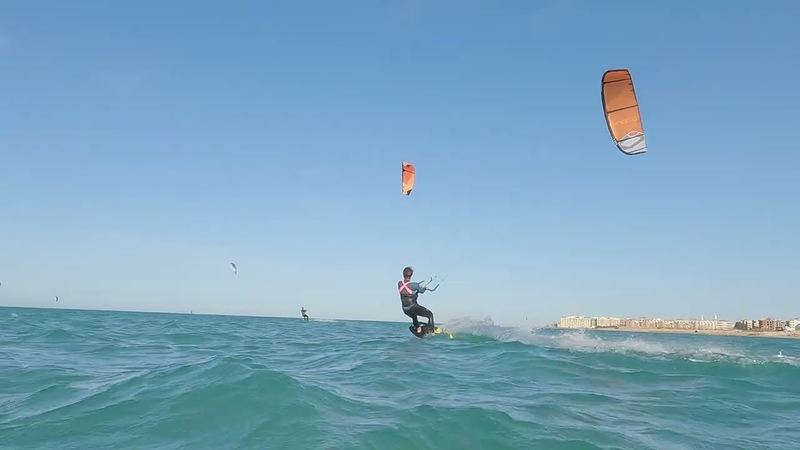
I have been on Mohamed's Red Sea safari several times. The published 2026 schedule lists trips in April, May, October and November, with none in January. The 2027 dates haven't been published yet, and you can ask to be notified on the kite safari page.
Fuerteventura airport shows 11 knots (5.7 m/s) and an average daytime temperature of 19°C in January. The main season there is summer, with 14 knots (7.2 m/s) in July. Dakhla does a little better in January at 13 knots (6.7 m/s), and from February the wind builds up to 21 knots (10.8 m/s) in July. It's no warmer than the Canaries, also 19°C.
Dubai and Mauritius: better in other months
In Dubai the airport station averages 8 knots (4.1 m/s) in January. With that I would take a foil or a big light-wind kite to Dubai and treat kiting as a bonus to the trip; check conditions at your chosen beach separately.
In Mauritius January is a summer month. For wind at Le Morne, I would aim for June to November, when the trade wind is most stable. Summer brings up to 32°C, but the wind is less reliable.
How to choose
- Wind strength is your starting point: look at Sal and Aruba, which have the highest January averages among the stations in the table. For a 1-week trip, check local conditions and the forecast too; the average cannot promise a number of rideable days.
- You have just finished a course: check with a local school on Sal that you can handle the waves and shorebreak at Kite Beach, both going out and coming back in. On Bonaire, arrange instructor supervision; however well you ride, do not head out offshore without rescue cover and a boat already on the water.
- You want flat water to practise: the lagoons in Paje, as long as you watch the tide.
- You want something closer and don't mind cooler air: Egypt, Fuerteventura or Dakhla, with a bigger kite and a full wetsuit.
- You can go for 2 weeks: you have more time to wait for conditions that suit you if a week of light wind comes along.
On the kite spot map set the "Windy in" filter to January. It shows spots where, according to NASA POWER data, January is one of the windiest months of their year. That compares months within a location: a spot whose strongest month is January can still be light. Check measured statistics for shortlisted spots. For other dates, see my guides to winter kitesurfing and where to kitesurf in February.
Use the map to shortlist spots for future trips, and sign up for new guides by e-mail. Select the newsletter checkbox in the linked inquiry form.
If you stay at home
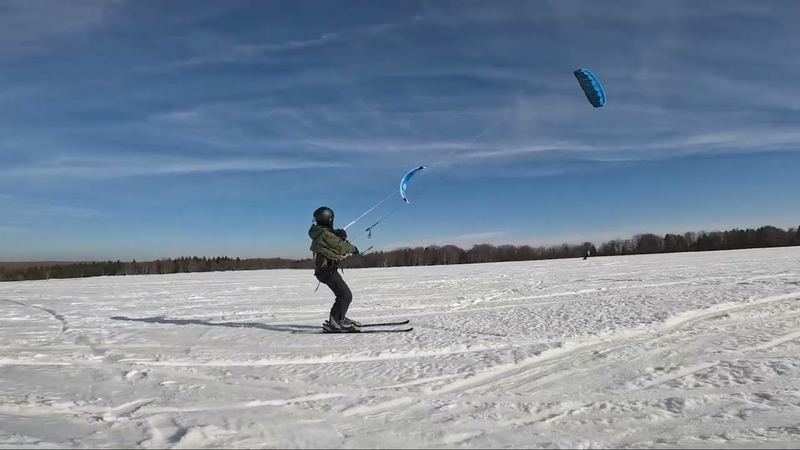
At home in Czechia, January is snowkite time. I ride in the Ore Mountains, at Moldava and Nakléřov, and there the small details make or break a session. If the wind comes off the forest and you're close to the trees, the kite gets turbulent and you need to move further away. On New Year's Eve 2022 I rode a 15 m² Kitech FRS in light wind on Lake Milada. If snow is your thing, switch on Snowkite on the same map.
Questions
Where is the best kitesurfing in January?
Among the stations compared here, Sal in Cape Verde and Aruba have the highest January averages, both rounding to 15 knots (7.7 m/s), with Bonaire at 14 knots (7.2 m/s). An average does not tell you how many days you will ride. January is also peak season in Mui Ne, Boracay and Paje on Zanzibar.
Is January a good month to kitesurf in Egypt?
It works, but expect lighter wind and cooler weather. Hurghada airport averages 11 knots (5.7 m/s) in January against 14 knots (7.2 m/s) in August, and the average daytime temperature is 19°C. Pack a bigger kite and a full wetsuit.
Does the Red Sea kite safari run in January?
The published 2026 safari schedule lists trips in April, May, October and November, with none in January. The 2027 dates have not been published yet.
Can you kitesurf in the Canary Islands in January?
Yes, but January is not the main season. Fuerteventura airport averages 11 knots (5.7 m/s) in January with an average daytime temperature of 19°C; the wind peaks in summer.
Is January a good time to kite in Mauritius?
Not really. The best months at Le Morne are June to November, when the trade wind is most consistent. January is summer in Mauritius and the wind is less regular.
Sources
- Sal, Amílcar Cabral airport (2000-2026): average wind in January 15 knots (7.7 m/s), January to May 15 knots (7.7 m/s), dominant direction northeast, average daytime temperature in January 23°C www.windfinder.com (checked 18 October 2026)
- Aruba, Queen Beatrix airport (2001-2026): average wind in January 15 knots (7.7 m/s), February to July 17-18 knots (8.7-9.3 m/s), direction east, average daytime temperature in January 28°C www.windfinder.com (checked 18 October 2026)
- Bonaire airport (2000-2026): average wind in January 14 knots (7.2 m/s), direction east, average daytime temperature in January 28°C www.windfinder.com (checked 18 October 2026)
- Curaçao, Hato airport (2000-2026): average wind in January 11 knots (5.7 m/s), direction east, average daytime temperature in January 28°C www.windfinder.com (checked 18 October 2026)
- Dakhla airport (2004-2026): average wind in January 13 knots (6.7 m/s), February 15 knots (7.7 m/s), July 21 knots (10.8 m/s), direction northeast, average daytime temperature in January 19°C www.windfinder.com (checked 18 October 2026)
- Cumbuco, Kitepoeira kite school station (2006-2024): average wind September to December 14 knots (7.2 m/s), January 12 knots (6.2 m/s), February 11 knots (5.7 m/s), April 7 knots (3.6 m/s); January direction east-northeast, average daytime temperature 28°C www.windfinder.com (checked 18 October 2026)
- Jericoacoara station (2005-2015): average wind in January 12 knots (6.2 m/s) www.windfinder.com (checked 18 October 2026)
- Hurghada airport (2000-2026): average wind in January 11 knots (5.7 m/s), August and September 14 knots (7.2 m/s), January direction north-northwest, average daytime temperature in January 19°C www.windfinder.com (checked 18 October 2026)
- Hurghada (27.25 N, 33.81 E), NASA POWER: relative 10 m wind speed, January 75, August and September 100 (100 = windiest month) power.larc.nasa.gov (checked 18 October 2026)
- Fuerteventura airport (2000-2026): average wind in January 11 knots (5.7 m/s), July 14 knots (7.2 m/s), direction northeast, average daytime temperature in January 19°C www.windfinder.com (checked 18 October 2026)
- Dubai International Airport (2002-2026): average wind in January 8 knots (4.1 m/s), December 7 knots (3.6 m/s), average daytime temperature in January 22°C www.windfinder.com (checked 18 October 2026)
- Cabarete beach station (2003-2014): average wind in January 5 knots (2.6 m/s), June 8 knots (4.1 m/s), average daytime temperature in January 25°C www.windfinder.com (checked 18 October 2026)
- Windfinder statistics use real weather station measurements from daytime hours; location and wind shadow affect readings, and wind probability is a share of observations, not days www.windfinder.com (checked 18 October 2026)
- Sal: Kite Beach has cross-on wind from the left, waves, shorebreak and local school lessons; busy at peak times, more room late afternoon or during lunch break; bring a full wetsuit; Ponta Preta is for advanced riders, the wave closes close to the rocks www.iksurfmag.com (checked 18 October 2026)
- Bonaire: within the marine park, kiters must use the Atlantis entry and exit zone; Lac Bay is for windsurfing stinapabonaire.org (checked 18 October 2026)
- STINAPA: visitors entering the sea pay 40 USD per calendar year; children under 12 and residents of Aruba, Bonaire, Curaçao, Sint Maarten, Sint Eustatius and Saba with official ID are exempt stinapabonaire.org (checked 18 October 2026)
- Cabarete: windiest season April to September; from December to March you can be lucky with good wind; winter swells can be large and powerful www.iksurfmag.com (checked 18 October 2026)
- Mui Ne: January is in the main northeast monsoon season; open sea, chop and shorebreak; learners need instruction and supervision, with wind direction, beach space and conditions checked before launching muinekiteschool.com (checked 18 October 2026)
- Boracay: main season mid-October to end of March, northeast Amihan wind; Bulabog has flat water and waves on the reef, choppy inside in stronger wind, busy at peak times, early morning sessions are best www.iksurfmag.com (checked 18 October 2026)
- Paje, Zanzibar: Kaskazi season mid-December to February, wind from the north; low tide empties the inner lagoon and riders move to the outer lagoon and sandbanks; knee-deep flat water in the lagoons, mild chop and small kickers at high tide www.iksurfmag.com (checked 18 October 2026)
- Le Morne, Mauritius: best months June to November with the most stable trade winds; up to 32°C in summer but the wind is less consistent iksurfmag.com (checked 18 October 2026)
- Paradise kite safari: 2026 dates 11-18 April, 22-29 May, 10-17 October, 7-14 November; 2027 dates not yet published paradisekitesurf.cz (checked 18 October 2026)
- Offshore: ride only with a boat already on the water, a driver trained in deep-water rescues and someone on land aware that the rider is out d8.ikointl.com (checked 18 October 2026)
- Bonaire: the local spot has offshore wind; the school offers instructor supervision and pickup for riders lacking confidence, and instructors accompany students on the water kitersparadise.com (checked 18 October 2026)
- Kiteboarding Bonaire offers mandatory Beach & Rescue service with launch and landing assistance and boat rescues www.kiteboardingbonaire.com (checked 18 October 2026)
- Bulabog: the lagoon is too shallow for safe riding at extreme low tide; time sessions for suitable depth, with rocks and reef in parts of the bottom www.padayonkiteboarding.com (checked 18 October 2026)
- Cumbuco: the strong, steady wind season runs from June to January kitefeliz.com (checked 18 October 2026)
- The inquiry form offers an optional subscription to safari dates and new guides by e-mail; checkbox f-news kitewithjaja.pages.dev (checked 18 October 2026)