Downwind kite safari: wind and Red Sea islands
Long-term monthly averages show a prevailing northwesterly wind around the islands north of Hurghada. Agree each downwinder with the crew based on current conditions and support on the water.
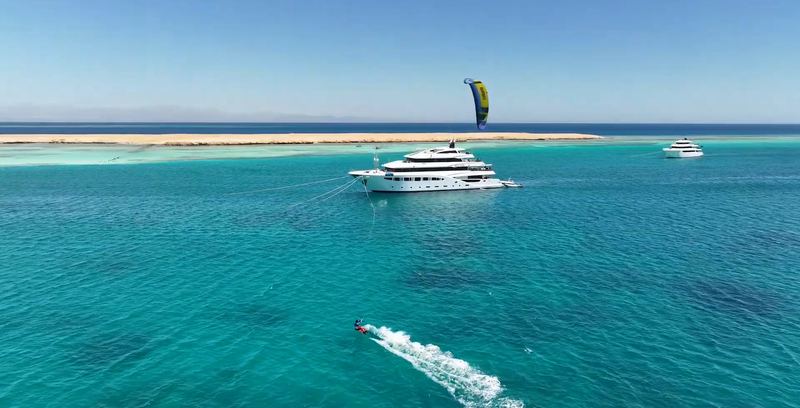
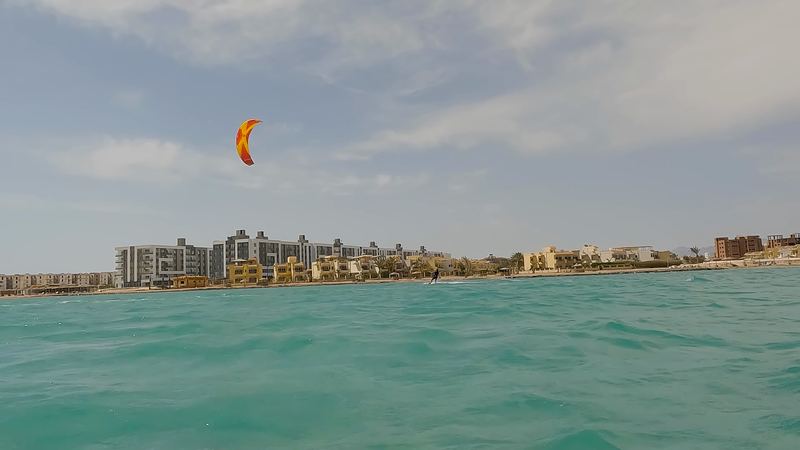
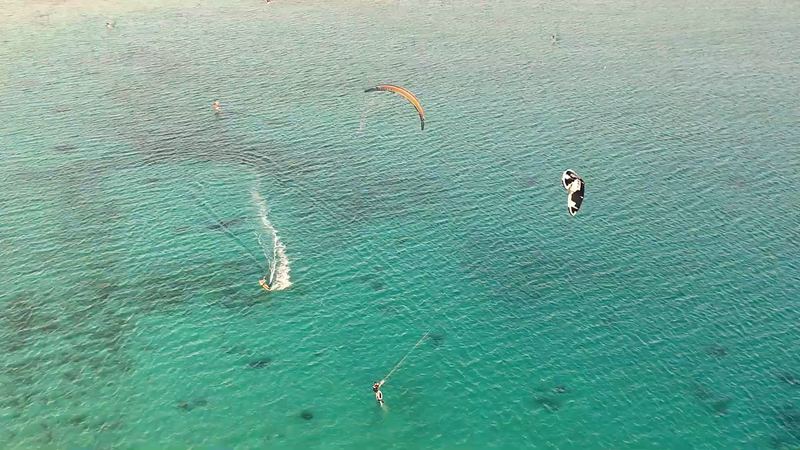
On a downwind kite safari from Hurghada, island crossings feature in the programme on days 3 to 6. Long-term averages show a prevailing northwesterly wind around the islands, but the crew needs to confirm the start, finish and passage around reefs for the conditions that day.
Nobody can honestly promise you how many downwinders you'll get in a week. That comes down to the wind and to who else is on the boat. If they are your main reason for going, ask about the group's riding level and support on the water when you enquire.
Where the wind comes from and where you go
According to the NASA POWER model, the long-term average wind near Gubal comes from the northwest in every month of the year, between 316° and 323°. The annual average of 319° gives a dead-downwind direction of 139°, towards the southeast. The line from Geisum to Tawila runs at 157°, or 18° further south. This compares island positions with climate averages; it is not a course for a particular ride.
Wind speed is another story. The model calculates wind at 10 m on a grid of roughly 50 km, and for the safari months it gives averages of 10-12 knots (5-6 m/s). Tawila's listed range is 15-25 knots (8-13 m/s), which is no guarantee for an entire crossing. The model shows the prevailing direction and the windiest period, June to September (13-14 knots, 7 m/s on average). Before riding, you need the current forecast and the crew's assessment of conditions on the spot.
Distances between the islands
Reference points on Geisum and Gubal are 9 km apart in a straight line, and those on Geisum and Tawila 11 km. These distances use points on islands checked against OpenStreetMap; they do not mark beach launches or confirmed safari routes. The length of a ride depends on its actual start and finish, detours around reefs and the legs you choose between turns.
| Line between reference points | Straight line | Bearing of line | Offset from modelled 139° |
|---|---|---|---|
| Geisum → Gubal | 9 km | 118° | 21° |
| Geisum → Tawila | 11 km | 157° | 18° |
The offsets use the annual average wind direction. They do not determine the number of turns or time on each tack. Choose your legs according to the actual wind, your equipment and the corridor agreed with the crew.
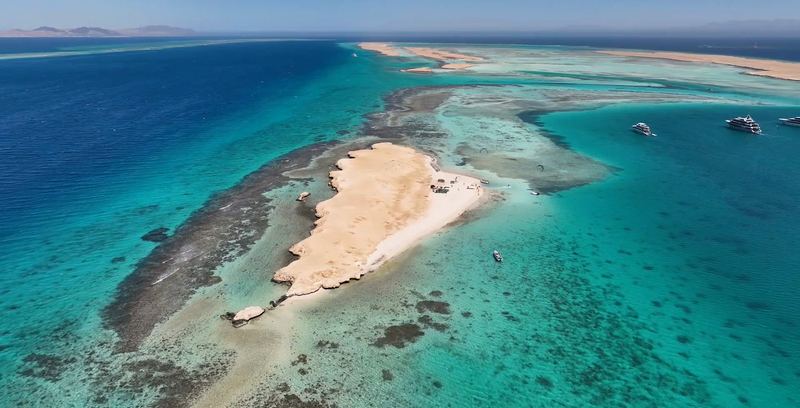
- Geisum has long beaches, shallow and deeper water, and the option of downwinders to neighbouring islands; agree the destination with the crew.
- Ashrafi is the most remote of the spots, with shallow water and waves, for advanced riders.
- Tawila has to be arranged in advance because entry to the island is charged. Check whether a visit is possible before the boat sets off.
- Gubal is included in the programme only if guests are interested in diving. It has deeper water and coral reefs.
Check the islands' relative positions on the kite spot map. I describe each place in more detail in my guide to Red Sea kite safari islands.
What the water is like
Tawila has a shallow lagoon with a sandy bottom, Geisum has shallow and deeper water, and Ashrafi also has waves. Lagoon conditions alone are not enough to assess a whole crossing. Before launching, go through the passage around reefs, the landing place and options for ending the ride with the crew.
In offshore wind, set off only with confirmed support: the boat must already be on the water with a driver trained in deep-water rescue, and someone ashore must know you are riding. Agree signals and the pickup procedure beforehand. A rescue boat included in the safari price does not confirm an escort for a particular ride.
If your kite will not relaunch, follow the procedure you have practised with an instructor for your equipment and agreed with the crew. This includes securing the bar and lines; do not deflate an inflatable kite prematurely while waiting for rescue, as it provides buoyancy and helps the crew spot you.
How a downwinder works on the boat
The crew organises the downwinders. The safari programme lists downwind trips between the islands and courses on the mornings of days 3 to 6, with another session in the afternoon. The crew picks where to go based on the wind, helps with launching and landing, and the rescue boat is included in the price. For the week as a whole, see what to expect on an Egypt kite safari.
Not everyone on board is an experienced rider. In April 2024 we took 8 beginners along on the safari; they trained on Geisum for the first 2 days and then we moved on to Ashrafi. Courses and downwinders both feature in the programme, but if you're going mainly for long downwind runs, ask in your enquiry what levels are booked on your dates and how support for downwinders is planned alongside lessons. The 2027 dates for the Egypt kite safari aren't published yet; you can sign up for a heads-up through the form on that page.
What you should be able to do
For an island crossing, I'd want an independent group: confident riding on both tacks, deep-water relaunch and self-rescue practised with an instructor. Agree the length and difficulty around the least experienced rider and conditions the whole group can handle.
If that isn't you yet, the lagoons will keep you busy all week and the downwinder can wait. I go through how to prepare for your first long run in how to plan your first kitesurf downwinder.
Which kite and board to bring
Choose your kite for your weight, board and the full forecast for the planned ride. You need enough power for a lighter section while retaining safe control in the strongest expected wind, including gusts and when you stop. If your kite cannot cover that range, agree a shorter or different route, or postpone the ride. Treat a size calculation as a starting point and check it against the manufacturer's wind range for that model and your own experience with it.
Choose a kite and board you know well, and check the safety systems before riding. You don't have to bring your own gear: a full kite set costs €300 for 6 days on the safari and a twintip €60 for 6 days (2026 prices). With rental equipment, allow time to get familiar with it before the downwinder. For the rest of the packing list, see what to pack for a kite safari.
Questions
How long are the downwinders on a Red Sea kite safari?
The crew needs to confirm the length of each downwinder along with its start, finish and route around reefs. Reference points on Geisum and Gubal are 9 km apart in a straight line, and those on Geisum and Tawila 11 km; these are geographical comparisons, not confirmed safari routes.
Which way does the wind blow around Ashrafi, Geisum and Tawila?
NASA POWER gives long-term monthly average directions between 316° and 323°, from the northwest. Your actual course depends on the wind that day; the lines between the islands do not sit exactly downwind.
How many downwinders do you get in a week on a kite safari?
There is no fixed number. The safari programme has a downwind trip between the islands on days 3 to 6, and how often it actually happens depends on the wind and the group. If downwinders are the reason you're going, say so in your enquiry.
Does a boat follow the riders on a downwinder?
A rescue boat is included, but the price list does not confirm an escort for a particular ride. Set off only after the crew has confirmed support, signals and the pickup procedure; in offshore wind, the boat must already be on the water with a driver trained in deep-water rescue and someone ashore must know you are riding.
Do I need my own gear for downwinders?
No. On the 2026 price list a full kite set is €300 for 6 days and a twintip on its own €60 for 6 days. For a downwinder, choose equipment you know well.
Sources
- Islands: Tawila steady wind 15-25 knots (8-13 m/s), shallow water, sandy bottom, visited only when arranged in advance because entry is charged; Geisum one of the least crowded spots, long beaches, option to downwind to neighbouring islands, mix of shallow and deeper water; Ashrafi the most remote, shallow water and waves, perfect for a downwind trip, for advanced riders; Gubal deeper water, coral reefs, only when guests want to dive; Abu Mungar smaller island with a lagoon for beginners and trick training paradisekitesurf.cz (checked 18 October 2026)
- Programme: day 2 afternoon session (freeride, trick training, downwinders); days 3-6 morning kiting, downwind trip between the islands and courses, move to an island depending on conditions (e.g. Ashrafi or Geisum); the crew helps with launching and landing, handles safety and rescue on the water, organises downwinders and picks spots by the wind; rescue boat included paradisekitesurf.cz (checked 18 October 2026)
- 2026 price list: full kite set €300 / 6 days, twintip €60 / 6 days; 2026 dates 11-18 April, 22-29 May, 10-17 October, 7-14 November paradisekitesurf.cz (checked 18 October 2026)
- NASA POWER climatology 2001-2025, point 27.67 N, 33.80 E (near Gubal), wind at 10 m: average direction by month 316-323° (year 319°); average speed April 5.88 m/s (11 knots), May 6.06 m/s (12 knots), October 6.19 m/s (12 knots), November 5.32 m/s (10 knots), June to September 6.79-7.36 m/s (13-14 knots) power.larc.nasa.gov (checked 18 October 2026)
- Reference point on southern Geisum (27.679 N, 33.724 E); own calculation of straight-line distance and initial bearing to the Gubal and Tawila points: 8.801 km / 117.851° and 11.354 km / 157.007°, offsets of 21° and 18° from the modelled downwind direction of 139°; not navigational routes api.openstreetmap.org (checked 18 October 2026)
- Reference point on Tawila island (27.585 N, 33.769 E) for the geographical calculation api.openstreetmap.org (checked 18 October 2026)
- Reference point on Gubal island (27.642 N, 33.803 E) for the geographical calculation api.openstreetmap.org (checked 18 October 2026)
- IKO: offshore riding requires a boat already on the water, a driver trained in deep-water rescue and an informed person ashore; practise self-rescue with an instructor, secure the bar and retain an inflatable kite's buoyancy until rescue is assured d8.ikointl.com (checked 18 October 2026)
- Ozone: equipment must suit ability and conditions, riders must understand forecasts and prepare for weather changes; safety systems must be familiar and tested before an emergency ozonekites.com (checked 18 October 2026)
- IKO Boat Handling: rider pickup requires coordination with the driver, signals and securing the kite and lines; advice to agree the procedure before riding follows these rescue procedures d8.ikointl.com (checked 18 October 2026)
- Duotone: kite size depends on weight, wind, riding style and board type; advice to assess the full expected wind range is based on these factors and Ozone's safety guidance www.duotonesports.com (checked 18 October 2026)
- April 2024: 8 beginners on the safari, first 2 days of training on Geisum, then the move to Ashrafi (Jája's Instagram) www.instagram.com (checked 18 October 2026)