Going solo kitesurfing: joining a safari without a travel buddy
You can join a kite safari without bringing a group. Before booking, confirm your cabin arrangements and price, and discuss lessons based on what you can do on the water.
Going solo kitesurfing on a safari means travelling without a buddy and joining an organised trip with other riders and a crew. Meals and beach facilities are shared. Before booking, confirm your cabin arrangements and price; travelling solo doesn't mean heading out on the water alone.
I've been on Mohamed's safari several times. If you're going solo, I think 4 practical things decide how your week goes: where you'll sleep, who catches your kite when you have no buddy, how you look after yourself on the water, and whether your riding is at a level where you'll actually enjoy the week.
For the day-by-day programme, see Kite safari Egypt: what to expect.
Where you'll meet the other riders
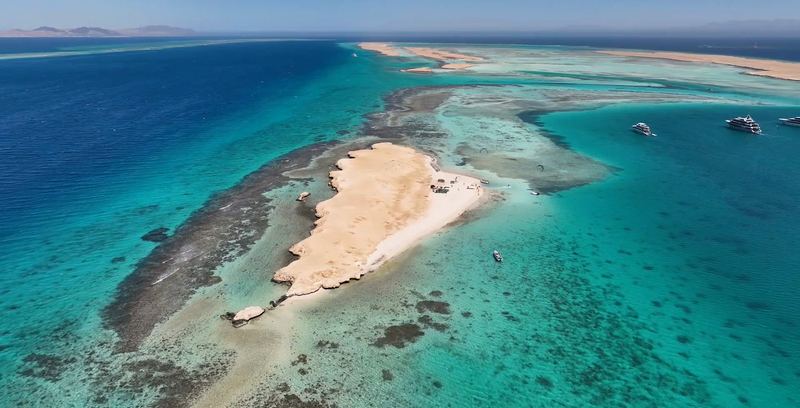
You spend the week with the same people. Breakfast, lunch and dinner are a buffet on deck, and there's a shared beach camp with a tent on the island. Meals and breaks between sessions give you time to talk to the other riders. You meet the crew on evening 1, before the safety briefing and dinner.
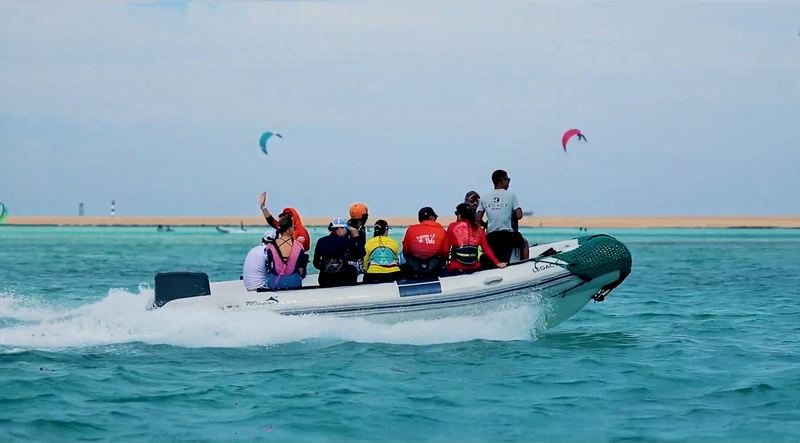
The crew chooses spots based on the wind, handles boat transfers and helps with launching. Arrange your cabin, rental gear and any lessons before the trip so you know what to expect for the week.
If you're wondering whether a boat suits a solo traveller better than a hotel by the spot, where everyone goes their own way after the session, I compare the two in Kite safari vs kite camp vs beach hotel.
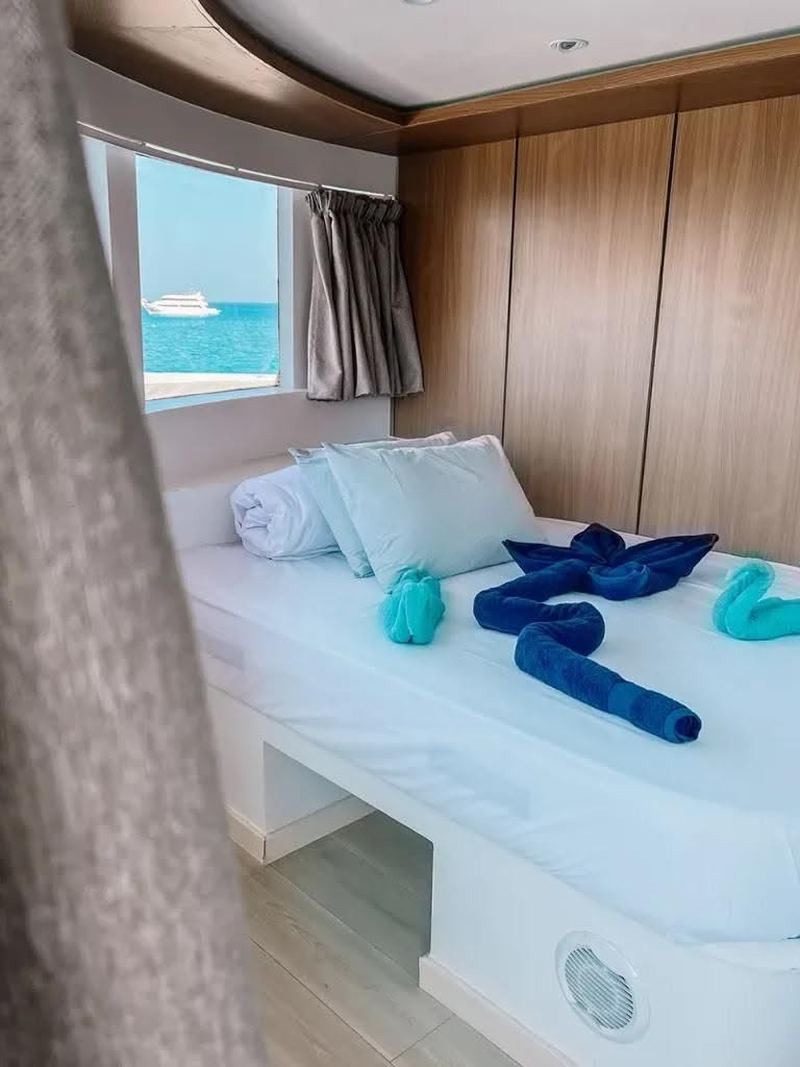
Your cabin: share it or have it to yourself
The 2026 price is €1,250 per person in a twin cabin with 2 beds. The website doesn't explain how beds are allocated to solo guests or what you pay if the other bed remains empty. Confirm the price and cabin-sharing arrangements in your enquiry.
Watch out for one thing in the price list. The "single room - double bed" column is actually a cabin with a double bed for 2 people, at €100 extra per person. A cabin for just 1 person is priced on request.
| Cabin | 2026 price per person |
|---|---|
| Twin cabin, 2 beds | €1,250 |
| Double-bed cabin, for 2 | €1,250 + €100 |
| TOP SEA VIEW suite with a double bed, for 2 | €1,250 + €200 |
| Cabin for 1 person | on request |
Every cabin has air conditioning, a fridge, a toilet and a shower. What the price covers and what you pay on top once you're there is broken down in How much a kite safari costs and what's included.
Who catches your kite when you have no buddy
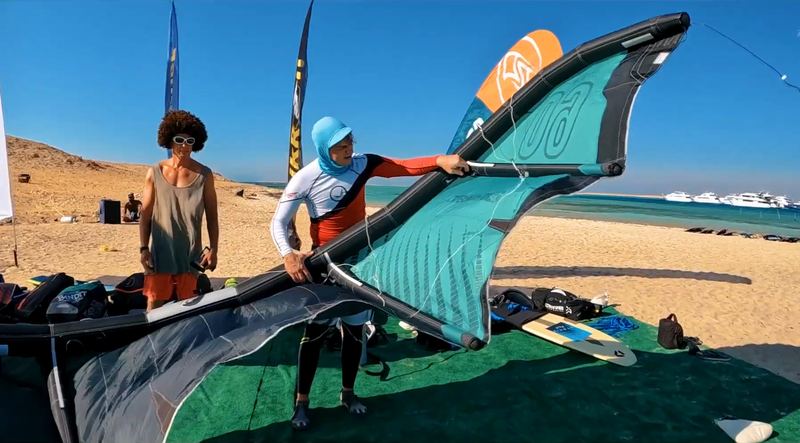
When you're travelling without a buddy, arrange help on the beach in advance too: someone to hold your kite for launching and catch it when you land after the session.
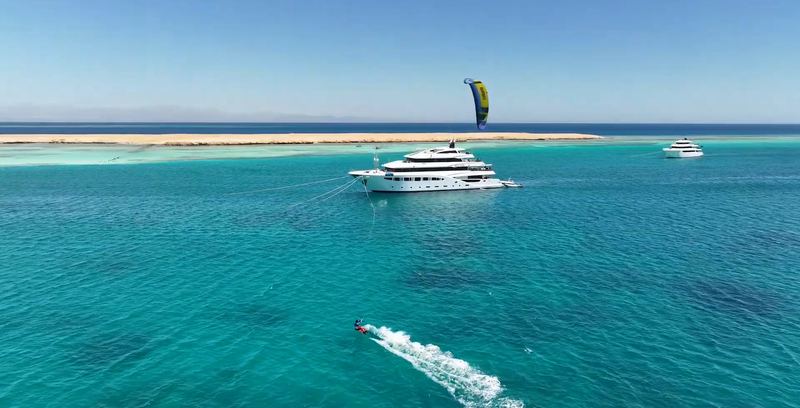
On the safari that's what the beach boys do. They're the guys from the crew who stay with you on the beach. They carry your gear, pump up your kite and help you launch and land. The compressor and pumps are on the boat, and so is storage for your kite and wing gear.
Safety on the water: wind and the rescue boat
If the wind at a particular spot is offshore, meaning it blows from the land out to sea, a crash and failed relaunch can leave you drifting away from the beach. Don't count on getting back to shore by using your kite in that wind. Confirm the rescue arrangements for the spot with the crew before entering the water.
There's a rescue boat on the water, and the safety briefing on evening 1 covers boat rules, kite zones and the wind. Before riding, agree with the crew on a signal for help and the pickup procedure.
I'd practise self rescue, meaning how to deal with an emergency on the water, with an instructor before the trip, using the type of kite you'll ride. With an inflatable kite, self rescue uses its buoyancy; packing it down for a boat pickup is a different situation. While waiting for rescue, keep it inflated for flotation. Pack down only when the boat is approaching, pickup is assured and you've coordinated with the crew.
To me, being safe means you're not a danger to yourself or anyone else on the spot, and that applies on a safari just as much as at home.
A day on the boat: 2 sessions and video review in the evening
According to the programme, a typical day from day 3 to day 6 looks like this:
- morning yoga, breakfast and a briefing on the wind and the plan for the day
- the boat moves to an island depending on conditions, for example Geisum or Ashrafi
- morning session, downwinders between islands, lessons
- lunch on board and a break
- afternoon session
- evening activities after you're off the water
The crew picks the island every day based on the wind and the forecast, so chasing the wind isn't your job. According to the NASA POWER model, the area around Hurghada is windiest from June to September and calmest from November to February. The model calculates wind 10 m above the ground over a grid square of roughly 50 km, though, so it shows the pattern across the year, not the wind on a particular beach.
A downwinder is a ride from one place to another with the wind. Agree on the route, safety support and return transport beforehand. On the safari, the crew organises it; discuss whether the route suits your riding level before joining.
You can check the islands' locations on the kite spot map centred on Gubal.
Evening video review and time together
The evening programme includes video review and a BBQ on the boat or the beach. A recording gives you an outside view of your stance and bar position. I'd choose a specific attempt to review, such as an upwind run, and work with the instructor on what to change next session. There's also a sun deck, a jacuzzi and a bar on the boat; after 2 sessions, leave yourself time to rest if you need it.
What level you need to go solo
You'll get the most out of a safari if you can ride independently after your course. You should be able to waterstart, getting out of the water onto the board, ride both ways and upwind, control your speed and stop. That also means relaunching from the water, using the safety systems including the quick release, and having practised self rescue. When describing my level to an instructor, I'd say which of these I can do and which I need to practise.
You can also join with less experience and lessons arranged. In April 2024 we took 8 beginners along and spent days 1 and 2 on Geisum. Day 1 was tough, and by the middle of day 2 everyone was riding. Your progress will depend on the wind, the instructor and your previous experience.
If any of these skills are missing, arrange lessons before the trip. You can book a refresher on board (3 h for €180, 6 h for €330) or private lessons at €65 an hour. Complete beginners can take the 6-day course for €600, gear included. There's more on that in Kite safari for beginners: can you learn to kite there?
What to check before you book solo
- Cabin. Do you want it to yourself (price on request) or are you fine sharing? Say so in your very first enquiry.
- Gear. Your own or rented: a complete kite set costs €300 for 6 days, a twin tip on its own €60 for 6 days.
- Insurance. The organiser recommends travel insurance that explicitly covers kiting. A standard travel policy without sports cover may not be enough.
- Cash for the trip. The marine park and marina fees plus crew tips come to €100 to €150, and Mohamed confirms the exact amount with the dates. Flights and the visa aren't included.
- Dates. The 2027 dates haven't been published yet. You can get notified through the form on the kite safari in Egypt page.
What to bring is in my kite safari packing list.
Questions
Can I go on a kite safari on my own?
Yes, you can join without bringing a group. Meals are shared, and you meet the crew on evening 1. Before booking, confirm the price and cabin-sharing arrangements for a solo traveller.
Do I have to share a cabin on a kite safari?
The 2026 price of €1,250 is per person in a twin cabin with 2 beds. A cabin for 1 person is priced on request. The "single room" column in the price list is a double-bed cabin for 2 people at €100 extra per person.
Who helps me launch my kite if I'm travelling alone?
The beach boys from the crew. According to the organiser, they carry your gear, pump up your kite and help you launch and land. There is a rescue boat on the water.
What level do I need to enjoy a kite safari solo?
You'll get the most out of it as an independent rider who can waterstart, ride both ways and upwind, stop with control, relaunch from the water, use the safety systems and perform self rescue. If any of these skills are missing, arrange lessons: a refresher costs €180 for 3 h or €330 for 6 h, and private lessons cost €65 an hour. Less experienced riders can join with lessons arranged; complete beginners can take a 6-day course for €600 including gear.
Sources
- 2026 price list: EUR 1,250 per person in a standard room; the "single room - double bed" column +EUR 100 per person (for 2 people); TOP SEA VIEW suite +EUR 200 per person (for 2 people); air-conditioned cabins with fridge, toilet and shower paradisekitesurf.cz (checked 18 October 2026)
- The public price list gives no single-occupancy price or solo guest matching terms; it lists EUR 100 for marine park fees and crew tips paradisekitesurf.cz (checked 18 October 2026)
- Included: beach boys help with carrying, inflating, launching and landing kites; compressor and pumps; kite and wing storage on the boat; rescue boat; full board and drinks paradisekitesurf.cz (checked 18 October 2026)
- Programme: day 1 introduction to the crew, cabins, safety briefing (boat rules, kite zones, wind), dinner; days 3-6 yoga, breakfast and briefing, transfer to an island depending on conditions (e.g. Ashrafi or Geisum), morning kiting and downwind between islands, afternoon session, evening dinner and ride analysis (video coaching), BBQ on the boat or the beach paradisekitesurf.cz (checked 18 October 2026)
- 2026 extras: complete kite gear EUR 300 / 6 days, twin tip EUR 60 / 6 days, beginner course EUR 600, refresher 3 h EUR 180 and 6 h EUR 330, private lessons EUR 65 / hour paradisekitesurf.cz (checked 18 October 2026)
- Not included: flights, tourist visa, marine park fee and crew tips (the website says EUR 100), travel insurance covering kiting (recommended), personal expenses paradisekitesurf.cz (checked 18 October 2026)
- NASA POWER wind climatology at 10 m near Hurghada (MERRA-2, 2001-2025 average): windiest June to September, calmest November to February power.larc.nasa.gov (checked 18 October 2026)
- The boat heads out to the islands each day depending on the wind; transfer to an island depending on conditions paradisekitesurf.cz (checked 18 October 2026)
- IKO: safety systems, water relaunch, self rescue, waterstart with a controlled stop, speed control and riding upwind are part of the learning progression www.ikointl.com (checked 18 October 2026)
- IKO Boat Handling, PDF page 7: keep the kite inflated as flotation while waiting for a rescue boat; pack down only as the boat approaches and pickup is assured, communicating with the driver d8.ikointl.com (checked 18 October 2026)
- Ozone Water Kite Manual: practise self rescue before riding on water and learn with a qualified instructor; an inflated kite can be used as a sail during self rescue depending on wind direction ozonekites.com (checked 18 October 2026)
- De Silva describes organised downwinders with an instructor, rescue boat and return transport; bringing your own group is not a general requirement surfschool-srilanka.com (checked 18 October 2026)
- The spot map shows locations and wind, not a weekly safari itinerary; focused on Gubal kitewithjaja.pages.dev (checked 18 October 2026)
- Jája on Instagram, 30 April 2024: took 8 beginners on the safari, first 2 days on Geisum, day 1 looked tough, by the middle of day 2 everyone was riding www.instagram.com (checked 18 October 2026)