What is kite foiling
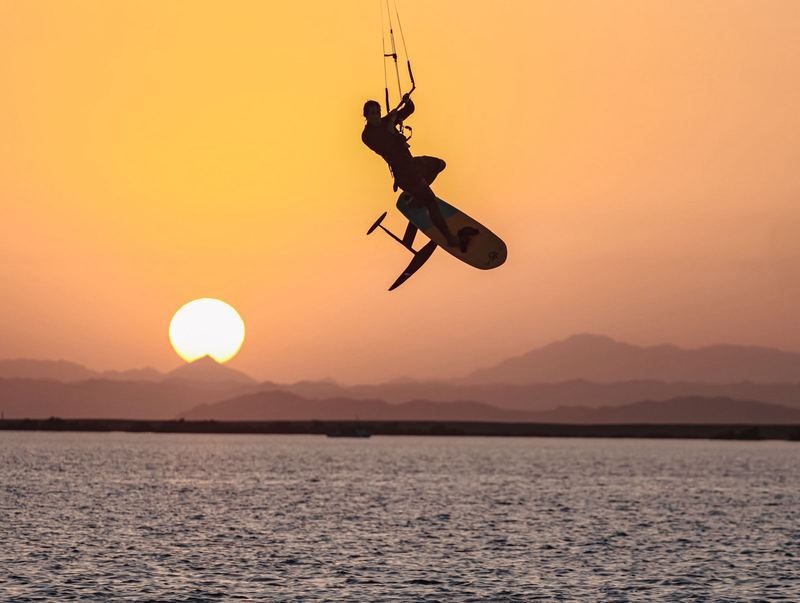
Kite foiling is kitesurfing with a hydrofoil under the board. As you build speed, the wing lifts the board out of the water and you fly above the surface.
Kite foiling is kitesurfing with a hydrofoil fixed under the board. The foil is a wing on a mast that generates lift as you gain speed, and once there is enough lift the board rises out of the water and you fly above the surface. Only the mast and the wing stay in the water below you.
Because the foil cuts water resistance dramatically, foiling works in very light wind, often 5-8 knots (3-4 m/s). It is the same sport, with the same kite and bar, but a completely different feeling under your feet.
What a foil is made of
A kite foil is a hydrofoil system with four main parts. Each one has a job, and the setup is modular, so parts can be swapped as you progress.
| Part | What it does |
|---|---|
| Mast | Connects the foil to the board; standard 75-90 cm, shorter for beginners, around 60 cm |
| Front wing | Generates lift; larger wings suit beginners, smaller ones allow higher speeds |
| Rear wing / stabilizer | Keeps balance in flight |
| Fuselage | Connects the front and rear wing |
Masts come in aluminium, which is cheaper and durable, or carbon, which is lighter and faster but more fragile. Beginner setups often use a shorter mast for stability and confidence, and manufacturers publish their own recommended lengths for different levels.
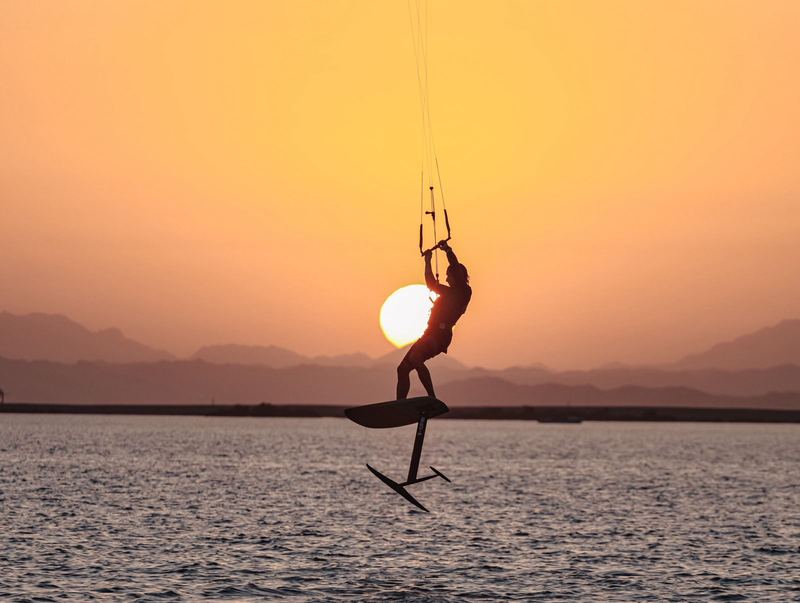
How the foil lifts and why it works in light wind
As you build speed, the wing generates lift and raises the board out of the water. You are then flying on the foil, unaffected by the surface chop that a normal board has to push through.
That efficiency is the whole point. A hydrofoil greatly reduces water resistance, so you can ride in much lighter wind than on the surface. It also improves upwind performance and speed, and different wing shapes are tuned for speed, stability or waves.
The trade-off is difficulty: kitesurfing with a hydrofoil is described as hard to learn.
Foilboard and the kite for foiling
Foilboards are directional, with the mast mounted at the tail. You ride them with two straps, three straps or none at all. Racers often use more straps for stability and power transfer, while freeriders and trick riders go strapless.
Board design matters too. High-volume boards with volume under the front foot help with balance, and rails are shaped for upwind performance. If you want the wider comparison of board shapes, see twin tip, surfboard or foil board.
For the kite, both inflatable kites and foil kites can be used. Closed-cell foil kites (with valves) can be relaunched from the water and suit racing, hydrofoiling, snowkiting and powerkiting, while bow and SLE inflatables cover the widest wind range. The choice depends on your riding, not on the foil.
If you are unsure which kite type fits your plans, the comparison of foil kites vs inflatables covers the differences.
When to start foiling and what you need
Foiling comes after the basics. Foil lessons generally require confident, independent riding and the ability to go upwind, because you need board control before you add lift. If going upwind is still shaky, work on that first - see going upwind.
A beginner foil setup looks different from a racer's:
- Choose a larger front wing so the foil lifts at lower speed.
- Use a shorter mast for stability and confidence.
- Pick a board with high volume for balance.
- Choose replaceable parts so you can progress without buying a whole new foil.
Protection is not optional. The wings are sharp and hitting the mast can cause serious injury, especially at higher speed. A helmet, an impact vest and a long wetsuit are standard, and the safety basics apply just as much here as anywhere on the water.
Depth is the other limit. Allow enough water for the entire setup, and follow the manufacturer's guidance: one manual suggests at least mast length plus 50 cm on entry and exit to avoid underwater obstacles. Hitting the bottom causes falls and injuries, so check the area and keep distance from other riders.
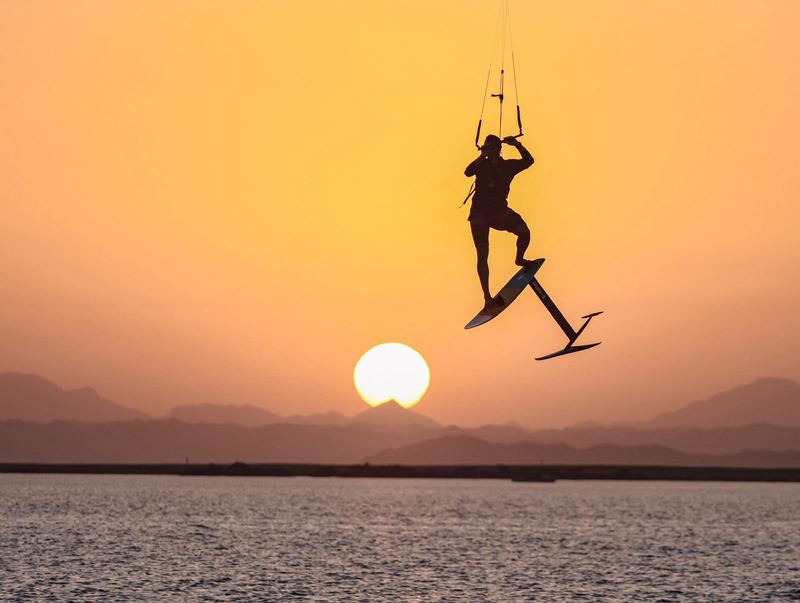
Foiling in competition: Formula Kite
Formula Kite is the high-performance racing class built around hydrofoil kites. It uses a foil kite and a board with a hydrofoil, and it is not a one-design class: competitors use approved series equipment. The class is governed by the International Kiteboarding Association and runs for both men and women.
World Sailing selected Formula Kite for the Olympic Games 2024. On 10 June 2021 the IOC executive board confirmed men's and women's kiteboarding for Paris 2024 on the recommendation of its programme commission.
Foil and shallow lagoons
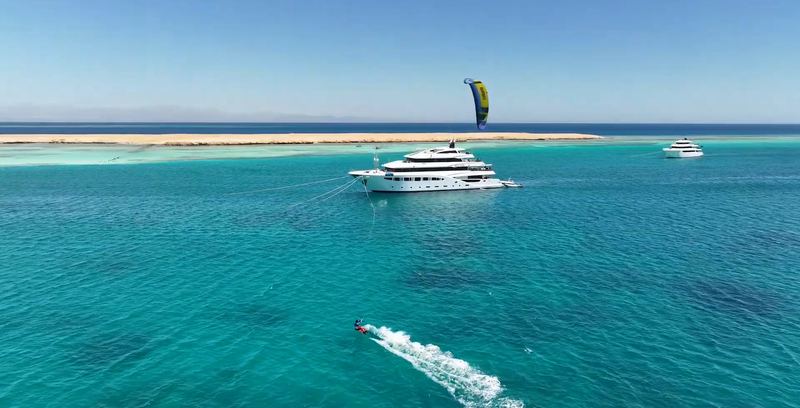
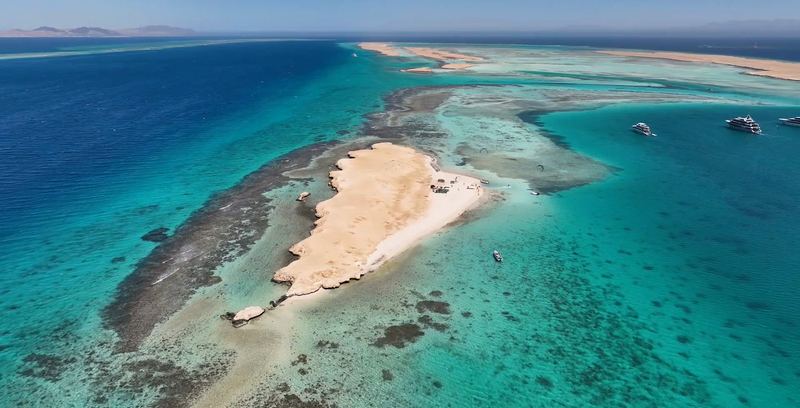
Shallow water is not foil territory. The mast needs room below the board, and even a short mast does not automatically make a shallow lagoon suitable for foiling. The Paradise kite centre near Hurghada describes a wide shallow lagoon with deep water at its edge for the hydrofoil, and the safari islands are mostly shallow, sandy-bottomed lagoons. Geisum, one of the spots on the Red Sea kite safari, has both shallow and deeper water according to the organiser.
When foiling makes sense
Foiling is worth considering if you want to ride in light wind, cover distance upwind efficiently, or race. Learning it takes more patience, and the reward is a completely different sensation on the water.
Beginners do better with a larger front wing and a shorter mast, and it helps to treat the first sessions as learning a new skill rather than an upgrade. Once you can fly steadily, the light wind days that used to be lost become rideable - which is exactly what the light wind sessions guide is about.
Questions
What is kite foiling?
It is kitesurfing with a hydrofoil mounted under the board. The wing generates lift as speed builds and raises the board out of the water, so you ride above the surface instead of through it.
Is a foil kite the same as a kite foil?
No. A foil kite is a kite made of fabric with air cells. A kite foil is the hydrofoil under the board. Foiling means riding that hydrofoil, and you can do it with an inflatable kite or a foil kite.
How much wind do I need for kite foiling?
Foiling works in very light wind, often 5-8 knots (3-4 m/s). The foil cuts water resistance, so the kite does not need to pull hard to get you going.
When should I start foiling?
After you can ride independently and go upwind. Foil lessons generally require solid board control and upwind riding before you add the foil.
Is kite foiling dangerous?
The wings are sharp and hitting the mast can cause serious injury, especially at higher speed, and on a foil you often ride faster than usual. A helmet, impact vest and long wetsuit are standard, and you need enough depth for the whole setup.
What is Formula Kite?
It is the high-performance racing class using a foil kite and a board with a hydrofoil. World Sailing selected it for the Olympic Games, and the IOC confirmed men's and women's kiteboarding for Paris 2024.
Sources and fact checks (10)
- Kite foil consists of mast, front wing, rear stabilizer and fuselage; the wing lifts the board out of the water as speed builds; standard mast 75-90 cm, around 60 cm for beginners; often 5-8 knots; helmet, long wetsuit and impact vest. www.kitemana.com (checked 25 October 2026)
- Foiling lets the board leave the water entirely and works in much less wind. en.wikipedia.org (checked 25 October 2026)
- Foilboards are directional with the mast at the tail, ridden with two, three or no straps. www.duotonesports.com (checked 25 October 2026)
- Formula Kite is the class selected by World Sailing for the Olympic Games 2024, using a foil kite and a board with a hydrofoil. en.wikipedia.org (checked 25 October 2026)
- The IOC executive board confirmed men's and women's kiteboarding (Formula Kite) for Paris 2024 on 10 June 2021. sailing.org (checked 25 October 2026)
- Formula Kite is a high-performance racing class of hydrofoil kites. www.sailing.org (checked 25 October 2026)
- The Kitesurf Centre requires confident independent riding and upwind ability for its foil lessons (requirements differ between schools). www.thekitesurfcentre.com (checked 25 October 2026)
- Water depth should be at least mast length plus 50 cm on entry and exit to avoid underwater obstacles. ridecore.com (checked 25 October 2026)
- Follow the foil manual, allow depth for the whole setup, check surroundings and keep distance from others; hitting the bottom causes falls and injuries. a.storyblok.com (checked 25 October 2026)
- According to the organiser Geisum has shallow and deeper water; the safari islands are mostly shallow sandy lagoons. paradisekitesurf.cz (checked 25 October 2026)