Best place to learn kiteboarding: spots with shallow water
Shallow water lets you stand during a lesson, with an instructor close by. For a first course, I'd look for flat water, plenty of space and a school that adapts lessons to the day's conditions.
The best place to learn kiteboarding depends on the school and the conditions in its teaching area. I'd look for flat water, plenty of space and somewhere you can stand. Deep water is also an option for lessons, with more opportunities to practise moving through the water with the kite and recovering your board.
If you're nervous in the water, being able to stand next to your instructor can help. You still need guidance: the location and lesson plan have to suit your ability and the wind that day.
I've ridden at Wiek, on Lake Neusiedl and in Hurghada myself; the other places I know from checked spot guides and wind statistics. You'll find more spots on the kite spot map and destinations sorted by level in Best kitesurfing spots in the world by level.
What makes a good spot for beginners
Waist-deep water and sand underfoot
In waist-deep water, your instructor can stand beside you and respond straight away. You start with kite control, then learn body dragging: using the kite's pull to move through the water, including to recover a lost board. Waterstarts, getting out of the water and onto the board, follow from there. Check the bottom too, and have the instructor show you the teaching area; standing depth alone doesn't make it suitable.
Wind at an angle to the beach
For a first course, I'd look for wind at an angle onto the beach (side-onshore) and clear space downwind. Offshore wind can carry you away from shore if you get into trouble. Direct onshore wind pushes you towards the beach and obstacles. Start under continuous instructor supervision, in a teaching area the school has assessed for the day's conditions. Having a rescue boat does not replace that assessment.
Steady wind and space around you
Gusty wind is unpleasant at the start: the kite jerks around and you can't tell why. Kiters measure wind in knots; 1 knot is about 0.51 m/s. Space matters just as much. On a crowded lagoon you spend a lot of your time getting out of other people's way.
The school matters as much as the spot
Before paying, I'd want to know how many students learn at the same time, how many kites are flying and how much instructor time I get. Group size alone doesn't tell you much about the lesson. A good course also teaches you to read the wind and handle a bad situation, including self rescue: getting yourself and your kite safely back to shore when you can't ride any more. A quick course that gets you up on the board but leaves you lost when something goes wrong isn't enough, in my view. Compare the syllabus with the skills you need when learning to kitesurf.
7 shallow water spots for your first course
| Spot | Water | What matters during lessons |
|---|---|---|
| Wiek, Rügen | standing area up to 450 m out | separate entry points for kiters and windsurfers, wetsuit |
| Lake Neusiedl | shallow lake with changing water levels | depth in the specific teaching area |
| Lo Stagnone, Sicily | shallow flat lagoon | soft muddy bottom, nature reserve |
| Dakhla, Morocco | standing areas vary with location and tide | lesson timing around tides, wetsuit |
| Le Morne, Mauritius | huge shallow lagoon | coral, booties, busy beach |
| Cape Hatteras, USA | shallow Pamlico Sound | powerlines near the road, wetsuit to suit the season |
| Hurghada and El Gouna | flat shallow lagoon at the Paradise centre | deeper water at the lagoon's edge |
Close to central Europe: Rügen and Lake Neusiedl
Wiek on Rügen
Wiek sits on the Wieker Bodden bay, where you can stand up to 450 m from the shore. Kiters and windsurfers each have their own entry point, about 150 m apart. I keep going back, in March, June and September. In June 2025, a good forecast was enough to get me heading up there again.
The Baltic is cold even in summer, so plan on a wetsuit. Before a kitesurfing course on Rügen, I'd have the school confirm the teaching spot based on the wind direction.
Lake Neusiedl
Lake Neusiedl is shallow, but its water level fluctuates naturally. What matters for a course is the current depth in the teaching area; a lake-wide average won't tell you that. I ride there too. Beginner courses are available at the school on Nordstrand in Podersdorf, for example. Before heading out on your own, have the school show you the teaching area and where kiting is allowed.
Further afield: Sicily, Morocco, Mauritius and the USA
Lo Stagnone near Marsala
Stagnone is a shallow lagoon in a nature reserve, with flat water and a soft muddy bottom. When choosing where to learn kitesurfing at Lo Stagnone, I'd look closely at the teaching area outside the school, where it can get crowded. Spring and autumn tend to bring stronger, more reliable wind, while summer brings regular thermal wind as the lagoon heats up. For a first course, I wouldn't choose dates just for the strongest wind.
Dakhla
Standing areas in the Dakhla lagoon vary with the tide and the teaching location. Ask the school where you'll be able to stand and how the water level changes during a lesson. The airport weather station recorded an average of 16 knots (8 m/s) between 2004 and 2026, mostly from the north-northeast; that's a long-term airport figure, not a forecast for your lesson. When planning kitesurfing in Morocco, allow for the cooler Atlantic water too: from November to April, the lagoon is around 17-19 °C and local school KBC recommends a 3/2 mm wetsuit. The water is warmer from May to October.
Le Morne in Mauritius
Below Le Morne mountain there is a huge shallow lagoon with flat water. There's coral underfoot, though, so I'd pack booties. Local operator ION CLUB recommends June to November. For your first kitesurfing trip to Mauritius, I'd also look at how much space you'll have during lessons, as the main beach gets busy.
Cape Hatteras
On Hatteras Island in North Carolina you ride on the Pamlico Sound side, where the water is shallow and there are plenty of schools. The National Park Service recommends spring and fall and warns about powerlines near the road, so don't launch anywhere near the wires. A spring or autumn trip doesn't guarantee warm swimming water: plan on a wetsuit, with the thickness suited to the month and water temperature.
Egypt: the Hurghada lagoon and the safari islands
Hurghada and El Gouna
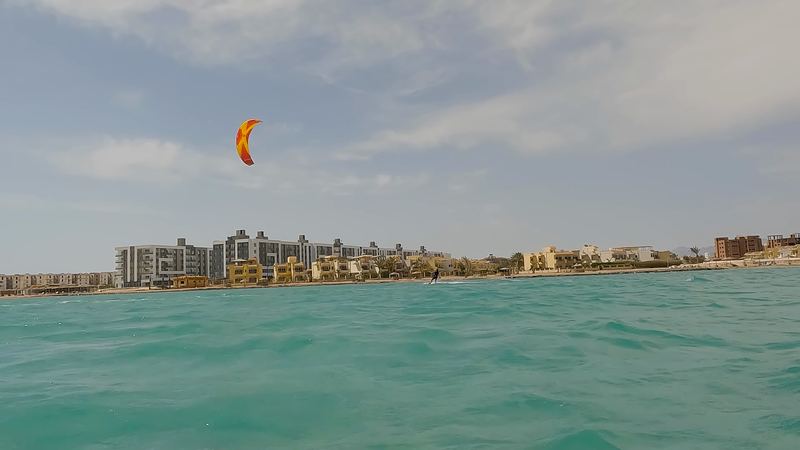
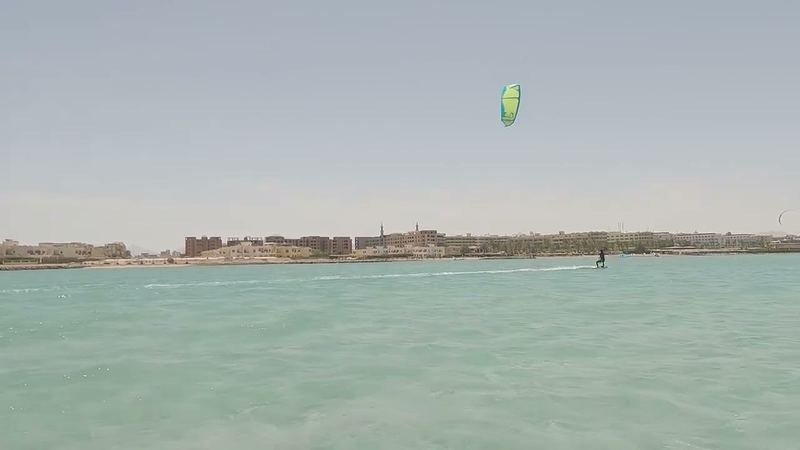
The kite centre I know sits between Hurghada and El Gouna: a wide, flat, shallow lagoon with a sandy bottom, steady wind and a beach that isn't crowded. There's deeper water at the edge of the lagoon, and that's not where a beginner should be. I kited in Hurghada in April 2023. According to NASA's climate model, the area gets the most wind from June to September, mostly from the northwest.
Can you learn to kitesurf on a kite safari?
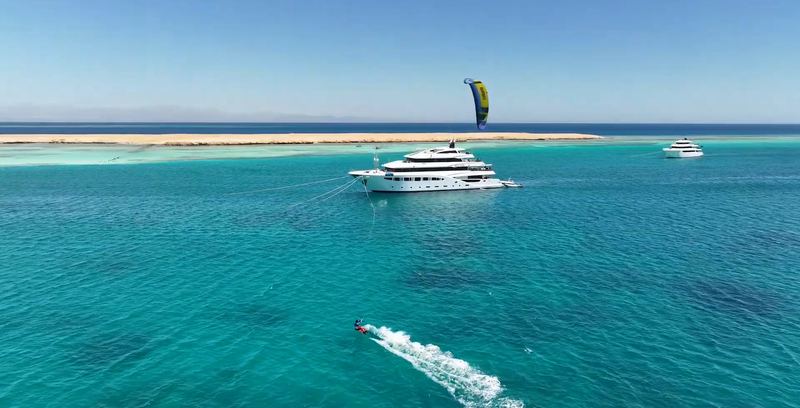
Yes, as long as you know what you're signing up for. On the Red Sea kite safari you can book a beginner course for €600 for 6 days including gear. If you already have a few hours behind you, there's a 3-hour refresher for €180.
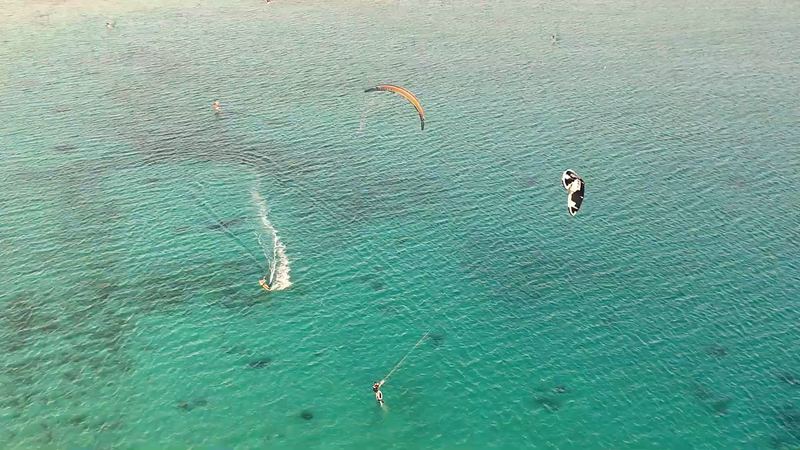
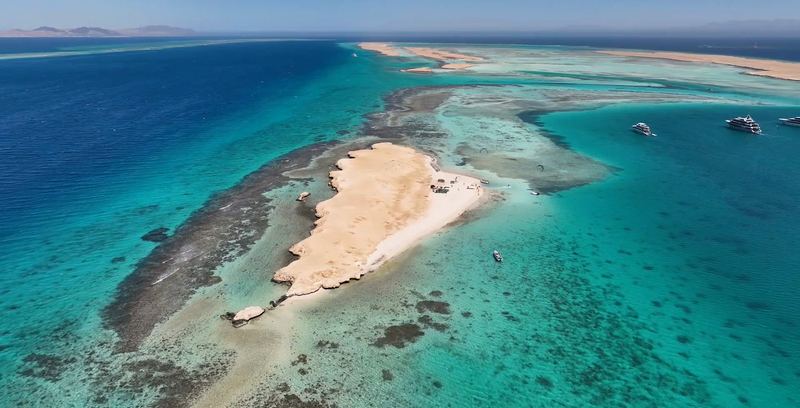
At Tawila the water is shallow with a sandy bottom and wind typically around 15-25 knots (8-13 m/s). Visits require prior arrangement and an entry fee, so don't assume it will be on your route. Abu Minqar has shallow, calm water suitable for beginner lessons too. The safari has a rescue boat, and the beach boys, the crew on the beach, help you launch and land. As a beginner, book a course and follow your instructor's guidance.
On our April 2024 safari, 8 people were starting out. We began with 2 days on Geisum devoted to their lessons: day 1 was hard work, and halfway through day 2 everyone was riding. That worked out well on that trip, but don't plan your own progress around the same timetable. Conditions, instruction and what you bring to the course all matter.
A safari gives the most to people who can already ride on their own after a course. If you're starting from zero, ask beforehand how many other beginners will be on the boat, so you're not the only one in the course.
What to ask a school before you pay
- How deep is the water where they teach, at high and at low tide?
- How many students and kites will be on the water at once, how do students take turns, and how much instructor time will you get?
- Is there a boat on the water to pick you up if you drift off?
- Does the course cover right of way, self rescue and using the quick release? When it works correctly, this safety release greatly reduces the kite's pull, but it may not remove it entirely. Your instructor needs to practise its use with you, including what to do if the kite keeps pulling or the system fails.
- What happens on days with no wind?
Questions
Where is the best place to learn kitesurfing?
For a first course, I'd choose a school offering supervised lessons, flat water and plenty of space. Shallow water can make the start easier, but the school needs to assess the teaching area for the day's conditions; options near central Europe include Wiek on Rügen and Lake Neusiedl.
Why learn kitesurfing in shallow water?
Being able to stand can help you feel more confident and make it easier to talk to your instructor. You still need to learn kite control and body dragging, using the kite's pull to move through the water and recover your board.
Can you learn to kitesurf on a kite safari?
Yes. On the Red Sea safari a beginner course costs €600 for 6 days including gear, and lessons happen in shallow lagoons with a rescue boat. A safari still gives the most to people who can already ride on their own after a course.
What wind is best for beginners?
Look for steady wind without big gusts, blowing at an angle onto the beach (side-onshore), and let your instructor assess the conditions. Offshore wind can carry you out to sea; a rescue boat alone does not make a spot suitable for lessons. Direct onshore wind pushes you towards the beach and obstacles.
Sources
- Wiek: separate entry areas for kiters and windsurfers about 150 m apart, standing area reaching out 450 m, suitable for all levels www.visit-mv.com (checked 18 October 2026)
- Lake Neusiedl is a shallow steppe lake with natural water-level fluctuations www.nationalparkneusiedlersee.at (checked 18 October 2026)
- Podersdorf am See: Kiteriders on Nordstrand offers beginner courses progressing from kite control through body dragging to waterstarts www.kiteriders.at (checked 18 October 2026)
- Lo Stagnone: flat water and soft muddy bottom, stronger and more reliable wind in spring and autumn, regular summer thermal wind www.prokitealbyrondina.com (checked 18 October 2026)
- Stagnone: shallow lagoon within a nature reserve orbs.regione.sicilia.it (checked 18 October 2026)
- Dakhla: standing areas vary with location and tide; KBC describes standing water at high tide too; November to April water 17-19 °C and recommended 3/2 mm wetsuit, warmer water May to October www.kiteboarding-club.com (checked 18 October 2026)
- Dakhla Airport: average wind 16 knots (8 m/s) from NNE (observations 6/2004 to 9/2026) www.windfinder.com (checked 18 October 2026)
- Le Morne: huge shallow flat lagoon good for beginners, coral underfoot (wear booties), best months June to November, main beach gets busy www.iksurfmag.com (checked 18 October 2026)
- Cape Hatteras: shallow soundside water, local businesses give lessons to beginners, best kiteboarding weather in spring and fall, watch out for powerlines near the road www.nps.gov (checked 18 October 2026)
- The shallow Albemarle and Pamlico Sounds offer world-class learning conditions www.outerbanks.org (checked 18 October 2026)
- Cape Hatteras: spring and autumn equipment needs change with water temperature, with a full wetsuit needed as autumn cools down www.realwatersports.com (checked 18 October 2026)
- Paradise kite centre between Hurghada and El Gouna: flat shallow water, steady wind, not crowded; wide shallow sandy lagoon with deeper water at the edge paradisekitesurf.cz (checked 18 October 2026)
- Kite safari: beginner course €600 (6 days including gear), refresher 3 h €180, rescue boat and beach boys included; Tawila shallow water, sandy bottom, wind 15-25 knots (8-13 m/s), visits by prior arrangement with an entry fee; Abu Mungar shallow calm water good for beginners; Geisum shallow and deeper water paradisekitesurf.cz (checked 18 October 2026)
- Hurghada area: windiest June to September according to the model, wind mostly from the northwest power.larc.nasa.gov (checked 18 October 2026)
- Shallow and deep water each have learning benefits; kite control, body dragging and board recovery are part of learning www.ikointl.com (checked 18 October 2026)
- Safety requires lessons, checking conditions and tides, and staying within the rider's abilities rnli.org (checked 18 October 2026)
- Offshore wind carries riders out to sea, direct onshore wind quickly pushes riders onto the beach; clear space without obstacles is needed www.thekitesurfandsup.co (checked 18 October 2026)
- A quick release with a correctly functioning safety system removes most of the kite's pull, but complete depowering is not guaranteed www.ikointl.com (checked 18 October 2026)
- A kite may keep pulling after the quick release is activated; the safety system also includes emergency leash release www.duotonesports.com (checked 18 October 2026)
- Group lesson arrangements involve both student numbers and the number of shared kites www.ikointl.com (checked 18 October 2026)
- Le Morne: recommended period June to November www.ion-club.net (checked 18 October 2026)
- Wind speed conversion between knots and m/s www.windfinder.com (checked 18 October 2026)