Spot kitesurf beaches that suit your level
There is no single best spot. What matters is whether you need shallow water for supervised practice, steady wind to progress, or waves and strong wind.
Spot kitesurf beaches that suit your level by checking the water, wind and launch first. For supervised practice, look for shallow flat water and wind blowing towards the beach at an angle. Once you ride independently, steady wind and room on the water matter most. Save waves, strong wind and downwinders, longer rides from place to place with the wind, for when you feel confident.
There's a Kite Beach on Sal in Cape Verde and another in Cape Town, and they couldn't be more different. On Sal it's where most schools teach. In Cape Town, Kite Beach is one of the flatter spots, but the wind blows 20-40 knots (10-21 m/s) and the water is cold enough for a 4-5 mm wetsuit.
How to tell if a kite spot suits your level
I look at 4 things at every spot. They're small details, but they decide whether you have a great session or spend an hour fighting the conditions.
- Water depth. Where you can stand, you can get up after a crash, grab your board and relaunch the kite calmly.
- Wind direction relative to the shore. Onshore blows straight at the beach, offshore blows from the beach out to sea, side-onshore blows at an angle towards the beach. To start with, you want side-onshore or wind along the shore: if something goes wrong, it won't carry you out to sea. In offshore wind, only ride with a boat already on the water, a trained rescue driver and someone on shore keeping track of you.
- Wind strength and consistency. For progression, moderate wind almost every day beats strong wind 2 times a week. 1 knot is about 0.51 m/s.
- What's in and around the water. Coral, reef, rocks, current in a channel, a packed beach. Launching and crashing are both harder on a crowded spot.
Overview: where to go by level and month
These are broad groups, separate from IKO certification: 1 = lessons or supervised practice. 2 = you ride independently in both directions and return upwind. 3 = you ride confidently and are learning jumps and tricks. 4 = you have experience with waves, strong wind, reefs or long downwinders.
| Place | Level | Recommended season | Watch out for |
|---|---|---|---|
| Egypt: Hurghada, El Gouna | 1-3 | all year, strongest June to September | lighter wind November to February |
| Morocco: Dakhla | 1-3, waves 4 | April to September | more chop on the lagoon at high tide |
| Vietnam: Mui Ne | 1 with an instructor, 2-3 | roughly November to April | ocean chop and shorebreak |
| Brazil: Prea, Jericoacoara | 2-4 | July to January | lagoons change with the tide |
| Caribbean: Aruba, Bonaire | 2-3 | Aruba February to July, Bonaire January to July | Fisherman’s Huts and Atlantis: offshore, rescue essential |
| Cape Verde: Sal | 2-4 | late October into spring | Ponta Preta is for experienced riders only |
| Mauritius: Le Morne | 2-4 | June to November | coral in the lagoon, One Eye for experts only |
| Canary Islands: Fuerteventura, Sotavento | 2-3 | spring and summer | tidal lagoon; Risco del Paso: offshore, rescue essential |
| South Africa: Cape Town | 3-4 | December to February | 20-40 knots (10-21 m/s), cold water |
Long-term statistics and local guides help you choose a season. Monthly averages cannot tell you how many days will suit your equipment or guarantee wind every day of your trip. Check the forecast for the actual spot before travelling.
Level 1: lessons and supervised practice
After a course, I would ask an instructor to check what I can safely manage on my own. Independent riding requires speed control, returning upwind, using the safety systems and self-rescue, including packing down your equipment in deep water. Keep practising under supervision until those skills are secure. A shallow lagoon helps with practice; Mui Ne adds shorebreak to the challenge.
Egypt: the lagoons around Hurghada and El Gouna
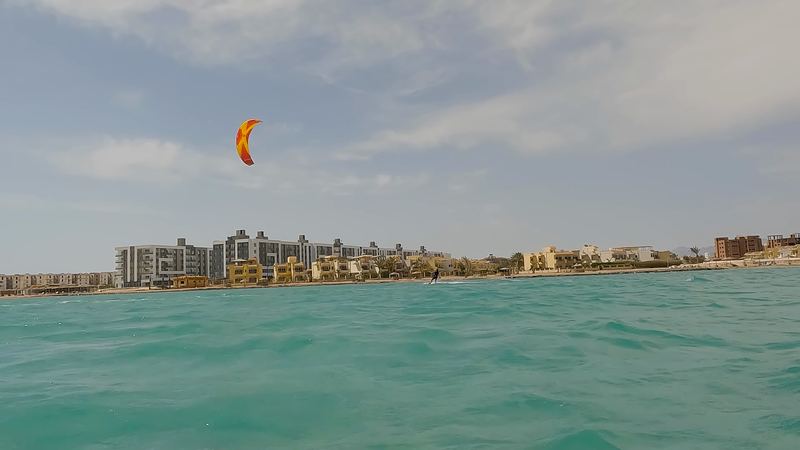
For more lessons around Hurghada and El Gouna, I would look for a shallow lagoon with a kite station on shore. The safari organiser’s centre between the towns has flat, shallow water over sand. NASA’s model shows the strongest wind around Hurghada from June to September and the lightest from November to February, mainly from the northwest. Allow for lighter days on a winter trip.
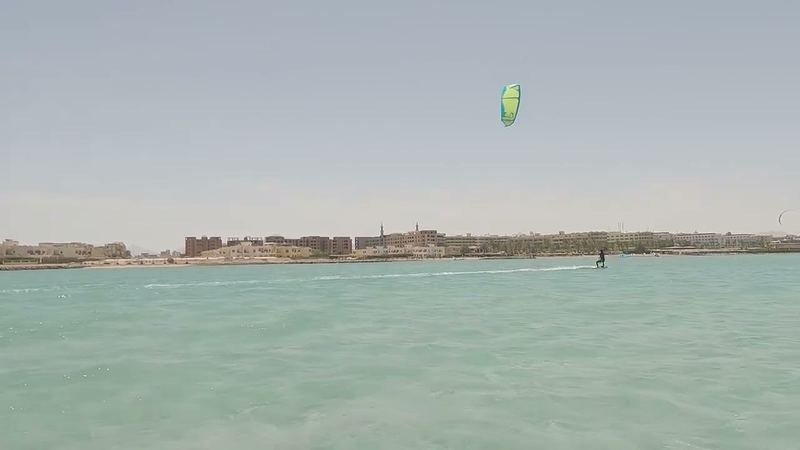
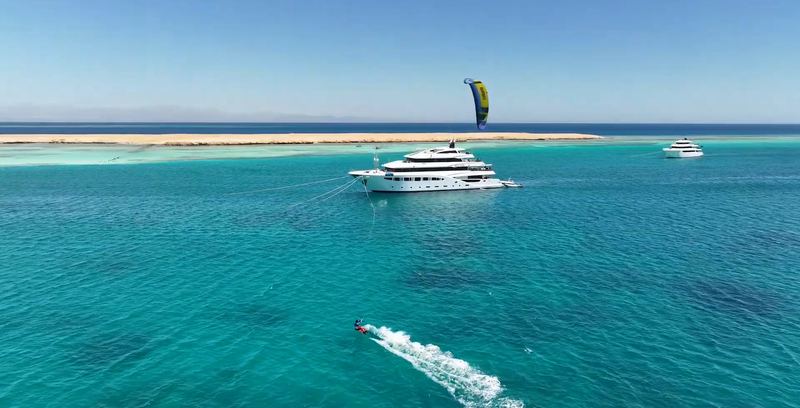
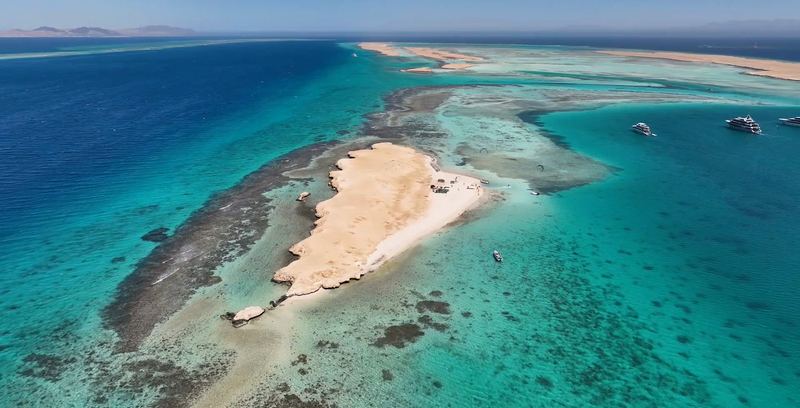
I've been on the Red Sea kite safari several times. The boat heads to whichever island suits the wind each day, and according to the organiser Tawila gets a steady 15-25 knots (8-13 m/s) over shallow water with a sandy bottom. Visiting Tawila requires advance arrangements and a paid entry. In April 2024 we brought 8 beginners along. We spent the first 2 days on Geisum, and by the middle of the 2nd day all of them were riding. Don't take that as a promise: it depends on the wind, the instructor and how much you've done before.
Morocco: the Dakhla lagoon
In Dakhla I would start by the camps at the northern end of the lagoon. The water is flatter at low tide and gets choppier as the tide rises. The wind usually runs along the shore from the northeast by the camps; nearby Speed Spot has offshore wind, so let your instructor choose the launch. April to September is the windiest period, with airport averages of 16-21 knots (8-11 m/s).
Vietnam: Mui Ne
Mui Ne is an ocean spot with chop and shorebreak. The main season is roughly November to April, with wind usually cross-shore to cross-onshore on the main beach. As a beginner, I would go with an instructor who can choose suitable conditions and help you get beyond the breakers. If shallow flat water is your priority, I would choose another spot.
For more shallow-water spots, including some in Europe, see my guide to the best places to learn kitesurfing.
Levels 2 and 3: you ride on your own and want to progress
If you only ride a few days a season at home, I would look for somewhere with more chances to practise and room to try new things. Alongside the season, check the actual beach, wind direction and rescue arrangements.
Brazil: Prea and Jericoacoara
The main season runs from July to January, and the beaches at Prea see 16-35 knots (8-18 m/s). Older station observations from Jericoacoara in 2005-2015 averaged roughly 12-15 knots (6-8 m/s) from August to December but only 6-7 knots (3.1-3.6 m/s) from April to June, so I wouldn't go in those months. The flat lagoons change with the tide: Barra Grande is best at low tide, Guriu at medium to higher tide. There is a short downwinder from Prea to Jericoacoara. Landing by the dune in Jeri means dealing with offshore wind; arrange an earlier exit if you are not confident in those conditions. More in my guide to kitesurfing in Brazil.
Caribbean: Aruba and Bonaire
On Aruba, choose the beach carefully: Fisherman’s Huts has shallow flat water but offshore wind; Boca Grandi has small waves and onshore wind. On Bonaire, Atlantis Beach offers flat water with offshore wind. I would only ride an offshore spot with active rescue arranged beforehand and help launching. Kiteboarding Bonaire says its rescue boat is on the water for every session. Airport statistics help with seasonal planning: Aruba averages roughly 17-18 knots (8.7-9.3 m/s) from February to July; October and November are lighter on both islands. Explore more options in kitesurfing in the Caribbean.
Cape Verde: Sal
Sal’s usual season runs from late October into spring. The airport’s highest monthly averages fall between January and May, at roughly 15 knots (7.7 m/s). The main beach, Kite Beach, mixes flatter water with waves, the wind comes cross-on from the left, and most schools teach there. Bring a full-length wetsuit, especially for longer sessions.
Mauritius: the Le Morne lagoon
I would aim for June to November, when the trade winds tend to be most consistent. The southeast trade wind runs cross-shore from the left along the main beach, and behind it lies a huge shallow lagoon with flat water for cruising and practising tricks. Wear booties, as there's coral underfoot in places.
Fuerteventura: Sotavento
Sotavento is usually windiest in spring and summer, with gusts as the terrain accelerates the wind. Plan separately for the lagoon and the open sea. The lagoon fills over several days around the new and full moon; check the date, time and estimated depth in René Egli’s lagoon calendar before booking. The sea off Risco del Paso has offshore wind. I would only go out with active rescue arranged beforehand.
Level 4: waves, strong wind and downwinders
In Cape Town the season runs from December to February, and November and March are often good too. The Cape Doctor blows 20-40 knots (10-21 m/s), builds from around 10 am, and you'll want a 4-5 mm wetsuit even in summer. Pro rider Sam Light says the cold, dense wind gives you the biggest jumps of your life, and adds straight away that it's not the easiest place for beginners.
One Eye at Le Morne breaks over a shallow, sharp reef, often reaching 3 times a rider’s height. It is for expert wave riders in suitable conditions at high tide; get a local briefing on access and conditions first. The wind blows diagonally offshore, so active rescue is essential too. Ponta Preta on Sal also demands experience, with the wave closing near rocks. In Dakhla, Oum El Bouir gets its biggest waves in winter.
Europe and spots closer to home
Besides Egypt, I ride at Wiek on Rügen, on Neusiedler See in Austria and on Bärwalder See in Saxony, and I've done a kite trip to Sicily. Europe has shorter travel and a summer season going for it. For a shorter trip, explore the best kite spots in Europe.
On the kite spot map you can browse spots all over the world, including El Gouna, Le Morne and Cape Town, and see what else is nearby.
Questions
Where is the best kitesurfing spot in the world for beginners?
I would start with shallow water and an instructor, for example around Hurghada and El Gouna or in Dakhla. Have the school choose the launch for the day’s wind and conditions; the wind usually runs along the shore by Dakhla’s camps but blows offshore at Speed Spot.
Where can I kitesurf in winter?
Egypt, where it blows all year; Sal in Cape Verde (usual season from late October into spring); Brazil (season July to January); Mui Ne in Vietnam (roughly November to April); or Cape Town (December to February, for experienced riders only).
Where can I kitesurf in summer?
Dakhla in Morocco (windiest April to September), Mauritius (June to November), Fuerteventura (spring and summer) or Egypt, where NASA's model shows the windiest months around Hurghada are June to September.
What is Kite Beach?
It's the usual name for the main kitesurfing beach in a destination. There's a Kite Beach on Sal in Cape Verde, where most schools teach, and one in Cape Town, where the wind blows 20-40 knots (10-21 m/s) and the water is cold. The name tells you nothing about whether the beach suits your level.
Sources
- Independent riding: speed control, riding upwind, self-rescue and packing down in deep water www.ikointl.com (checked 18 October 2026)
- IKO: practising safety systems and self-rescue with an instructor; offshore requires a boat on the water, a trained driver and someone on shore aware of the rider d8.ikointl.com (checked 18 October 2026)
- Aruba: Fisherman’s Huts has shallow flat water and offshore wind; Boca Grandi has small waves and onshore wind www.aruba.com (checked 18 October 2026)
- Bonaire, Atlantis Beach: flat water and offshore wind www.kiteboardingbonaire.com (checked 18 October 2026)
- Kiteboarding Bonaire: rescue boat on the water every session www.kiteboardingbonaire.com (checked 18 October 2026)
- Sotavento, Risco del Paso: north to northwest wind, offshore www.ion-club.net (checked 18 October 2026)
- Sotavento lagoon fills around new and full moon, with dates, times and estimated depths in the operator’s calendar www.rene-egli.com (checked 18 October 2026)
- The 2026 lagoon calendar shows windows lasting several days with daily times and estimated depths www.rene-egli.com (checked 18 October 2026)
- El Gouna Kiteboarding Club station, observations 5/2006-9/2026: average wind 10-14 knots (5-7 m/s) in every month, dominant direction NNW to NW www.windfinder.com (checked 18 October 2026)
- NASA POWER wind climatology at 10 m for Hurghada: strongest June to September (August 7.36 m/s (14.3 knots)), weakest November to February; prevailing direction 316-323° (northwest) power.larc.nasa.gov (checked 18 October 2026)
- Paradise kite centre between Hurghada and El Gouna: shallow sandy lagoon, side-onshore wind and lessons with instructors paradisekitesurf.cz (checked 18 October 2026)
- Kite safari: 8 days / 7 nights, the boat heads to islands according to the wind every day; Tawila: steady 15-25 knots (8-13 m/s), shallow water, sandy bottom, for beginners and advanced riders; Tawila requires advance arrangements and paid entry paradisekitesurf.cz (checked 18 October 2026)
- Dakhla: windiest months April to September, side-shore northeasterly wind by the camps, offshore at Speed Spot, lighter in the morning, picking up around 2 pm; lagoon flat at low tide, choppier at high tide; Oum El Bouir wave spot mainly in winter www.iksurfmag.com (checked 18 October 2026)
- Dakhla airport, observations 6/2004-9/2026: average wind 16-21 knots (8-11 m/s) April to September, 12-14 knots (6-7 m/s) October to January www.windfinder.com (checked 18 October 2026)
- The Bahia de Dakhla is a flat lagoon protected by a peninsula visitmorocco.com (checked 18 October 2026)
- Mui Ne: main season roughly November to April; main beach cross-shore to cross-onshore, chop and shorebreak; lessons take place beyond the breakers www.surfpoint-vietnam.com (checked 18 October 2026)
- Jericoacoara and Prea: prime season July to January, 16-35 knots (8-18 m/s) on the beaches of Prea; lagoons Barra Grande (best at low tide), Guriu (medium to higher tide), Tatajuba; short downwinder from Prea to Jericoacoara, landing by the Jeri dune is offshore and not beginner friendly, an earlier exit is possible www.mackiteboarding.com (checked 18 October 2026)
- Jericoacoara, observations 4/2005-5/2015: average wind roughly 12-15 knots (6-8 m/s) August to December, 6-7 knots (3.1-3.6 m/s) April to June, easterly www.windfinder.com (checked 18 October 2026)
- Aruba airport, observations 10/2001-9/2026: average wind roughly 17-18 knots (8.7-9.3 m/s) February to July, 12 knots (6.2 m/s) in October and November, easterly all year www.windfinder.com (checked 18 October 2026)
- Bonaire airport, observations 11/2000-9/2026: average wind 14-16 knots (7-8 m/s) January to July, 11-12 knots (5.7-6.2 m/s) in October and November, easterly all year www.windfinder.com (checked 18 October 2026)
- Sal: usual season late October to April; Kite Beach: cross-on from the left, mix of flatter water and waves, most schools teach there; Ponta Preta advanced, the wave closes near rocks; full-length wetsuit recommended www.iksurfmag.com (checked 18 October 2026)
- Sal, Amilcar Cabral airport, observations 11/2000-9/2026: highest monthly averages roughly 15 knots (7.7 m/s) January to May, 11 knots (5.7 m/s) in July and August www.windfinder.com (checked 18 October 2026)
- Le Morne: best months June to November, most consistent trades then, windless days still possible; southeast trades cross-shore from the left on the main beach; huge shallow flat lagoon, booties because of coral; One Eye: shallow reef, often 3 times a rider’s height, experts only www.iksurfmag.com (checked 18 October 2026)
- One Eye: experts only, razor-sharp shallow reef, cross-offshore wind, access via Grand Pass or a smaller channel, riding should only be attempted at high tide web.kite-and-windsurfing-guide.com (checked 18 October 2026)
- Sotavento (Fuerteventura): best in spring and summer, Venturi effect makes the wind strong and gusty www.fuerteventuraplayas.com (checked 18 October 2026)
- Cape Town: season December to February, November and March often excellent; Cape Doctor 20-40 knots (10-21 m/s), building from about 10 am; cool water, 4-5 mm wetsuit; Kite Beach and Dolphin Beach flatter www.iksurfmag.com (checked 18 October 2026)
- Sam Light: in Cape Town the cold dense wind gives the biggest jumps and kiteloops, not the easiest place for beginners; Brazil September to December, lagoons and wave downwinders www.youtube.com (checked 18 October 2026)