Kiteboard splitboard: water travel board or snowkite gear?
Start snowkiting with skis or a snowboard you already ride well. Choose your kite size with an instructor, allowing for the model, wind, snow and your experience.
Searching for a kiteboard splitboard? A snow splitboard helps you climb in the mountains; a split kiteboard packs down for a trip to the sea. For an ordinary snowkite field, you can use regular skis or a snowboard.
The kite control you learned on your water course carries over. On snow there are no waves or waterstarts, but you have terrain to read and a different way to stop. I'd choose my first winter setup with an instructor at the spot where I planned to ride.
Skis or snowboard
You don't need the best skis or a new board. You need to be able to stop and turn on them; if you can ride both, these are the differences that matter:
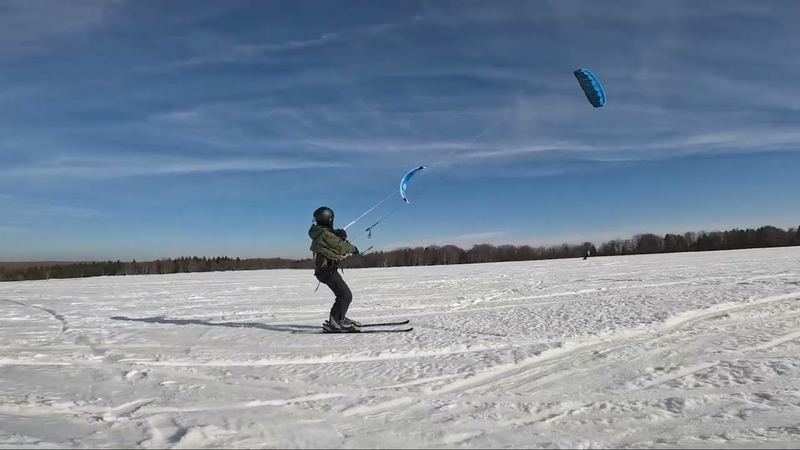
- Skis let each foot move on its own. In gusty, light wind that gives you more control and leaves more attention for the kite. Starting and stopping are easier, which is why most beginners find skis the gentler way in. Once you're riding confidently, shorter twin tip park skis (turned up at both ends, so you can ride backwards) help, but you don't need them to start.
- A snowboard feels closer to a twintip, the two-way board you learned on in the water. The stance and footwork are similar and carry over to spring. The difference is weight distribution: on a snowboard you need much more pressure on your front foot to hold an edge. Easy-entry bindings are worth having if you've ever strapped in with gloves on in the middle of a windy plateau.
Splitboard or split kiteboard
When choosing a board, check which surface it is designed for.
A splitboard for snow is a snowboard that splits lengthways into 2 halves. You stick climbing skins on them and walk uphill like on touring skis. You also need compatible splitboard bindings with touring and riding modes. At the top, join the halves and switch the bindings to ride mode. For snowkiting it makes sense where you have to hike to the wind: ridges and high plateaus with no road. If you can walk to the spot from the car park, you don't need one.
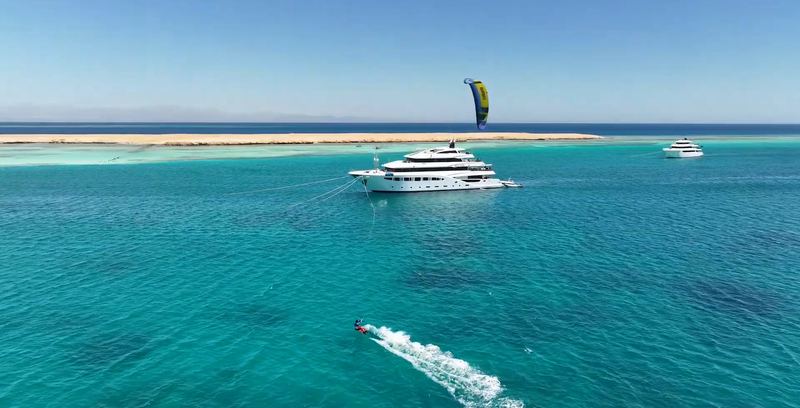
A split kiteboard is a water twintip that comes apart and fits in a travel bag. The Flysurfer Trip3, for example, has 3 pieces and is built for travel and freeride, for riders who fly to the wind with limited luggage. If you're flying to the sea, you can also just rent a twintip: on the Red Sea kite safari a twintip costs €60 for 6 days on the 2026 price list.
Which kite for snow: foil or inflatable
You can ride on snow with a foil kite or with an inflatable like the one you had on your course. But foils include fixed-bridle trainers without depower, depower kites for riding, and lightweight single skins without a lower sail. Before buying, check the model's intended use and its control and safety system.
| Foil kite | Inflatable kite | |
|---|---|---|
| Setup | no pump, unpack and check lines | inflate and check lines |
| Packed | usually compact, especially single skins | allow room for a pump too |
| Gusts and lulls | stability depends on design and conditions; can collapse | retains its inflated shape but can still fall |
| Depower | model dependent: fixed-bridle trainer or depower kite | range depends on the model |
| Risk on snow | check the canopy and bridle | a stick in thin snow can puncture the bladder |
| After a crash | relaunch depends on model and system; some allow reverse launch | relaunch depends on model, surface and wind |
| On water | open cell no (fills with water), water-relaunchable models yes | yes |
Depower means you can reduce the kite's pull by pushing the bar away. A kite without depower doesn't let you reduce pull this way, but its pull still changes with wind and kite movement. Don't treat a small trainer foil as a scaled-down depower snowkite. Practise releasing power and relaunching with an instructor using the specific system.
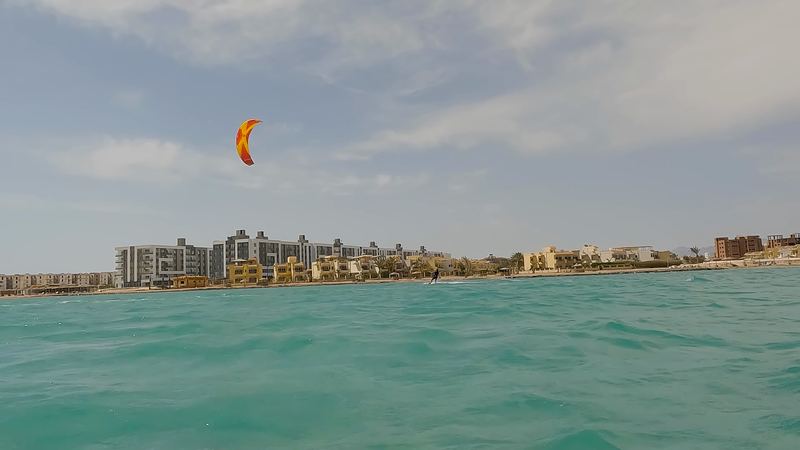
On snow I fly a Kitech FreeRS 12 m² foil kite, and I've also ridden the same kite on the water in Hurghada. Kitech builds the FreeRS for kitesurfing, snow, land and buggies. On land I fly a Flysurfer Peak. It's a single skin foil, with no bottom sail, built for mountains and snow; Flysurfer specifies limited water relaunch for the current PEAK6. There's more on both types in Inflatable vs foil kites, and on Kitech in Kitech kites: FreeRS and Magus.
If you're buying your first kite and can't decide between snow and water, buy an inflatable water kite. It works in winter and summer, and you already know how it flies from your course. Try a foil on snow first by borrowing or renting one, and decide once you know how much you actually ride on snow.
What size kite for snow
Choose a size for the specific kite and current conditions. Getting moving on hard snow takes less pull than in deep powder. That doesn't tell you how many square metres to subtract from your water kite.
Start with the manufacturer's wind range for that model. It is a guide: your weight, experience, skis or board, surface and wind, including gusts, all matter. Don't assume that equal areas on an inflatable, trainer foil and depower foil deliver equal power.
For your first sessions, choose the size with an instructor at the spot. If unsure, I wouldn't reach for a larger kite just to make starting in powder easier. If you don't have suitable equipment or experience for the conditions, wait for another day.
The kite size calculator assumes water. Don't use its result for snow or automatically go down a size from it.
Helmet, harness and the rest
- Helmet, always. You need head protection when falling on hard snow or ice. Wear a well-fitting ski or snowboard helmet.
- Harness, the belt you hook the bar into so the kite doesn't pull on your arms alone. Most beginners on snow prefer a seat harness: it sits on your hips and supports your lower back. A waist harness gives more freedom of movement but puts the load higher.
- Quick release and leash. On a hooked-in depower kite, letting go of the bar reduces pull, but don't rely on it to stop all power. The main quick release opens the chicken loop, the loop hooked into your harness, and transfers the kite onto its safety line when correctly connected; you remain attached through the leash. Releasing the leash completely is a last resort in an emergency, because a loose kite endangers others. Practise with an instructor following your system's manual, and check the connections and release function before riding.
- Goggles, back protector, knee pads, depending on the terrain.
- Clothing: a waterproof shell jacket and pants and lightly insulated, windproof gloves.
For a snowkite lesson, bring your own skis or snowboard. Harness and helmet can often be borrowed, so ask beforehand.
Where to start and what to watch out for
For your first sessions, look for a big open plateau and snow that isn't too deep. Walk the area and check for obstacles before unpacking the kite. Set your clearance from trees, fences, roads, houses and power lines according to your equipment manual and an instructor's assessment of the spot. Ozone's depower manual requires at least 100 m clear downwind and on both sides of the launch; allow extra room for the conditions. On ice you can't stop quickly, and if you fall you slide a long way.
Forests matter more than people expect. At Moldava, when the wind comes from the forest and you're close to it, the kite flies turbulently, it's unpleasant and you need to move further away from the trees. Every spot has small details like this, and they decide whether a session is good. I cover Czech spots in Snowkite spots in the Czech Republic, and they're on the kite spot map.
Kite control carries over from the water, but launching, braking on an edge and reading the terrain are new skills on snow. I'd start with at least a day with an instructor on snow. A good course also teaches you to read the wind and handle things when they go wrong. Hills and slopes need avalanche awareness, covered in Snowkite safety: terrain, forests and avalanche slopes. For the bigger picture on getting started, see Snowkiting: how to get started.
Questions
Is snowkiting easier on skis or a snowboard?
For your first season, ride whatever you're more confident on. Skis let you move each foot independently and give you more kite control in gusty, light wind; a snowboard feels closer to riding a twintip on the water.
What size kite do I need for snowkiting?
Hard snow creates less resistance than deep powder, but don't automatically convert your water kite size to snow. Start with the manufacturer's range for that model and work with an instructor to account for your weight, experience, equipment, surface and current wind, including gusts.
Can I use my inflatable water kite on snow?
Yes, a suitable inflatable water kite can also be used on snow. Its inflated structure keeps its shape in a lull, but it can still fall; depower range and relaunch depend on the model and conditions. On thinly covered fields a stick can puncture the bladder, and you need a pump.
What is a splitboard, and is it good for snowkiting?
A splitboard is a snowboard that separates into 2 halves for climbing with skins; it needs compatible splitboard bindings with touring and riding modes. It makes sense where you have to hike to the wind, and you reassemble the board and change the binding setup before riding. A split kiteboard is a travel twintip for the water.
Do I need a helmet for snowkiting?
Yes, every time: you need head protection when falling on hard snow or ice. Wear a well-fitting ski or snowboard helmet.
Sources
- For your first season ride what you're comfortable with; skis let you move your feet and give more kite control in gusty, light wind; a snowboard is closer to water kiteboarding but needs more pressure on the front foot; easy-entry bindings are a plus www.mackiteboarding.com (checked 18 October 2026)
- On snow you can practise kite control without waves or waterstarts www.mackiteboarding.com (checked 18 October 2026)
- Deep snow requires more pull than a hard surface; equipment selection depends on rider weight and ability, wind and snow conditions www.mackiteboarding.com (checked 18 October 2026)
- Foils need no pump and pack small; open cell foils fill with water when crashed on water; an inflated structure retains its shape in lulls, but sticks can puncture the bladder on lightly covered fields www.mackiteboarding.com (checked 18 October 2026)
- If deciding between a snow kite and a water kite, buy the water kite in a bow or SLE shape, it does both www.mackiteboarding.com (checked 18 October 2026)
- Protect your head on snow and ice with a well-fitting ski or snowboard helmet; a seat harness loads the hips and supports the lower back, while a waist harness allows more movement; waterproof clothing and windproof gloves; stopping quickly on ice is difficult www.mackiteboarding.com (checked 18 October 2026)
- Skiing is generally easier for beginners (stability, control, easier to start and stop); goggles, back protector and knee pads depending on terrain; foil kites are the most common choice on snow www.spots4kite.com (checked 18 October 2026)
- Snowkite school provides harness and helmet, students bring their own skis or snowboard www.kitesailing.ch (checked 18 October 2026)
- A splitboard separates into 2 parts for climbing with skins and rejoins for descending; it requires compatible splitboard bindings that switch between touring and riding modes www.jonessnowboards.com (checked 18 October 2026)
- Flysurfer TRIP3: collapsible 3-piece twintip for travel and freeride, 137 × 41.5 cm and 142 × 43 cm flysurfer.com (checked 18 October 2026)
- Flysurfer PEAK6: single skin for mountains and kite touring with effective depower and limited water relaunch; wind ranges are a guide and depend on weight, skill, equipment and conditions, with a smaller size advised when unsure on land flysurfer.com (checked 18 October 2026)
- Kitech FRS V2: foil kite for kitesurf, kitefoil, snowkite, landboard and buggy; Kitech has made kites in Europe since 2002 wp.kitechkites.com (checked 18 October 2026)
- Video Nakléřov 29 January 2023: Kitech Free RS 12 m², wind 9 m/s (18 knots per the video description), jumps on skis www.youtube.com (checked 18 October 2026)
- Video snowkite course at Moldava (19 February 2023): Flysurfer Peak 4, 5 m², rider on skis www.youtube.com (checked 18 October 2026)
- Safari price list 2026: twintip rental €60 for 6 days, full kite gear €300 for 6 days paradisekitesurf.cz (checked 18 October 2026)
- Ozone distinguishes the main quick release, which retains the safety leash connection, from emergency full detachment using the leash release; it requires practice, system checks and at least 100 m clear downwind and on both sides of the launch ozonekites.com (checked 18 October 2026)
- IKO teaches letting go of the bar and activating the quick release separately, along with pre-flight checks and spot assessment www.ikointl.com (checked 18 October 2026)
- Kite lift depends on relative airflow, shape and angle to the flow; retaining shape alone does not ensure flight, and pull varies with wind and kite movement www1.grc.nasa.gov (checked 18 October 2026)
- Ozone Ignition V3 is a trainer with its own landing and relaunch system, distinct from a depower kite's main quick release ozonekites.com (checked 18 October 2026)