Snowkiting in the Czech Republic: Moldava, Nakléřov, Lipno and more
I know Moldava, Nakléřov and Lipno from my own sessions. When choosing a spot, I look at snow cover, wind direction and what surrounds the field: trees, power lines, ice.
Snowkiting in the Czech Republic includes Lake Lipno, with its frozen reservoir and snowy meadows nearby. I would not step onto the ice without checks of the specific area. In the Ore Mountains (Krušné hory), choose between Moldava, Nakléřov, Adolfov and the fields near Fojtovice according to snow cover and wind direction.
I know Moldava, Nakléřov and Lipno from my own sessions. For the other spots I rely on the community map run by kiteboarding.cz and on nature conservation rules.
If your course was on water, I would take an instructor for your first snowkite session. Riding independently means being able to control, launch, land and release the kite. On an open meadow you can walk back with it safely packed, but plan your return and leave clear space downwind. On a frozen reservoir, walking back could take you across unchecked ice.
Where people snowkite in the Czech Republic
The kite spot map lists more than 130 snowkite locations across the country. Meadows and fields only work once enough snow has fallen. Around Moldava, the NASA POWER model puts the mean temperature below zero from December to February. Check a webcam or ask someone who has been there today to confirm the snow cover.
The main areas:
- Eastern Ore Mountains: Moldava, Nakléřov, Adolfov, Fojtovice, Petrovice, Český Jiřetín
- Western Ore Mountains: Abertamy, Pernink, Boží Dar
- Lipno: the frozen reservoir and meadows near Černá v Pošumaví, Kovářov and Frymburk
- Krkonoše (Giant Mountains) and foothills: Královec, meadows near Vrchlabí and near mountain huts outside the quiet zones
Moldava: a big plateau, but stay away from the trees
Moldava sits at about 840 m. You park at the turn-off to Fláje or in the village itself. The plateau is large, with forest around it.
When the wind at Moldava blows from the forest and you ride close to it, the kite becomes unstable. Trees disrupt the airflow, changing its direction and strength, so the kite twitches, loses power, then surges. That is particularly unsettling during launch if you are a beginner. Stay further out on the open plateau, where the wind is cleaner.
Watch for fog on the ridge too. Once you can no longer see the edge of the field or your own kite, it is time to pack up.
The NASA POWER model gives Moldava a January average of about 4.7 m/s (9 knots) at 10 m. That average includes windless days, so it is no forecast for your session. It only tells you winter tends to be windier here than summer, when the average drops to about 3.3 m/s (6 knots).
Another option is Český Jiřetín above the ski slope. According to the map it only works in a north-west wind, but that wind is clean, and a ski lift takes you up to the spot. For Moldava itself, see the Moldava spot page or find it on the map.
Nakléřov, Adolfov and Fojtovice
The eastern end of the Ore Mountains is my home area. Nakléřov is a field at the Nakléřov Pass. I have ridden it with a Kitech FreeRS 12 m² foil kite. A foil kite has no inflatable struts and fills with air as it flies, so on snow you do not need a pump.
A few more spots close to Nakléřov:
- Adolfov: 2 fields along the road to Adolfov at about 760 m. According to the map every wind direction works, and you park at the roadside right by the spot. There are often plenty of kiters.
- Petrovice 1: a big spot at about 680 m with patches of trees in places. Park by the transmitter down at the road.
- Fojtovice - Adolfov: about the size of Moldava, split up by tree-lined avenues and strips of brush. The terrain is broken, with small valleys, ponds, clumps of trees and a ruined military holiday camp. Park in Adolfov or Fojtovice and walk a bit uphill.
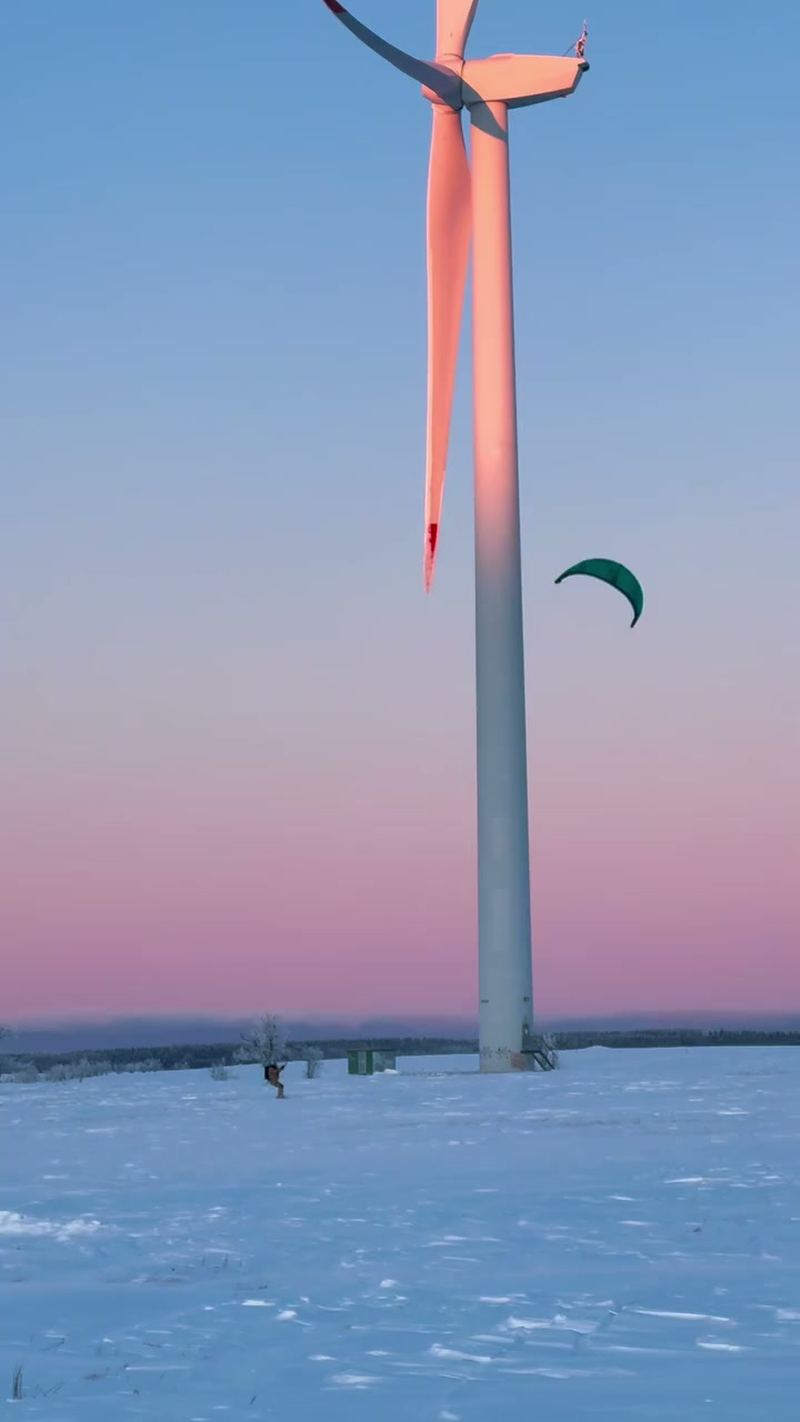
Fojtovice and Krupka are also my home spots for kite buggying, so I know the fields without snow as well. Under snow, the ponds may be invisible, so at Fojtovice stick to ground you know. The wind turbines above Fojtovice stir up the wind behind them the same way a forest does.
If you can already control, launch, land and release your kite on snow, I would consider Adolfov for your first independent sessions here. It is open, you park at the spot, and other kiters can help with launching and landing. Their presence does not replace lessons.
Kiting on Lake Lipno: ice or meadows
At 48.7 km², Lipno is the largest body of water in the Czech Republic. When it freezes in winter, people ride on the ice. Most park along the road that runs south-west from Černá v Pošumaví beside the water. I rode at Lipno in February 2025 on a properly stormy day.
The ice on Lipno is not equally thick everywhere. In January 2025 Czech Television reported 9.5 cm in one place and only 3 cm elsewhere. The water level moves under the ice, and around stumps and stones in the shallows it freezes last. For snowkite safety, a report that Lipno has frozen is not enough: before stepping onto it, you need current expert information and checks of ice thickness and condition across the specific area you intend to ride. Even that cannot guarantee safety on natural ice. I would never go alone, and if unsure I would stay on a meadow.
When Lipno does not freeze or the ice will not hold, there are the meadows around it:
- Černá v Pošumaví: a meadow that works in south-west, west and north-west wind. Park down by the road.
- Kovářov - Lipno: a meadow behind Kovářov. A power line runs along the road, so you ride in west, north-west and north wind. Sometimes there are straw bales on it.
- Blatná - Frymburk airfield: a smaller spot that, according to the map, often has snow when other places do not. Works in west, north-west and south-west wind, park at the airfield entrance (on the map).
The NASA POWER model gives Lipno a January average of about 3.6 m/s (7 knots), weaker than Moldava. Lipno itself has its own spot page; according to the map it works in winds from south through west to north.
Western Ore Mountains, Krkonoše and Praděd
Abertamy is a field on a gentle slope right by the village. According to the map it is crossed by power lines in several places, so walk it before you launch and know exactly where they run. At Pernink expect some gusts; it is smoother in a south or south-east wind. Boží Dar works best in west and south-west wind, sits on a gentle slope, and you park by road 25.
In the Krkonoše, the plains around Luční and Labská bouda are off-limits. They are a quiet zone where the law does not allow leaving marked paths, and violations are punished. The Krkonoše National Park administration lists the meadows near Brádlerovy boudy, Medvědí and Moravská bouda, and near Vrchlabí as legal places. Just east of the Krkonoše, near Žacléř, there is Královec, a flat field where the map reports south-east to south winds working and snow lasting well into spring. The NASA POWER model gives it a January average of about 5.1 m/s (10 knots), more than Moldava or Lipno.
I would leave Praděd off the shortlist for a first independent session. Leaving marked paths in the Praděd National Nature Reserve is prohibited. Snow cover or a chat with a ranger does not remove that restriction. Before considering riding off the paths, check the specific area and a valid exemption decision with AOPK, the nature conservation authority; without it, keep the kite packed.
How to pick your first snowkite spot
| Spot | Parking | Watch out for |
|---|---|---|
| Moldava | turn-off to Fláje or in the village | forest at the edge, fog |
| Adolfov | roadside at the spot | lots of kiters at once, the road |
| Petrovice 1 | by the transmitter at the road | patches of trees |
| Fojtovice - Adolfov | Adolfov or Fojtovice, short walk | avenues, brush, ponds under snow |
| Lipno (ice) | road from Černá v Pošumaví along the water | uneven ice |
| Kovářov - Lipno | anywhere along the track | power line, straw bales |
| Abertamy | in the village | power lines |
For a first independent session, this is what I would look for:
- A big open field with no power lines and the forest as far away as possible, especially upwind.
- Other kiters on the spot. Launching and landing are when a second pair of hands helps most.
- A kite suited to the snow and wind. Hard snow and ice offer little resistance; deep snow needs more pull. When choosing snowkite gear, allow for the specific model, wind including gusts, your weight and experience. A fixed reduction from your water kite size is not enough.
- Tested quick releases and a helmet. With the system correctly connected, the primary release greatly reduces pull while the kite stays attached by its safety leash. Releasing the leash completely disconnects the kite as a further emergency step. Before launching, test both releases with the kite secured on the ground, then reassemble them according to your system's manual. Wear a helmet.
- Webcam and forecast before you leave. Before the long drive up to the ridge, know whether there is snow and where the wind will come from.
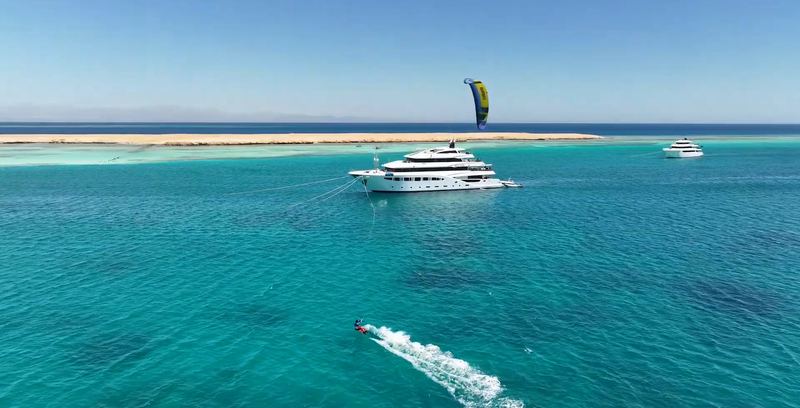
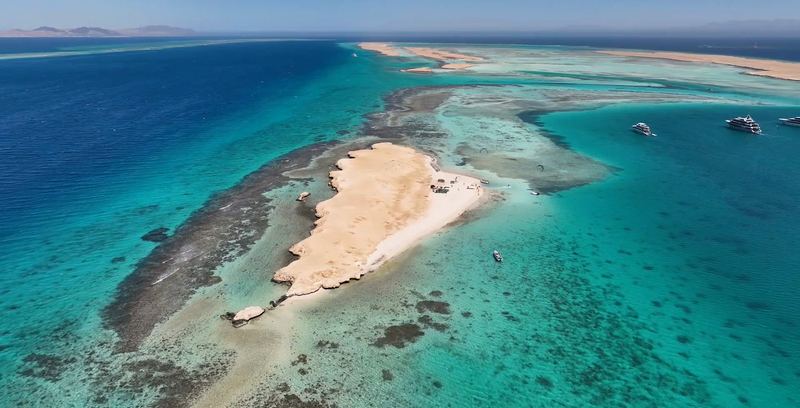
When the snow does not come, kitesurfing on Czech lakes is another option. And if a snowless winter feels long, there is the kite safari in Egypt, which has 2026 dates in April, May, October and November.
Questions
Where can you snowkite in the Czech Republic?
Options include Moldava, Nakléřov, Adolfov and Fojtovice in the Ore Mountains, Lake Lipno and selected meadows in the Krkonoše and foothills. The kite spot map lists more than 130 Czech snowkite locations, but a map entry does not confirm permission to ride. Leaving marked paths in the Praděd National Nature Reserve is prohibited; any exemption needs checking with AOPK before you travel.
Can you kite on frozen Lake Lipno?
People ride on frozen Lipno, but ice thickness and condition vary across the reservoir, and natural ice is never completely safe. Before stepping onto it, you need current expert information and checks of the specific area you intend to ride; a general report that Lipno has frozen is not enough. If unsure, I would stay on a snowy meadow near Černá v Pošumaví, Kovářov or Frymburk.
Why does my kite behave strangely near trees?
Trees disrupt the airflow, making it gusty and changeable downwind. When the wind blows from the forest and you ride close to it, the kite becomes unstable. Stay further out on open ground.
Is snowkiting allowed near Luční bouda in the Krkonoše?
No. The ridge plains around Luční and Labská bouda are a quiet zone where the law does not allow leaving marked paths. The park administration lists the meadows near Brádlerovy boudy, Medvědí and Moravská bouda and near Vrchlabí as legal places.
What size kite do I need on snow?
Hard snow and ice need less pull than deep snow, which creates more resistance. I would avoid a fixed conversion from your water kite size: choose for the specific model, wind including gusts, your weight and experience.
Sources
- Moldava: about 840 m above sea level, parking at the turn-off to Fláje or in Moldava www.google.com (checked 18 October 2026)
- Adolfov: 2 fields along the road to Adolfov, about 760 m, all wind directions work, roadside parking, often plenty of kiters; Petrovice 1: large spot with patches of trees, about 680 m, parking by the transmitter at the road www.google.com (checked 18 October 2026)
- Fojtovice - Adolfov: large spot comparable to Moldava, split by tree-lined avenues and brush, small ponds, clumps of trees, a ruined military holiday camp, parking in Adolfov or Fojtovice and a short walk uphill www.google.com (checked 18 October 2026)
- Český Jiřetín above the ski slope: only north-west wind, but clean, a lift takes you up to the spot www.google.com (checked 18 October 2026)
- Lipno freezes in winter and is used for snowkiting, parking along the road from Černá v Pošumaví south-west along the water; the meadow at Černá (SW, W, NW) is the alternative when Lipno is not frozen; Kovářov: power line along the road, ride in W, NW, N, straw bales; Blatná - Frymburk airfield: smaller spot, W, NW, SW, parking at the airfield entrance; Lipno spot: N, NW, W, SW, S www.google.com (checked 18 October 2026)
- Abertamy: field on a gentle slope next to the village, crossed by power lines in several places; Pernink: some gusts, none in S and SE wind; Boží Dar: best in W and SW, gentle slope, parking by road 25; Královec: flat field, tested in SE to S wind, snow lasts long into spring www.google.com (checked 18 October 2026)
- Praděd National Nature Reserve: leaving marked paths requires an exemption, granted by AOPK through administrative proceedings jeseniky.aopk.gov.cz (checked 18 October 2026)
- Nakléřov Pass in the Ore Mountains www.usti.cz (checked 18 October 2026)
- Community kite spot map (kiteboarding.cz) www.kiteboarding.cz (checked 18 October 2026)
- Our map contains 139 Czech snowkite entries: count of records in spots where c = CZ and k includes snowkite; this is neither a visitor statistic nor permission to ride kitewithjaja.pages.dev (checked 18 October 2026)
- Krkonoše National Park: snowkiting on the plains around Luční and Labská bouda is illegal (no entry off marked paths, black grouse, 70-day growing season); legal places: meadows near Brádlerovy boudy, Medvědí and Moravská bouda, near Vrchlabí www.krnap.cz (checked 18 October 2026)
- Lipno: 48.7 km², the largest body of water in the Czech Republic www.pvl.cz (checked 18 October 2026)
- Ice on Lipno is very uneven (January 2025: 9.5 cm in one place, only 3 cm elsewhere), the water level moves under the ice, ice forms last around stumps and stones in the shallows ct24.ceskatelevize.cz (checked 18 October 2026)
- Czech Fire Rescue Service: natural ice is never completely safe and thickness varies; do not enter without knowing its thickness, do not go alone and avoid weakened areas hzscr.gov.cz (checked 18 October 2026)
- NASA POWER (MERRA-2, 2001-2025, wind at 10 m): Moldava January 4.65 m/s (about 9 knots), July 3.32 m/s (about 6 knots); mean temperature below zero December to February power.larc.nasa.gov (checked 18 October 2026)
- NASA POWER (MERRA-2, 2001-2025, wind at 10 m): Lipno January 3.64 m/s (about 7 knots) power.larc.nasa.gov (checked 18 October 2026)
- NASA POWER (MERRA-2, 2001-2025, wind at 10 m): Královec January 5.07 m/s (about 10 knots) power.larc.nasa.gov (checked 18 October 2026)
- Hard snow and ice offer little resistance, while deep snow requires more pull; kite choice depends on design, wind, rider weight and ability www.mackiteboarding.com (checked 18 October 2026)
- IKO: the primary release allows the kite to lose most of its power; safety systems need testing and correct reassembly before use www.ikointl.com (checked 18 October 2026)
- Ozone: the kite remains attached by its leash after the primary release; releasing the leash completely disconnects it as a further emergency step; follow the specific manual, wear a helmet, leave clear downwind space and secure the kite on the ground ozonekites.com (checked 18 October 2026)
- Ozone recommends full snowkite training with a qualified instructor, including setup, launching, landing and riding ozonekites.com (checked 18 October 2026)
- Kite safari dates 2026: 11-18 April, 22-29 May, 10-17 October, 7-14 November paradisekitesurf.cz (checked 16 October 2026)