Kitesurf in Zanzibar: Paje, Wind by Month and the Tide
Kitesurfing in Zanzibar mostly happens in Paje on the south-east coast, in 2 wind seasons: roughly mid-December to mid-March and June to September, with less reliable conditions at the edges. Whether you ride on a given day depends as much on the tide as on the wind.
If you want to kitesurf in Zanzibar, Paje is the main base, a village on the south-east coast of the island. A wide, shallow lagoon sits between the beach and the reef. I would choose June to September or roughly mid-December to mid-March; the edges of the seasons are less reliable.
What you need to plan for in Paje, even more than the wind, is the tide. The water comes in and goes out roughly 2 times a day, and within a few hours the lagoon turns from knee-deep water into wet sand and back again. Before riding, I would ask a local instructor where there will be enough depth, a clear launch area and a safe route back to shore.
When the wind blows in Zanzibar
- Kaskazi (roughly mid-December to mid-March): blows from the north to north-east, usually 10-20 knots (5-10 m/s), most often 12-18 knots (6-9 m/s). It is the warmer and lighter season, so you fly bigger kites.
- Kusi (mainly June to September): blows from the south to south-east, mostly 15-20 knots (8-10 m/s) and up to 25 knots (13 m/s) on stronger days. It tends to be lighter in the morning and picks up after lunch.
- Season edges: local schools give slightly different dates, with some including early October in the Kusi season. I would treat May and October as less reliable and check with a school in Paje before booking. Expect transition periods from mid-March to May and late October to early December; NASA's model shows April as the wettest month.
NASA POWER gives a long-term average wind speed at 10 m for Paje over 2001-2025, including calm spells and nights. It helps compare months and prevailing directions; the actual wind on the beach can be very different.
| Month | Average wind (model) | Prevailing direction | Rain (mm per day) |
|---|---|---|---|
| January | 11.3 knots (5.8 m/s) | NNE | 2.2 |
| February | 9.8 knots (5.0 m/s) | NE | 2.1 |
| March | 7.7 knots (4.0 m/s) | E | 4.1 |
| April | 10.1 knots (5.2 m/s) | SSE | 8.2 |
| May | 12.9 knots (6.7 m/s) | SSE | 5.4 |
| June | 13.9 knots (7.2 m/s) | SSE | 0.9 |
| July | 14.1 knots (7.2 m/s) | SSE | 0.4 |
| August | 12.8 knots (6.6 m/s) | SE | 0.4 |
| September | 11.8 knots (6.1 m/s) | SE | 0.6 |
| October | 10.6 knots (5.4 m/s) | ESE | 1.7 |
| November | 8.7 knots (4.5 m/s) | E | 3.2 |
| December | 9.6 knots (5.0 m/s) | NE | 3.1 |
If I were choosing on wind alone, I would go between June and September, when the model shows the strongest wind and it hardly rains. For other early-summer options, see Where to kitesurf in June. January and February make sense if you want to escape a European winter and don't mind lighter wind and a bigger kite. Early March can still have Kaskazi wind; for dates later in March, I would check with a local school. I wouldn't choose April or November for a trip mainly for kitesurfing.
The Paje lagoon and the tide
The lagoon in Paje is protected by a reef that lies well offshore and breaks the Indian Ocean waves. Inside, the water is flat and, at the right tide, about knee-deep. The waves beyond the reef are for experienced wave riders.
Zanzibar gets roughly 2 high and 2 low tides a day, and the difference between them changes over the month. For kiting, this is what it means in practice:
- At low tide the inner lagoon by the beach empties and people ride further out in the outer lagoon and around the sandbanks. The water there is very shallow and flat.
- At mid to high tide ride around the seaweed farms; a higher tide does not guarantee clearance over their stakes and ropes.
- At high tide the water reaches the buildings and there is no beach left to launch from. Out on the water you get mild chop, meaning small, uneven waves raised by the wind.
I would use the tide table for the Zanzibar station on the west coast only as a rough guide. For Paje, ask a local school to confirm the times in local time, the depth where you plan to ride and a safe route back to shore. In the Kusi season, when the wind builds in the afternoon, what matters most is whether that afternoon wind meets rideable water.
Sea urchins, seaweed farms and boats
Seaweed is farmed in the intertidal zone around Paje. It is an important source of income for local people, and most of the farmers are women. The farms contain stakes, ropes and people at work, so ride around them and never launch from within them. I would ask a local instructor to show me a safe passage between the lagoon areas.
Sea urchin colonies live around the farms and there are sharp shells on the bottom. I would wear neoprene booties in the water for the whole trip. Also watch out for fishing boats and, at low tide, for the shallows, where it is easy to hit the bottom when you fall.
At high tide there is very little space on the beach, and several kite schools work in Paje, so the launch area gets crowded. If there is no clear, safe area for both launching and landing, don't launch. I would wait for a more suitable tide or choose another safe launch with a local instructor. You need clearance from buildings and other obstacles as well as from other riders. Secure your kite with sand on the beach.
Who Paje suits
For beginners, the lagoon at the right tide is a pleasant place to learn: knee-deep flat water, a sandy bottom and a reef that keeps the waves outside. Just expect lessons to be planned around the tide, so they won't be at the same time every day. A good instructor will also teach you to read a tide table and to recognise when not to go out. To me that is as important as getting up on the board, because once you ride on your own, you will be the one deciding.
If you are past your first course, I would choose the lighter Kaskazi for your first independent days. In the Kusi season it pays to be able to ride upwind, meaning towards the wind, so you get back to where you started instead of carrying your kite back along the beach.
Advanced riders will enjoy the flat water for tricks. For a first trip to the waves beyond the reef, I would go with a local guide and a group. Check the suitable tide, the route out and a safe return with the guide before leaving; wave experience elsewhere won't tell you how this reef works.
Typical kite sizes in Paje by season:
| Season | Typical wind | Typical kite sizes |
|---|---|---|
| Kaskazi | 12-18 knots (6-9 m/s) | 10-17 m² |
| Kusi | 15-20 knots (8-10 m/s) | 8-14 m² |
To work out your own size, use the kite size calculator with your weight and the wind.
Getting there, visa and mandatory insurance
You fly into Abeid Amani Karume International Airport (ZNZ), and Paje is about 1 hour away by car.
Whether you need a visa for Tanzania depends on your nationality: check the official visa-free list and visa guidelines before applying through visa.immigration.go.tz. British tourists need a visa; US passport holders visiting as tourists must apply for a Multiple Visa. For British citizen passports, GOV.UK specifies at least 6 months of validity after arrival and 1 blank page. With another passport, check the requirements for your nationality.
From October 2026, choose mandatory inbound insurance by your first point of entry: ZIC for Zanzibar through visitzanzibar.go.tz, or NIC for mainland Tanzania through its official portal. For a combined trip, 1 policy is enough because both are recognised in both places. Cover lasts for your stay, up to 92 days.
The standard ZIC rate is 44 USD per adult. Check current ZIC rates for children and other categories before buying. Alongside the mandatory policy, I would take personal travel insurance that covers kitesurfing.
Where to go next
On the kite spot map you'll find this stretch of coast under the name Makunduchi, along with spots in other countries.
If planning around the tide doesn't suit you, I would compare water depth and launch space when choosing another destination. For options by rider level, see the best kitesurfing spots in the world.
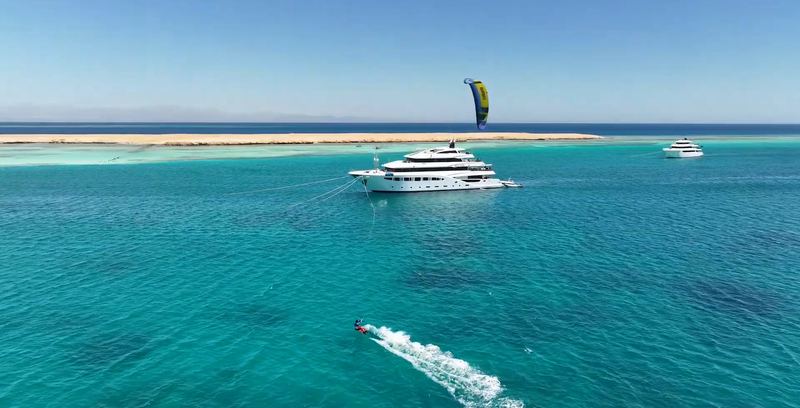
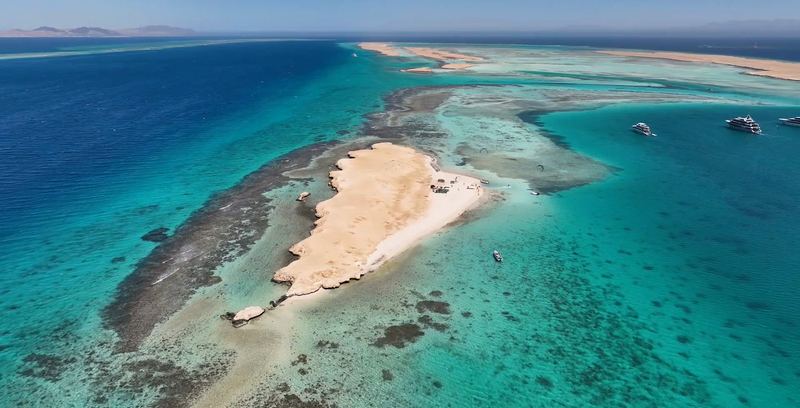
I have been on the kite safari in the Red Sea several times. There the yacht heads to an island each day based on the wind forecast, and islands such as Tawila and Abu Mungar have shallow lagoons with a sandy bottom.
Questions
When is the best season for kitesurfing in Zanzibar?
I would choose June-September for the stronger Kusi, usually 15-20 knots (8-10 m/s), or roughly mid-December to mid-March for the Kaskazi, mostly 12-18 knots (6-9 m/s). Local schools give slightly different dates for these 2 seasons, so treat May and October as less reliable edges. Early March can still have Kaskazi wind, while the second half of the month is a transition period.
Is Paje good for beginner kitesurfers?
Yes, at the right tide the lagoon behind the reef has knee-deep flat water. The tidal cycle repeats roughly 2 times a day and empties the inner lagoon at low tide, so lessons are planned around the tide table.
What size kite should I bring to Zanzibar?
In the Kaskazi season riders in Paje usually fly 10-17 m² kites, in the stronger Kusi 8-14 m². The right size for you depends on your weight and board.
Do I need booties for kitesurfing in Paje?
I would wear them. There are sea urchin colonies around the seaweed farms in the lagoon and sharp shells on the bottom, and neoprene booties protect your feet.
What insurance do I need for Zanzibar?
Under the rules from October 2026, you need 1 mandatory policy for Zanzibar and mainland Tanzania, chosen by your first point of entry: ZIC for Zanzibar, NIC for the mainland. The standard ZIC rate is 44 USD per adult; check current rates for children and other categories. I would also take personal travel insurance that covers kitesurfing.
Sources
- Kite safari Paradise: the yacht heads to the islands according to the wind forecast; Tawila huge lagoon, shallow water, sandy bottom; Abu Mungar shallow calm water, sandy bottom paradisekitesurf.cz (checked 18 October 2026)
- NASA POWER for Paje (-6.27, 39.54): 10 m wind Jan-Dec 5.80 5.03 3.96 5.22 6.66 7.15 7.24 6.56 6.09 5.44 4.49 4.95 m/s, converted to 11.3 9.8 7.7 10.1 12.9 13.9 14.1 12.8 11.8 10.6 8.7 9.6 knots; table units rounded independently from original data; prevailing direction Jan 30°, Feb 37°, Mar 82°, Apr 149°, May 161°, Jun 161°, Jul 153°, Aug 139°, Sep 128°, Oct 120°, Nov 96°, Dec 44°; MERRA-2 model, 2001-2025 average power.larc.nasa.gov (checked 18 October 2026)
- NASA POWER for Paje: precipitation Jan-Dec 2.2 2.1 4.1 8.2 5.4 0.9 0.4 0.4 0.6 1.7 3.2 3.1 mm per day; air temperature 25.2-28.5 °C power.larc.nasa.gov (checked 18 October 2026)
- Paje spot guide: Kaskazi from the north, 10-20 knots (5-10 m/s), most days 12-18 knots (6-9 m/s); Kuzi from S to E-SE, most days 12-25 knots (6-13 m/s), averaging 15-20 knots (8-10 m/s); indicative kite sizes Kaskazi 10-17 m², Kuzi 8-14 m²; very shallow flat water at low tide, no beach to launch at high tide; hazards fishing boats, shallows, small launch area, seaweed farms with urchins; booties recommended for urchins and sharp shells locations.thekitespot.com (checked 18 October 2026)
- Paje: Kuzi calmer in the morning and stronger after lunch; low tide empties the inner lagoon and sends kiters to the outer lagoon and sandbanks; both lagoons offer knee-deep flat water at different tide states, mild chop at high tide; watch for sea urchins; Abeid Amani Karume International Airport (ZNZ), about 1 hour transfer by car; several kite schools in Paje www.iksurfmag.com (checked 18 October 2026)
- Tides at Zanzibar are mainly semidiurnal, with 2 high and 2 low waters a day and 2 spring and 2 neap tides a month with different ranges open.uct.ac.za (checked 18 October 2026)
- Tide table for Zanzibar (Tide), Zanzibar Urban/West on the west coast; only a rough guide for Paje, not a basis for safety decisions www.windfinder.com (checked 18 October 2026)
- Seaweed farms in the intertidal area at Paje are a major part of local livelihoods; most farmers are women www.iasu.kyoto-u.ac.jp (checked 18 October 2026)
- British citizen passports: visa required, passport valid 6 months after arrival with 1 blank page; new mandatory insurance from October 2026 chosen by first entry, ZIC for Zanzibar or NIC for mainland, 1 policy for both, cover up to 92 days; official purchase portals linked www.gov.uk (checked 18 October 2026)
- Czech foreign ministry: mainland mandatory insurance from 1 October 2026; mainland and Zanzibar policies are mutually recognised mzv.gov.cz (checked 18 October 2026)
- ZIC standard rate 44 USD per adult; children and SADC/EAC travellers have different rates, check before purchase tempweb.zic.co.tz (checked 18 October 2026)
- Tanzania visa requirements have nationality exemptions; official visa-free country list visa.immigration.go.tz (checked 18 October 2026)
- Tourist visa type depends on nationality; US passport holders must apply for a Multiple Visa visa.immigration.go.tz (checked 18 October 2026)
- REPOA: farms use stakes and ropes; Paje testimony on printed page 62 reports kiters hitting workers and stakes and damaging farms; basis for recommending riding around farms www.repoa.or.tz (checked 18 October 2026)
- Ozone: no use on crowded beaches, clear space downwind and to both sides, avoid obstacles; basis for not launching without enough room ozonekites.com (checked 18 October 2026)
- Duotone: assess launch, landing, water access, obstacles and exit plan before launching; ask locals about reef and access routes www.duotonesports.com (checked 18 October 2026)
- Aquaholics Paje: main seasons June-September and mid-December to mid-March; east coast spot where riding areas change with the tide www.aquaholics-zanzibar.com (checked 18 October 2026)
- Kite Centre Zanzibar: transition from mid-March to late May and late October to early December; less reliable season edges kitecentrezanzibar.com (checked 18 October 2026)
- Kite Centre Zanzibar FAQ gives seasons roughly June-early October and December-early March; recommends a group or guided reef trip at a suitable tide, basis for a local guide on the first trip kitecentrezanzibar.com (checked 18 October 2026)
- Windy camera 1691216071 is Paje Beach - B4 Kitesurf Zanzibar; API provides an image update timestamp, image unreadable for wind assessment when checked kitewithjaja.pages.dev (checked 18 October 2026)