Kitesurfing buggy or mountainboard: where to start on land
Land kiteboarding is kiting without water: the kite pulls you across a field or a beach while you sit in a buggy or stand on a mountainboard. You start with a small kite in light wind, a helmet and ideally an instructor.
With a kitesurfing buggy, you ride on dry ground: a kite pulls you across a meadow, a stubble field or a hard beach while you sit and steer with your feet. You can also ride standing on a mountainboard, a board with big wheels. Both are forms of land kiteboarding. You don't need the sea or a lake, just open space and wind.
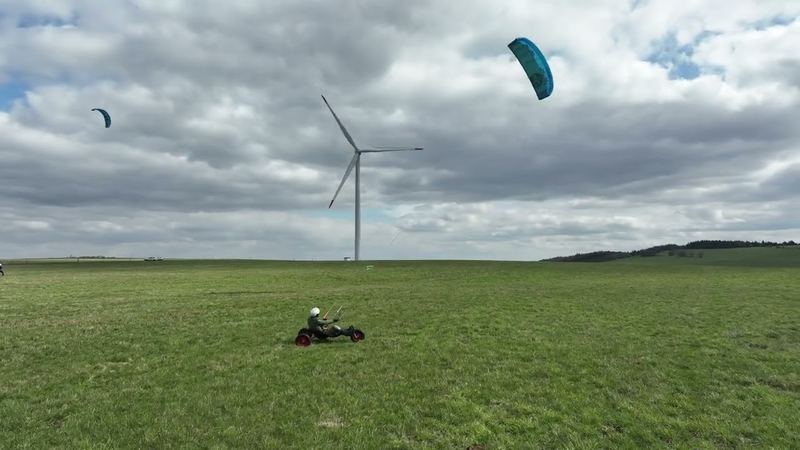
My homespot is on the ridge of the Ore Mountains near Fojtovice and Komáří vížka, a plateau with wind turbines above the Czech town of Krupka. When there's snow I go snowkiting up there, when there isn't, I take the buggy. At the Czech landkiting championship in Panenský Týnec in December 2023 I found out that on wheels I still have a lot to learn.
Kite buggy or mountainboard
Either way the kite pulls you and you ride across the wind. The difference is how many things you have to learn at the same time.
A kite buggy has a low seat, 1 front wheel and 2 rear wheels. You steer with your feet on the front fork. A typical kite buggy has no brake; practise stopping by turning into the wind at low speed with an instructor. Because you're sitting, you don't have to balance at the same time, so you can focus more on controlling the kite. For a first go it's the calmer route.
A mountainboard is a board with 4 pneumatic wheels and bindings. You stand sideways, like on a twintip (a board you can ride in either direction on water) or a snowboard, and you turn by tilting the board. The stance is closer to kitesurfing and snowboarding, but you fall on hard ground.
| Kite buggy | Mountainboard | |
|---|---|---|
| How you ride | sitting low | standing sideways in bindings |
| Steering | feet on the front fork | tilting the board |
| Stopping | practise turning into the wind | practise turns and kite control |
| Protection | helmet, protective clothing | helmet, knee, elbow and wrist pads |
| What it gives you later | feel for the kite and the wind | stance and edging for water and snow |
For a complete beginner I'd start by practising with just a small kite, then try the buggy. If you can already control, launch and land a kite safely, use its safety systems and want to practise your board stance, you could try a mountainboard with an instructor.
Which kite for land
On land I fly kites that don't need a pump. Conventional foil kites have fabric cells that fill with air; the Flysurfer Peak has a single-skin canopy with cells only at the wingtips. I ride the smaller Peak sizes from 4 to 8 m² and the 11 m². The current PEAK6 comes in sizes from 2.5 to 11 m². Practise the relaunch procedure for your particular kite, and check the lines and the space around you before launching again.
The very first step is a trainer kite, a small kite that teaches you to steer and to feel where in the wind window it pulls and where it doesn't. The window is the space downwind in front of you where the kite flies. Learn in light wind, and choose a kite for landboarding or buggy riding with your instructor to suit your skills and the conditions. Don't use my kite sizes as a beginner's shopping list. On snow I also fly Kitech FreeRS and Magus foil kites.
2 terms you'll hear from the start:
- Quick release is the safety release where the bar system connects to your harness. On a push-away system, push the release handle away from your body towards the kite; pushing the bar away does not activate it. A properly working system greatly reduces the pull while keeping the kite connected through the safety line and leash, which links it to your harness. It does not guarantee zero pull. Practise releasing your particular system, attaching the leash correctly and taking further emergency action if the pull continues, with an instructor and following the manual. Test the releases before every session.
- Harness is the belt around your hips that you hook the bar into. Your hips take the pull, and your hands stay free to steer.
Where to start: the spot and the wind
On land you need a big open space with no trees, buildings, power lines, roads or railway tracks. Keep a clear area downwind of at least 3 times your line length, because that's exactly where the kite drags you when something goes wrong. Don't ride among people and never fly over them.
Something I've noticed snowkiting at Moldava matters on a meadow too: when the wind blows from the forest and you're close to it, the air is turbulent and the kite jerks around. It's uncomfortable. Move further away from the trees, even if it means a longer walk with your gear.
Near Fojtovice you ride on the open plateau by the turbines. More about it on the spot page Fojtovice - Adolfov and on the map. Nearby snowkite spots include Adolfov, Petrovice 1 and Moldava; these are suggestions for winter riding on snow. To find more landkiting spots in the Czech Republic, select land on the kite spot map and check the surface and permission to use the land before travelling.
The NASA POWER model for Fojtovice shows the highest average wind in January, about 9 knots (4.7 m/s), and the lowest in August, 6 knots (3.1 m/s). A knot is a nautical unit of speed: 1 knot is 1.852 km/h, about 0.51 m/s. The model calculates wind 10 m above the ground on a coarse grid, so it doesn't tell you what's blowing on the meadow itself. It only shows that the ridge tends to be windier in winter than in summer. Before you drive up, check the live wind and the webcam from Krupka.
Stay off fields with crops and pastures with cattle. Even on a mown meadow it's good manners to know whose land it is and not to leave ruts behind.
Staying safe on land
Always wear a helmet and protective gear, whether you're riding a buggy or a mountainboard. On a mountainboard, that includes knee, elbow and wrist pads. Your instructor can help you choose protection for the equipment you'll be using.
Don't fly in thunderstorms or gusty wind. If the wind picks up, finish your session while you still have full control of the kite and land with a trained helper, using the procedure you've practised together. If you're already losing control, use your safety system as practised with your instructor; don't keep trying for a normal landing at any cost.
Safety is the main reason I don't like quick-fix courses. A good course teaches you to read the wind and the spot, to control the kite and to deal with a crisis, so that you're not a danger to yourself or to others afterwards, on land just as much as on water.
What to bring for your first land session
- a helmet, and on a mountainboard also knee, elbow and wrist pads
- sturdy shoes and long trousers, grass and stubble scrape skin
- gloves, the bar is more comfortable to hold with them
- a warm layer and a windproof jacket: NASA POWER gives Fojtovice a January average of -2.6 °C, and on an open ridge in the wind you feel it
- water and some food
Big Day includes the kite, bar and harness in the lesson price. If you choose another school, check equipment hire before booking.
Lesson or on your own
If you've never held a kite, start with an instructor. If you're in the Czech Republic, Big Day, a shop and school I work with, offers a landkiting course: 2 hours of practice for 2,500 CZK, with the training kite, bar and harness included and no more than 1-2 people per instructor. You agree on the location and date according to the weather. Lessons cover launching, landing, controlling the pull and the safety releases. Riding a buggy or a mountainboard is optional.
If you can already set up, control, launch and land a kite safely and use its safety system, you have skills to build on. On land, though, the terrain is different and so are the falls, so I'd still start with a small kite and someone who rides land. They'll help you launch and tell you where the wind on that particular field is clean. If you're unsure about any of those skills, keep learning with an instructor.
Land as a way to snow and water
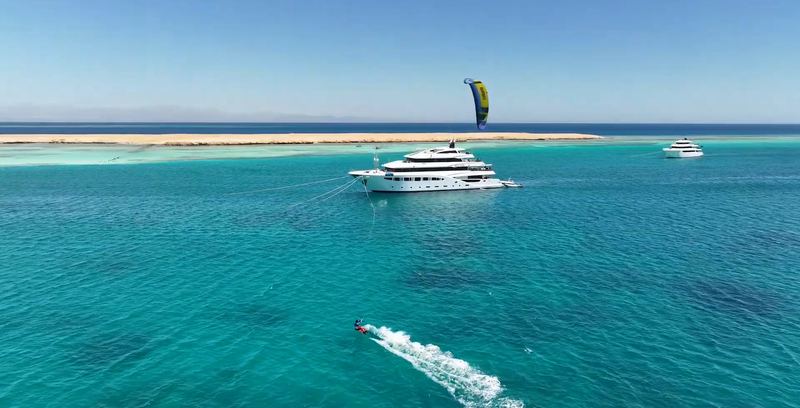
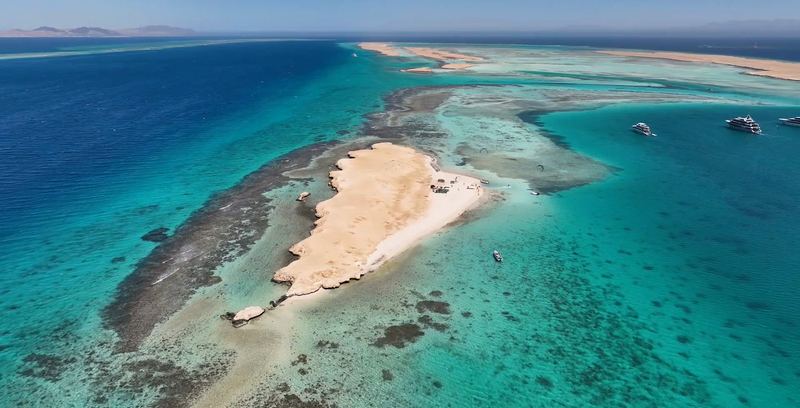
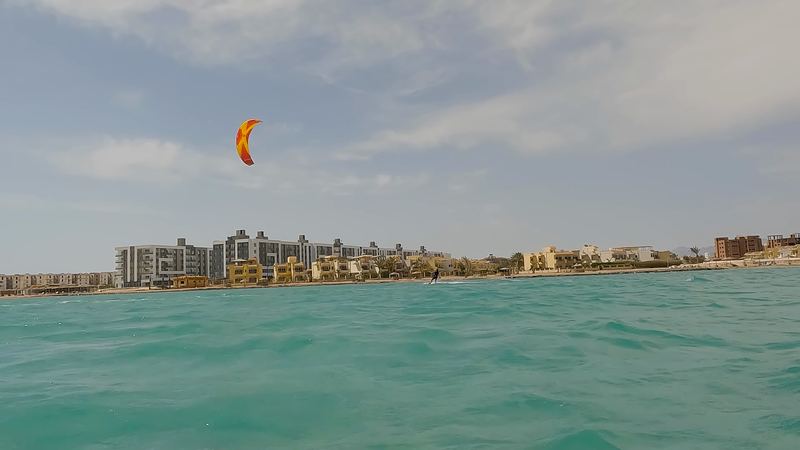
The kite control you practise on land also helps on snow and water. For snowkiting, you swap the wheels for skis or a snowboard; choosing a safe spot and checking your kite are still part of getting ready. If land gets you hooked and you want to try water, your first rides are easiest in shallow water where you can stand. You'll find lagoons like that on the kite safari in Egypt I go on.
Questions
What is land kiteboarding?
Kiting on land. A kite pulls you across a meadow, a stubble field or a hard beach, either sitting in a kite buggy or standing on a mountainboard, a board with big wheels and bindings.
Should I start on a kite buggy or a mountainboard?
A buggy is the calmer start, because you sit and only have to deal with the kite and steering with your feet. A mountainboard is closer to kitesurfing and snowkiting, but you fall on hard ground, so a helmet and pads are a must.
What kite do I need for land kiteboarding?
Start in light wind with a small trainer kite chosen by your instructor. Practise relaunching your particular kite, including checking the lines and keeping the area clear. On land I fly a Flysurfer Peak.
Is a kitesurfing buggy dangerous?
It can be if you skip the basics. Wear a helmet and protective clothing, keep away from trees, buildings, power lines and roads, keep a clear area downwind at least 3 times your line length, and never fly in thunderstorms or gusty wind.
Sources
- NASA POWER, MERRA-2 model, January 2001 - December 2025 climatology, wind at 10 m, 0.5° × 0.625° grid, point Fojtovice (50.737 N, 13.873 E): highest monthly mean wind in January at 9.0 knots (4.65 m/s), lowest in August at 6.1 knots (3.14 m/s); mean air temperature at 2 m -2.6 °C in January, 19.1 °C in July power.larc.nasa.gov (checked 18 October 2026)
- Kitty Hawk Kites: a kite buggy does not need brakes and can stop by turning into the wind; lessons include riding across the wind www.kittyhawk.com (checked 18 October 2026)
- MBS: a mountainboard has 4 wheels and turns by applying pressure through the toes or heels www.mbs.com (checked 18 October 2026)
- Peter Lynn: stay away from power lines, roads, railway lines, trees and buildings; keep a clear downwind area at least 3 times the flying line length; never fly in thunderstorms, gusty winds or without full control of the kite; learn in light winds with a small kite; use full protective gear on land; check releases before use; activate the primary push-away release towards the kite; foil cells fill with air during setup cdn.shopify.com (checked 18 October 2026)
- Flysurfer PEAK6: single-skin foil kite, marketed size labels 2.5, 4, 5, 6, 8 and 11 m²; size selection depends on weight, skills, equipment and wind flysurfer.com (checked 18 October 2026)
- Big Day: landkiting course 2,500 CZK, 2 hours of practice, new training kite, bar and harness included, at most 1-2 people per instructor; covers kite control, launching and landing, safety releases, optional buggy or mountainboard riding; for complete beginners and as preparation for water or snow; the offer does not specify a fixed lesson location www.big-day.cz (checked 18 October 2026)
- Big Day offers landkiting, snowkiting and kitesurfing lessons; location and date are agreed according to the weather www.big-day.cz (checked 18 October 2026)
- Peter Lynn: the buggy design replaced 3 skis with wheels, the front wheel steering; foot steering uses pegs attached to the front fork www.plh.nz (checked 18 October 2026)
- FLYSURFER Bar Safety Guide, sections 04 and 07: the push-away release handle moves away from the body, the bar then travels along the safety line and the kite falls with residual pull; leash attachment and emergency release require practice with an instructor following the manual flysurfer.com (checked 18 October 2026)
- IKO: a safety system cannot guarantee complete depower; a working flag-out removes most pull, but tangled lines can interfere with it www.ikointl.com (checked 18 October 2026)
- PEAK6 manual, sections 03-09: single-skin canopy and self-inflating wingtip cells, setup without a pump, line and bridle checks, relaunch procedure, landing with a trained assistant and emergency release flysurfer.com (checked 18 October 2026)
- MBS manual: deck with bindings and pneumatic tyres; helmet, wrist guards, knee and elbow pads, with long clothing, gloves and sturdy footwear recommended; assess obstacles and observe rules for using land www.mbs.com (checked 18 October 2026)
- NIST SP 1038, table 5.1.7: 1 knot = 1.852 km/h; dividing by 3.6 gives approximately 0.514 m/s nvlpubs.nist.gov (checked 18 October 2026)
- NASA POWER meteorological data have a spatial resolution of 0.5° × 0.625° power.larc.nasa.gov (checked 18 October 2026)
- IKO Discovery distinguishes achieved skills in setup, equipment checks, piloting, launch, landing and quick release activation; progression depends on student knowledge and conditions www.ikointl.com (checked 18 October 2026)
- ATBShop: landboard lessons build on kite flying skills and cover moving, turning and stopping safely using the kite www.atbshop.co.uk (checked 18 October 2026)
- The Kite with Jája map has a Land filter and links to spot pages kitewithjaja.pages.dev (checked 18 October 2026)
- Fojtovice - Adolfov is listed as a landkite spot kitewithjaja.pages.dev (checked 18 October 2026)
- Adolfov is a separate snowkite spot kitewithjaja.pages.dev (checked 18 October 2026)
- Petrovice 1 is a snowkite spot; its page warns about small wooded areas kitewithjaja.pages.dev (checked 18 October 2026)
- Moldava is a snowkite spot whose description discusses snow cover kitewithjaja.pages.dev (checked 18 October 2026)