Best power kites for land boarding and buggying
A suitable field near home lets you practise without travelling to the coast. I would choose a depower foil with a compatible bar and safety system, sized for your weight, the wind and your skills.
My starting point when choosing the best power kites for land boarding and buggying would be a foil with a compatible depower bar and quick release, provided you already have kite control and safety skills. Choose the size for your weight and the conditions on land. A suitable field near home lets you keep practising without a trip to the coast.
On land I fly Flysurfer Peak foils in sizes 4-8 m² and 11 m². If you have never flown a kite on your own, start with a small trainer. Finishing a course alone does not make you ready: practise your first launches and landings with a new foil on land with an instructor who knows that model.
Best power kites for land: the short answer
- Your very first kite, no board: a 3-line trainer such as the Ozone Ignition V3. Ozone recommends 2 or 2.5 m² depending on conditions; for children, 1.5 m² only in wind below 10 knots (about 5.1 m/s), always under careful adult supervision.
- Land board or buggy once you have kite control and safety skills: a depower foil with a compatible bar, quick release and safety leash. For example, the PEAK6 with a CONNECT3 bar uses FLS in its 4-line setup; B-Safe requires a 5th line.
- 1 kite for water, snow and land: a foil built to work on water too, such as the Kitech FRS V2 (7-18 m²), sized for the conditions and your skills.
A power kite is any kite that pulls, as opposed to a toy kite you just fly. Depower means pushing the bar away to take power out. The main quick release opens the harness connection and, when correctly set up, lets the kite flag out on a safety line. You remain attached through the safety leash. Releasing the leash completely detaches the kite and is a last resort in an emergency, because a loose kite can endanger people downwind. Have someone demonstrate the releases on your particular setup.
Why a foil kite on land
A foil kite (ram-air kite) has no inflatable tubes. It fills with air as soon as you lift it into the wind, so you need no pump and it packs into a small backpack after the session. You arrive at the field, lay out the lines and you are flying a few minutes later.
The second reason is the ground. On land your kite will crash now and then, onto hard grass, stubble or clods of earth. Flysurfer says single-skin foils like the Peak reliably absorb hard impacts. On land it recommends the reverse relaunch: pull the back lines and the kite lifts off the ground trailing edge first, which reduces wear on the fabric.
You can fly your inflatable water kite on a field, I just would not start with it. On wheels you need less power than on water, so your water size is usually too big for land, and a crash on hard ground is bad for both the kite and you.
Trainer kite or depower kite
A small trainer without depower, such as the Ozone Ignition V3, is mainly for learning to steer within the wind window. You do not control its pull by sheeting the bar in and out as you would with a depower kite. The Ignition V3 has 3 lines; with the wrist leash correctly fitted and connected according to the manual, it lands with minimal power when you let go of the bar. For children, Ozone recommends 1.5 m² only in wind below 10 knots (about 5.1 m/s) and under careful adult supervision.
A depower foil is controlled with a bar and connected to a harness, a waist or seat support you hook into. If you already have kite control and safety skills, it makes sense for further practice on land. Learn the launch and landing procedures for the new model with an instructor.
The PEAK6's standard FLS lets the kite flag out on a front line when you activate the quick release. Optional B-Safe gathers the kite together and also allows self-landing, but requires a 5th line correctly installed on both the kite and a compatible CONNECT3 bar according to the manual. A 4-line bar alone does not provide this function. The manufacturer recommends landing with a trained assistant as the safest method.
What size power kite for land
When unsure about size, Flysurfer recommends choosing smaller, especially on land. This chart is specifically for the PEAK6 and is a guide for a rider around 75 kg. Skills, surface, board type and wind including gusts also affect the choice. The upper limit is not a recommendation for beginners.
| PEAK6 size | Indicative wind range from Flysurfer |
|---|---|
| 4 m² | 15-28 knots (8-14 m/s) |
| 5 m² | 12-22 knots (6-11 m/s) |
| 6 m² | 10-18 knots (5-9 m/s) |
| 8 m² | 8-15 knots (4-8 m/s) |
| 11 m² | 6-11 knots (3-6 m/s) |
A knot is about 0.51 m/s. Some forecasts show knots and others m/s, which is why the chart has both. Lighter riders shift toward the smaller sizes, heavier riders toward the bigger ones.
For a starting estimate, the kite size calculator has a land mode where you pick a mountainboard or a buggy, and it works from your weight and the wind. Before buying, establish your weight, kite control skills and the usual wind at your chosen spot, including gusts. Then work through the specific model's chart with an instructor, taking account of the surface and the conditions in which you can safely practise.
1 kite for water, snow and land
If you do not want a separate kite for every surface, look at a foil that also works on water. I fly Kitech FreeRS foils on snow, including a 12 m² at Moldava and Nakléřov, and on Lake Milada I rode the FRS 15 m² in low wind. According to the dealer, the current Kitech FRS V2 is built for water, snow and land including land boards and buggies, and comes in 7-18 m². In the Czech Republic it is sold by Honza Procházka at Big Day, who I work with.
In winter the same gear works on snow. I cover skis, snowboards and kites in Snowkite gear.
Buggy or land board
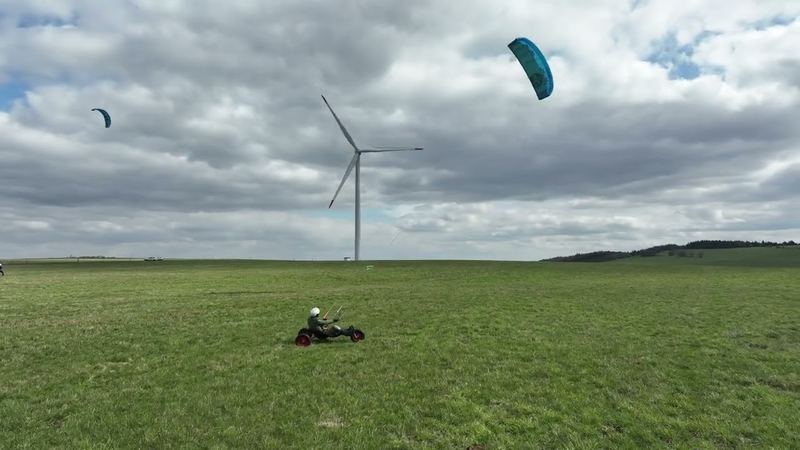
In a kite buggy, you sit and steer with your feet while controlling the kite with your hands, so you have to learn to coordinate both. Practise stopping as a separate skill with an instructor before riding independently. Do not strap yourself into the buggy: you need to be able to get out quickly if you fall or lose control.
A land board (mountainboard) is a board with bindings and big wheels. Practising on it also helps with riding a twin tip, a water board you can ride in either direction without changing your foot position. On land you risk falling onto a hard surface, so wear a helmet, knee pads and elbow pads.
The same kite works for both. At the Czech landkiting championship in Panenský Týnec in December 2023 I was reminded that I still have a lot to learn on wheels. More on buggies, mountainboards and where to start is in Landkiting: buggies, mountainboards and where to start.
Where to ride and how to stay safe
Look for a large mown meadow, stubble field or an airfield where riding is allowed, ideally with the landowner's permission. Stay off planted fields. Before launching, check the site, your gear and who can help you:
- No power lines, roads, trees or buildings nearby.
- Clear space downwind of at least 3 line lengths. With the 21 m lines Flysurfer recommends for the Peak, that is over 60 m.
- Test the quick release before every launch, so you know it works and your hand finds it without thinking.
- Helmet and pads. Land boarding and buggying need full protective gear.
- Never alone. Practise your first launches and landings with a new foil with an instructor who knows the model; have a trained helper for further practice. Even correctly installed B-Safe is no reason to ride alone.
Watch out for woods and tree lines. At Moldava on snow, when the wind blows from the forest and you are close to it, the wind is turbulent and the kite becomes harder to control. You need to move further away. The same applies behind a copse or a row of trees beside a field.
My home spot on land is Fojtovice in the Ore Mountains. Other places to ride on land in the Czech Republic are on the kite spot map and in Landkiting spots in the Czech Republic.
What land kiting gives you on the water
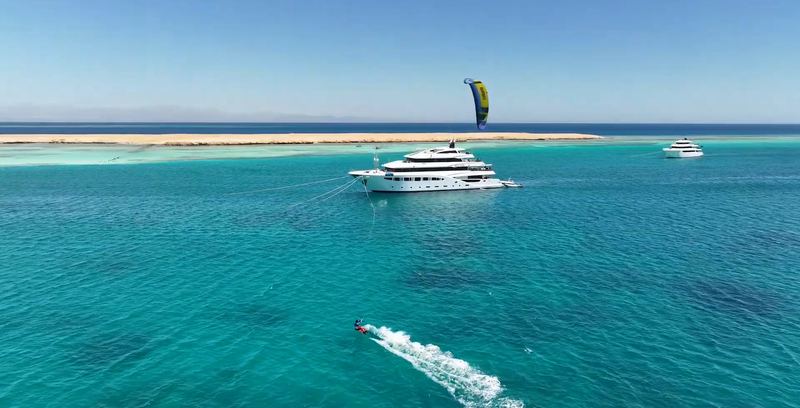
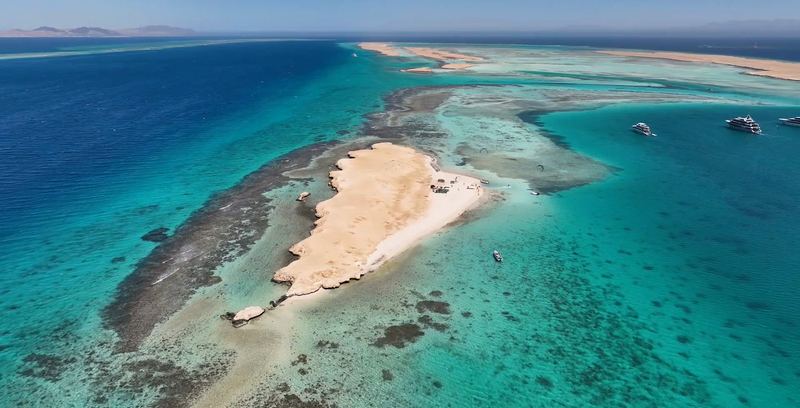
On a field you can keep practising kite control and, on a land board, board handling. Those skills help when you return to the water, perhaps on a kite safari in the Red Sea. Whether you are ready to ride independently also depends on your safety skills, understanding of the wind and ability to handle problems at that particular spot.
Questions
What is the best power kite for land boarding as a beginner?
If you already have kite control and safety skills, I would choose a depower foil with a compatible bar and quick release, and get an instructor to help you learn the new model. For example, the PEAK6 with a CONNECT3 bar uses FLS in its 4-line setup; optional B-Safe requires a 5th line installed according to the manual. For learning basic control, Ozone recommends its Ignition V3 trainer in 2 or 2.5 m², depending on conditions.
What size power kite do I need for land boarding?
Start with your weight, skills, riding surface and wind including gusts, then check the chart for the specific model. The PEAK6 chart below is a guide for a rider around 75 kg, not a recommendation for beginners to ride up to its upper limits. Flysurfer advises choosing a smaller size when unsure, especially on land.
Can I use my inflatable water kite on land?
You can, but I would not start with it. On wheels you need less power than on water, so your water size is usually too big for a field, and crashing on hard ground is bad for both the kite and you.
Do I need a helmet for land boarding?
Yes, wear a helmet and pads for land boarding and buggying because you risk falling onto a hard surface. For land boarding, MBS recommends a helmet, knee pads and elbow pads.
How much space do I need for power kiting on land?
Keep a clear area downwind of at least 3 line lengths, so over 60 m with 21 m lines. No power lines, roads, trees or buildings nearby.
Sources
- PEAK6: single-skin kite, CONNECT3 bar with 21 m lines; indicative chart for 75 kg, selection depends on weight, skills, board and conditions on water or land; choose smaller when unsure flysurfer.com (checked 18 October 2026)
- Official PEAK6 wind range chart for the sizes shown in the article table flysurfer.com (checked 18 October 2026)
- PEAK6 manual: instruction by school or dealer, trained landing assistant, quick release checks, clearance from obstacles, never alone; CONNECT3 uses FLS with 4 lines, optional B-Safe requires a 5th line installed per section 13; single-skin impact resistance and reverse relaunch on land flysurfer.com (checked 18 October 2026)
- Ignition V3: 3-line trainer, recommended sizes 2 or 2.5 m² depending on conditions; children 1.5 m² below 10 knots (5.1 m/s) under careful adult supervision; automatic landing with minimal power after releasing the bar requires the wrist leash ozonekites.com (checked 18 October 2026)
- Kitech FRS V2: ram-air foil kite, no pumping, for water, snow and land (landboard, kite buggy), sizes 7-18 m²; Big Day is an official Harlem, Kitech and C-Skins dealer www.big-day.cz (checked 18 October 2026)
- Peter Lynn: stay away from power lines, roads, railway lines, trees and buildings; keep a clear downwind area of at least 3 times your line length; always use full protective gear for landboarding, snowkiting and buggy riding cdn.shopify.com (checked 18 October 2026)
- GPA: steering a buggy with the feet while controlling the kite by hand requires coordination; riders are not strapped in and must be able to get out quickly; protective equipment gpa.de (checked 18 October 2026)
- Ozone: main quick release activates flag-out with a correctly attached safety leash; the leash release completely detaches the kite in an extreme emergency ozonekites.com (checked 18 October 2026)
- MBS: land boarding allows practice away from the coast and helps with kitesurfing; learn kite control before adding a board; helmet, knee pads and elbow pads mbseurope.com (checked 18 October 2026)
- IKO: a twin tip is a kitesurf board that can be ridden in either direction without changing foot position www.ikointl.com (checked 18 October 2026)
- Kitty Hawk Kites: turning and stopping a buggy are distinct techniques www.kittyhawk.com (checked 18 October 2026)
- Converting knots to m/s: 1 knot = 0.5144444 m/s www.weather.gov (checked 18 October 2026)
- Video Landkiting Buggy Fojtovice on the Jana Hrabalová channel www.youtube.com (checked 18 October 2026)