Kitesurfing in Sri Lanka: Kalpitiya and the season
Kitesurfing in Sri Lanka mostly happens in Kalpitiya on the northwest coast. There are 2 seasons: stronger summer wind from about May to September and lighter winter wind from December to February.
Kitesurfing in Sri Lanka almost always means Kalpitiya, a small fishing town on the peninsula by Puttalam Lagoon on the northwest coast. There are 2 seasons. Summer runs from about mid-May to September, according to some schools into mid-October, and brings stronger wind. Winter runs from December to February, by some accounts into mid-March, and it is lighter and steadier.
Before booking, 2 questions matter most: which months give you the most reliable wind, and whether the lagoon will suit you. It offers flat water and shallow sections, but in summer the wind can be gusty where it reaches the lagoon over land.
When it blows: the season month by month
The southwest monsoon brings the summer wind, and the northeast monsoon brings the winter wind. Between seasons it is less reliable. For a trip mainly to kite, I would aim for the middle of a season; at either end, leave room for days off the water.
The NASA POWER model gives long-term monthly averages for 2001-2025, including day and night, at a height of 10 m on a grid of roughly 50 km. It helps compare the seasons. Wind on a particular beach during the day can be different; I would not choose a kite for today's session from this table.
| Month | NASA model (monthly mean) | Direction | What to expect |
|---|---|---|---|
| January | 10 knots (5.3 m/s) | northeast | peak winter month |
| February | 9 knots (4.7 m/s) | northeast | winter, fading |
| March | 7 knots (3.6 m/s) | east-northeast | end of winter, hit and miss |
| April | 6 knots (3.0 m/s) | southwest | between seasons |
| May | 12 knots (6.1 m/s) | southwest | summer starts |
| June | 14 knots (7.4 m/s) | southwest | peak season |
| July | 14 knots (7.2 m/s) | southwest | peak season |
| August | 14 knots (7.0 m/s) | southwest | peak season |
| September | 13 knots (6.7 m/s) | southwest | summer, fading |
| October | 9 knots (4.7 m/s) | southwest | end of summer, hit and miss |
| November | 8 knots (4.0 m/s) | northeast | between seasons |
| December | 10 knots (5.0 m/s) | northeast | peak winter month |
As a rough guide for riding, expect 18-25 knots (9-13 m/s) in summer, peaking around 30 knots (15 m/s); the winter estimate is 15-25 knots (8-13 m/s). These are local operator Kitesurfing Lanka's figures, not a guarantee for your week. Kitekuda at Kappalady expects about 4 windy days a week in winter, so I would leave room for days without kiting too.
For other places that work in the same weeks, see Where to kitesurf in July.
Summer or winter
Summer (May to September) is the main season. The wind is stronger and starts earlier in the day. This is when people do trips to Vella Island and Dream Spot and downwinders along Puttalam Lagoon, meaning you ride with the wind between spots with a boat following. Setha Wadi gives 8-10 m² as the most common summer kite sizes for an 80 kg rider. That is just an example for your packing: your board, kite model and skills matter too. Use the kite size calculator for an estimate, then check it against the manufacturer's range and the actual wind.
With every spot, I want to know what the wind passes over before it reaches me. In Kalpitiya the southwest wind crosses the peninsula before reaching parts of the main lagoon and can be gusty: lighter at times, stronger at others. Before launching, I would discuss the wind, gusts and a suitable riding area with a local instructor. If the wind exceeds your equipment's range or you cannot control the kite precisely, do not launch. End your session if conditions deteriorate; a smaller kite alone does not make it safe.
In winter (December to February) the wind is lighter and less frequent, but it comes off the sea, so it is cleaner and less gusty. It usually builds towards midday. Expect to need a bigger kite than in summer and plan for some windless days each week. Winter also lines up with the Christmas holidays. In winter I go snowkiting in the Ore Mountains (Krušné hory) back home, while in Kalpitiya people ride in their swimsuits.
For an initial trip I would pick June to August, when you have the best chance of wind every day. If you want gentler wind or want to kite over Christmas, go in December or January.
Spots around Kalpitiya
The main lagoon
Kalpitiya lagoon has shallow teaching areas and deeper sections. The water is flat, the bottom sandy near the shore and muddier and deeper towards the middle. Most kite schools are around this lagoon, and this is where lessons happen. The map marks Cocodance Kite Resort in the Kalpitiya area.
Ask a local school to show you the right zone. I would want to know where the shallows end and where to launch safely, rather than just seeing flat water in photos. After a course, I would also go through what you can already handle independently and what still needs practice with an instructor. Water depth alone will not get you out of trouble.
The bottom has sharp shell fragments. Pack water shoes.
Kappalady and Kandakuliya
Several schools are based by the smaller Kappalady lagoon. It has flat water, with the ocean across the beach and waves forming on the reef in summer. Before heading out, ask a local school about the water entry and conditions at the reef. In winter, when the wind comes off the sea, Kandakuliya lagoon works well, especially if you can already ride independently. The map also marks Kite Center Sri Lanka in the area.
Vella Island
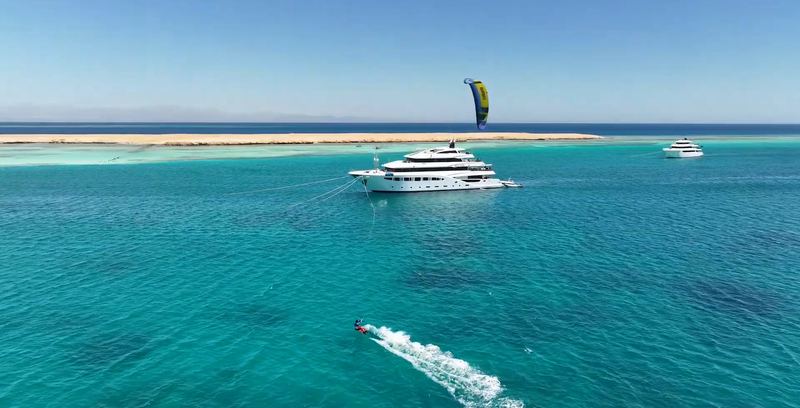
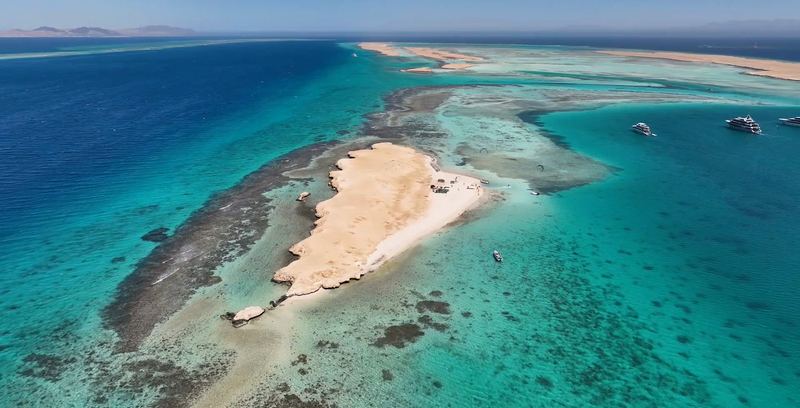
Vella Island is a long sandbar by Portugal Bay. Summer trips go there by boat, and some schools also offer downwinders with support. The direct downwinder is for advanced riders; you do not have to complete it to visit the island. The wind is offshore, blowing from the beach out to open water. You need reliable upwind skills and arranged rescue cover: a boat already on the water, a driver trained in rescues, and someone on shore who knows you are riding. Going with a friend is not enough.
Donkey Point and Dream Spot
Donkey Point is a summer wave spot for independent riders who can ride upwind. If you are new to waves, arrange guidance suited to the conditions that day. Rescue cover is not automatic here; Kitesurfing Lanka offers it by arrangement for a fee, subject to availability. Dream Spot and Mini Vella are other summer trips.
Dutch Bay Point
It lies south of Vella Island and looks out over Wilpattu National Park. Careful: in winter the wind here is offshore, which means it blows from the beach out to open water. If something goes wrong, the wind carries you away from the shore. I would only ride here with reliable upwind skills and arranged rescue cover: a boat on the water with a trained driver, and someone on shore who knows you are riding.
More spots in the area, such as Puttalam, are on the kite spot map.
When not to go
April has the lowest monthly average in the NASA model, around 6 knots (3.0 m/s), followed by March at 7 knots (3.6 m/s). November is also weak at 8 knots (4.0 m/s). That ranking alone does not tell you how many days will be rideable. For a trip mainly to kite, I would skip April and November; the edges of the seasons in March and October are uncertain too. Between monsoons, afternoon thunderstorms are common, and October and November are among the wettest parts of the year in Sri Lanka.
If your time off falls in April or in autumn, look elsewhere. The Red Sea kite safari I go on had 2026 dates in April, May, October and November; more on the kite safari in Egypt page. Dates for 2027 haven't been announced yet.
Practical things before you go
- Getting there: from Bandaranaike International Airport near Colombo it is about 4 hours by road to Kalpitiya.
- Water: warm in both seasons, so a wetsuit is generally unnecessary. A rash vest against the sun is useful.
- Air: 25-29 °C on average according to the NASA model, warmest from March to May.
- Rain: the northwest is one of the driest parts of Sri Lanka. The southwest monsoon brings rain mainly to the southwest of the island and the hills.
- Gear: smaller kites in summer, bigger in winter. Water shoes for the shells.
- Level: after a course you can practise on the lagoon; downwinders and waves are for more confident riders.
If you are choosing between Asian destinations, you can compare Kalpitiya with Mui Ne in Kitesurfing in Vietnam. For an overview by level, see Best kitesurfing spots in the world by level.
Questions
When is the kitesurfing season in Sri Lanka?
Kalpitiya has 2 seasons: stronger summer wind from mid-May to September or mid-October, and lighter winter wind from December to February or mid-March. In the NASA model, April has the lowest monthly average, followed by March; November is also weak. Those averages do not tell you how many days you will ride.
How windy is Kalpitiya?
Kitesurfing Lanka gives a summer average of 18-25 knots (9-13 m/s), peaking around 30 knots (15 m/s), and a winter range of 15-25 knots (8-13 m/s). Treat these as a guide: conditions vary with the day and spot, and winter brings windless days too.
Is Kalpitiya good for beginners?
The main lagoon has shallow teaching areas and deeper sections; ask a local school to show you the right zone. Summer wind can be gusty where it crosses land before reaching the lagoon. After a course, I would check with an instructor that the conditions match what you can safely handle.
Do I need a wetsuit in Kalpitiya?
You generally do not need a wetsuit: the water is warm in both seasons. Bring water shoes though, because the sandy bottom of the lagoon has sharp shell fragments.
Sources
- NASA POWER model for Kalpitiya (8.23 N, 79.76 E), climatology 2001-2025: monthly mean wind speeds at 10 m Jan-Dec 5.3 4.7 3.6 3.0 6.1 7.4 7.2 7.0 6.7 4.7 4.0 5.0 m/s (10 9 7 6 12 14 14 14 13 9 8 10 knots); April lowest, followed by March; direction 39-71° December to March, 222-243° April to October, air temperature 25.2-28.7 °C power.larc.nasa.gov (checked 18 October 2026)
- Kalpitiya: summer season May to October, winter December to February; windiest June, July, August, December, January; SW wind crosses land before parts of the lagoon and can be gusty, winter wind off the sea less gusty locations.thekitespot.com (checked 18 October 2026)
- Sharp shell fragments on the lagoon bottom, booties advised; Vella Island is a sandbar by Portugal Bay; Dutch Bay Point offshore in winter, upwind skills required; about 4 hours by road from the airport locations.thekitespot.com (checked 18 October 2026)
- Kalpitiya is a small fishing town on the peninsula of Puttalam Lagoon on Sri Lanka's northwest coast; most schools are by Kalpitiya lagoon, a few at nearby Kappalady lagoon; Dutch Bay Point is south of Vella Island, overlooking Wilpattu National Park locations.thekitespot.com (checked 18 October 2026)
- Setha Wadi: an 80 kg rider most often uses an 8-10 m² kite in summer; summer wind starts in the morning, winter wind around midday to afternoon; warm water in both seasons, wetsuit generally unnecessary sethawadikite.com (checked 18 October 2026)
- Kitesurfing Lanka: summer average 18-25 knots (9-13 m/s), peaks around 30 knots (15 m/s), winter range 15-25 knots (8-13 m/s); seasons roughly mid-May to mid-October and mid-December to mid-March; warm water, wetsuit generally unnecessary www.kitesurfinglanka.com (checked 18 October 2026)
- Kitekuda: flat Kappalady lagoon, ocean across the beach with summer waves on the reef; about 4 windy days a week in winter www.srilankakiteschool.com (checked 18 October 2026)
- Kalpitiya has shallow and deeper teaching sections; gustiness varies between parts of the lagoon www.kiteschule-srilanka.de (checked 18 October 2026)
- Vella Island: summer boat trip, optional downwinder, direct downwinder for advanced riders; offshore wind, upwind skills and rescue boat required www.kitesurfinglanka.com (checked 18 October 2026)
- Donkey Point: summer wave spot, upwind skills required; rescue boat by arrangement for a fee, subject to availability www.kitesurfinglanka.com (checked 18 October 2026)
- IKO: offshore riding only with a boat already on the water, a driver trained in rescues and an informed person on shore d8.ikointl.com (checked 18 October 2026)
- Duotone EVO 2026, sections 2.2, 2.6 and 10: gust risks, precise kite control required, check weather with locals; sizing depends on wind, rider, board and skills a.storyblok.com (checked 18 October 2026)
- NASA POWER: hourly meteorological data aggregated into daily and climatological monthly averages power.larc.nasa.gov (checked 18 October 2026)
- NASA POWER: meteorological grid of 0.5 × 0.625 degrees, roughly 50 km power.larc.nasa.gov (checked 18 October 2026)
- The Kalpitiya map point identifies Cocodance Kite Resort kitewithjaja.pages.dev (checked 18 October 2026)
- Summer season roughly mid-May to mid-October, winter mid-December to mid-March; in summer the wind starts earlier, in winter it builds towards midday; summer is the main season for Vella Island, Mini Vella, Dream Spot and Puttalam Lagoon downwinders; Kandakuliya lagoon works well in winter; lagoon bottom sandy at the edges, muddier and deeper towards the centre; wetsuit generally unnecessary iksurfmag.com (checked 18 October 2026)
- Kalpitiya is known as the best place for kitesurfing in Sri Lanka en.wikipedia.org (checked 18 October 2026)
- Sri Lanka Department of Meteorology: first inter-monsoon March-April, southwest monsoon May-September, second inter-monsoon October-November, northeast monsoon December-February; southwest monsoon weather confined mainly to the southwest quarter and hill country; driest zones under 1,000 mm a year in the northwest and southeast; afternoon thunderstorms in inter-monsoon periods www.jma.go.jp (checked 18 October 2026)
- Share of annual rainfall in Sri Lanka: second inter-monsoon (October-November) 30%, southwest monsoon (May-September) 30%, northeast monsoon 25%, first inter-monsoon 15% www.unoosa.org (checked 18 October 2026)
- Ze Wandering Frogs video shows Kalpitiya lagoon, Vellai Island, Donkey Point and Dream Spot www.youtube.com (checked 18 October 2026)
- Kite Surf & Travel video shows Vella Island from the air and riding on flat water next to a boat www.youtube.com (checked 18 October 2026)
- Red Sea kite safari dates 2026: 11-18 April, 22-29 May, 10-17 October, 7-14 November paradisekitesurf.cz (checked 16 October 2026)