Types of kitesurfing and what each style involves
Kitesurfing covers several styles that differ in the board, the kite and the spot. Most people ride freeride, and that is also where a beginner starts.
Kitesurfing covers several styles that differ in the board you ride, the kite you fly and the spot you choose. Most people ride freeride, and that is also the style a beginner starts with.
The names you will come across are freestyle, freeride, speed, course racing, wakestyle, big air, park, wave riding and foiling. Each one asks for different gear and a different kind of water.
An overview of the styles
The table sums up the main styles on the water.
| Style | What you do | Board | Kite note |
|---|---|---|---|
| Freeride | Cruising, jumps, grabs, basic tricks | Twin tip | Good relaunch and a wide wind range |
| Freestyle | Big jumps and tricks in the air, also in competition | Smaller twin tip | Good pop and hangtime, C-kites |
| Wakestyle | Wakeboard-style tricks, obstacles, flat water | Large twin tip with high rocker, boots | C-kites |
| Big air | Jumping high, often with kiteloops, in strong wind | Twin tip | C-kites, shorter lines, smaller kites |
| Wave riding | Riding breaking waves, following the kite down the line | Directional surfboard, straps or strapless | Wave kite with drift |
| Course racing, slalom | Racing a course or downwind around buoys | Directional race board with long fins, foilboard | |
| Speed | Top speed over 500 m, formal or GPS | Directional speed board | |
| Foiling | Flying above the water on a hydrofoil | Board with a foil and mast | Foil kites suit hydrofoiling |
Freeride: where you start
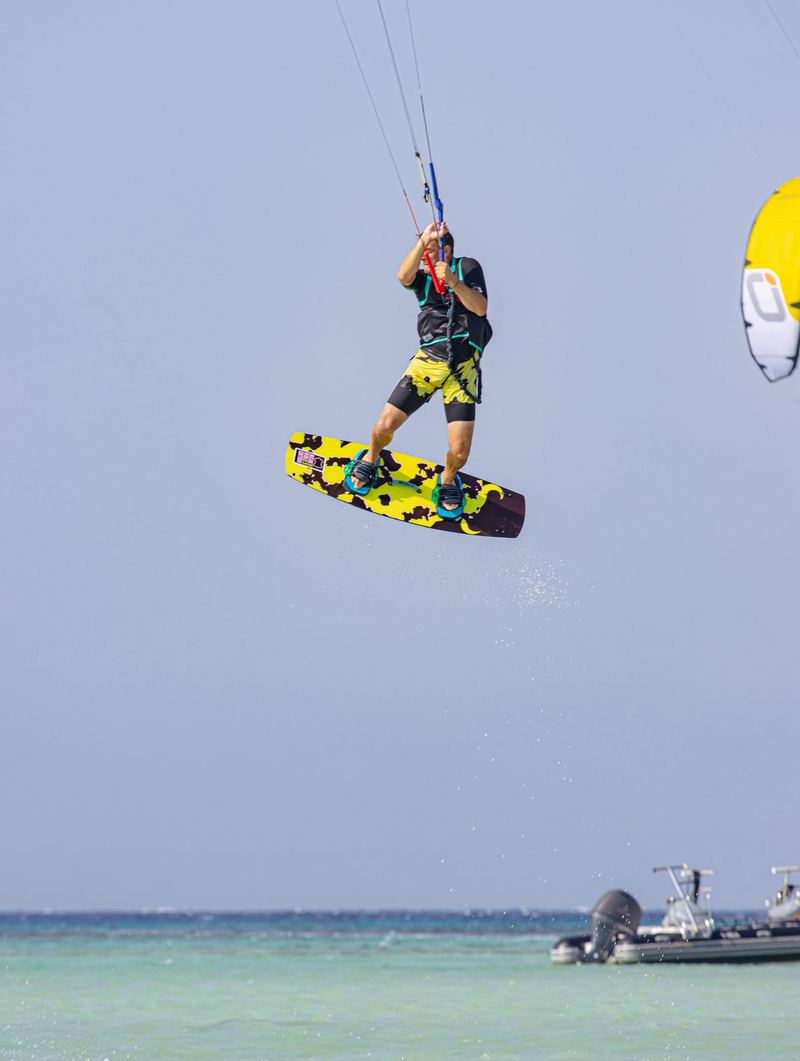
Freeride is any kiteboarding that is not tied to one discipline, and it is the most popular style. Most boards sold are made for it. It covers cruising, jumps, grabs and basic tricks, usually on a twin tip with a kite that has good relaunch and a wide wind range.
That combination suits a beginner: twin tips are the easiest boards to learn on and the most popular, and a reliable relaunch matters when you fall in the water. If you are still choosing gear, the guide to twin tip, surfboard and foil boards explains the differences.
Freestyle, wakestyle and big air
Freestyle uses the kite and board for big jumps and tricks in the air, including in competition. Riders use smaller twin tips and kites with good boost and hangtime. C-kites fit here: they give punchy power, stay stable in jumps and loop fast, but have a smaller wind range and suit intermediate to advanced riders.
Wakestyle comes from wakeboarding. The tricks are similar, sometimes with obstacles such as ramps and rails, and it is ridden on flat water. The boards are large twin tips with high rocker, and the bindings are close to wakeboard boots. Wakeskate is a twin tip without straps, with grip tape like a skateboard.
Big air means riding in very strong wind and jumping high, often with kiteloops, which are high-risk moves. Riders use C-kites, shorter lines and smaller kites. For the technique itself, see how to jump higher.
Wave riding
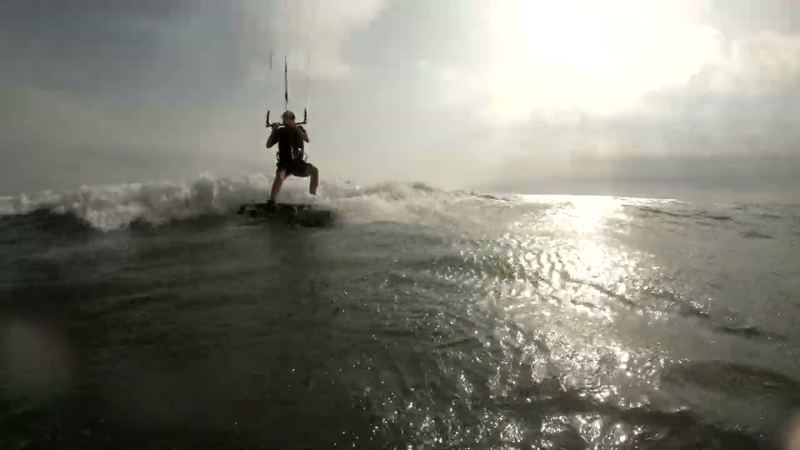
Wave riding combines kitesurfing with surfing and needs a spot with breaking waves. Most riders use a directional board, either with straps or strapless. Strapless means riding without straps, with your feet moving around the board.
The kite handling is different from freeride. The rider essentially follows the kite down the line, so the kite's pull drops while riding a wave. That is why wave kites are built for drift and turning while depowered. Wave riding is popular with surfers because it resembles tow-in surfing.
A surfboard makes sense once you ride independently and waves start pulling at you; the comparison is in twin tip, surfboard and foil.
Racing styles: course racing, slalom and speed
Course racing is sailed along a course like in yachting, combining speed and tactics. Riders use special directional race boards with long fins, some similar to windsurfing, and foilboards are used too. Slalom is a downwind race around buoys with the same equipment.
Speed is about top speed over 500 m, in formal races or informal GPS sessions, on special directional speed boards.
Formula Kite, the class that was part of the Olympic Games in Paris 2024, is raced on hydrofoils; see what is kite foiling.
Foiling
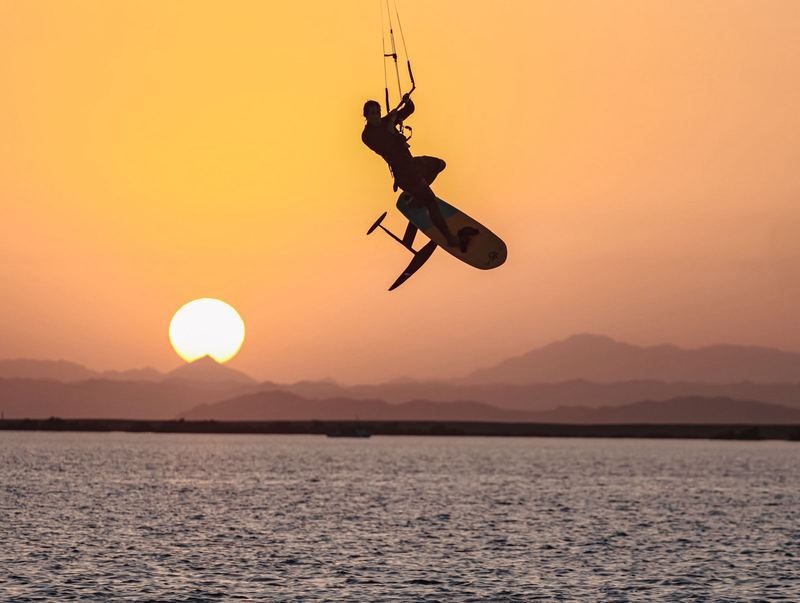
A hydrofoil, or foil, is a wing and mast attached to the bottom of the board. It lets the board rise fully out of the water, so the rider is not affected by chop. The efficiency of the foil allows riding in much less wind than on the surface and improves upwind ability and speed.
Different wing shapes are optimised for speed, stability or waves. Foiling needs a foil board; the kite can be an inflatable or a foil kite, and foil kites suit hydrofoiling well. If you ride in light wind often, it is worth reading about kitesurfing in light wind before you invest.
Kiting on snow and land
Kiting is not limited to water. On land, land kiting uses a short, light mountainboard, a buggy steered with your feet, inline skates or a sandboard on sand. It is good cross-training for kitesurfing because many of the kite control mechanisms carry over. See land kiteboarding for the buggy and mountainboard side.
On snow, snowkiting uses skis or snowboards. The kite handling transfers from water, and foil kites are ideal for snowkiting. The snowkiting hub covers spots and gear.
What to choose for your first year
For a first year on the water, keep it simple and stay with freeride.
- Learn the basics on a twin tip with a freeride kite that has a wide wind range and easy relaunch.
- Get comfortable riding upwind and controlling power before adding jumps.
- Add basic jumps and grabs, which are part of freeride.
- Once you know what you enjoy, branch into freestyle, wave riding or foiling with the right board and kite.
Start with freeride gear
The choice of board and kite matters more than the label of the style. The kitesurfing equipment guide walks through the full setup, and the kite types guide explains which kite fits which style.
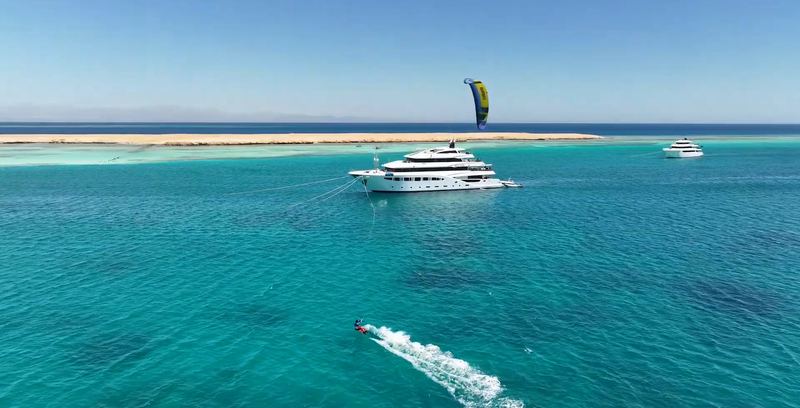
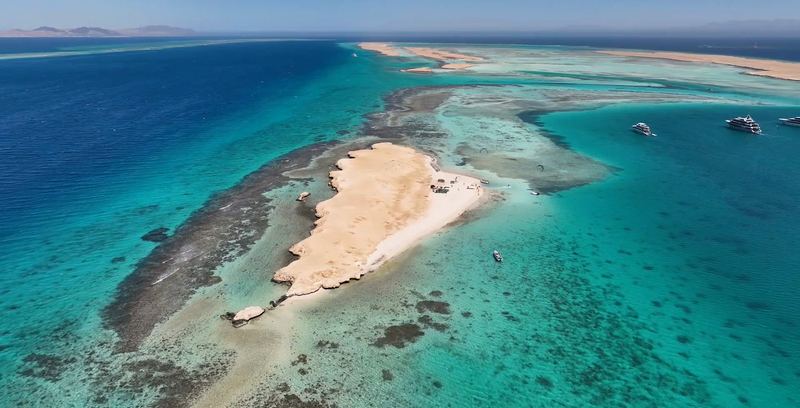
On the Red Sea kite safari the islands suit different styles: Tawila works for freeride and freestyle, Geisum for freeride and wave riding, and Ashrafi has shallow water and waves with downwind options.
If you are still deciding between styles, try several before buying specialised gear.
Questions
What are the main types of kitesurfing?
Freestyle, freeride, speed, course racing, wakestyle, big air, park, wave riding and foiling. They differ in board, kite and the spot you ride.
Which kitesurfing style should a beginner start with?
Freeride. It is the most popular style, most boards sold are made for it, and it covers cruising, jumps, grabs and basic tricks on a twin tip.
Do I need a different board for wave riding?
Yes. Wave riding uses a directional board, ridden with straps or strapless, on a spot with breaking waves.
What kite do freestyle riders use?
C-kites, which give punchy power, stay stable in jumps and loop fast, but have a smaller wind range. They suit intermediate to advanced riders.
Can I kite in light wind?
With a foil you can. A hydrofoil lets the board rise out of the water and works in much less wind than a board on the surface.
Is kitesurfing an Olympic sport?
Yes. Formula Kite, a class for foil kites and hydrofoil boards, was part of the Olympic Games in Paris 2024, with separate men's and women's events.
Sources and fact checks (7)
- Freeride is the most popular kiteboarding style and most boards sold are made for it. en.wikipedia.org (checked 25 October 2026)
- Wave riding uses directional boards with or without straps and needs a spot with breaking waves. en.wikipedia.org (checked 25 October 2026)
- Course racing and slalom use special directional race boards with long fins, and foilboards. en.wikipedia.org (checked 25 October 2026)
- A hydrofoil lets the board rise fully out of the water and works in much less wind. en.wikipedia.org (checked 25 October 2026)
- IKO divides boards into twin tips and directional boards and describes bow, SLE, C and foil kites by style. d8.ikointl.com (checked 25 October 2026)
- Duotone groups kites by style, from freestyle and freeride to foil and wave. www.duotonesports.com (checked 25 October 2026)
- Formula Kite was an Olympic class at Paris 2024. en.wikipedia.org (checked 25 October 2026)